
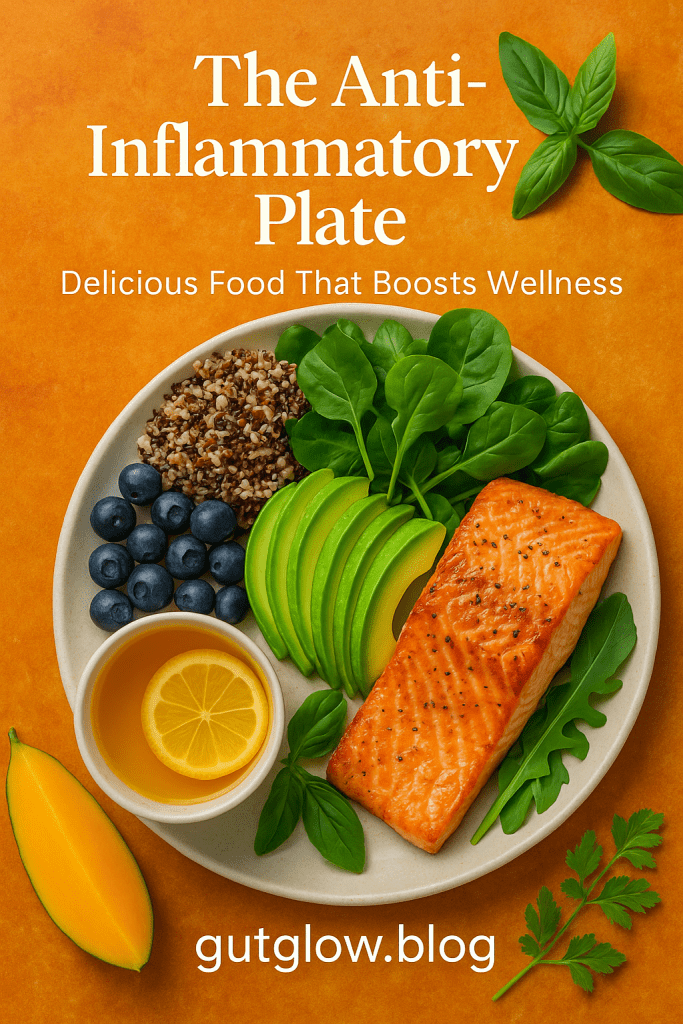
“Discover nurse-approved anti-inflammatory foods that support gut health, reduce inflammation, and promote glowing skin 🌿🥗. Your healing plate starts here!”
Ever notice how certain foods make you feel bloated, tired, or even trigger skin flare-ups? 😅 As a nurse with over 22 years of experience in wound, ostomy, and skin care, I can tell you: what you eat directly affects gut health, inflammation, and skin wellness.
Enter the anti-inflammatory plate—a simple, delicious way to eat your way to better digestion, glowing skin, and overall vitality. Research in Nutrients (2022) shows that diets rich in anti-inflammatory foods can reduce chronic inflammation, support gut microbiome diversity, and even improve skin elasticity.
Let’s break down my go-to anti-inflammatory foods and actionable tips to create a healing plate that works in real life (yes, even on busy weekdays 🥗✨).
🥦 What is an Anti-Inflammatory Diet?
An anti-inflammatory diet focuses on foods that reduce chronic inflammation in the body, which is often linked to:
- Digestive issues (IBS, bloating)
- Skin flare-ups (acne, eczema, rosacea)
- Joint pain or stiffness
- Low energy and premature aging
Glow tip:
I’ve seen countless patients improve gut and skin health simply by shifting to anti-inflammatory foods—no magic pills required.
🌱 Key Anti-Inflammatory Foods I Swear By
1. Leafy Greens
- Spinach, kale, Swiss chard
- High in magnesium, which helps calm inflammation
- Packed with antioxidants for skin repair
2. Berries
- Blueberries, strawberries, raspberries
- Rich in polyphenols, fighting oxidative stress
- Great for gut microbiome diversity
3. Fatty Fish
- Salmon, sardines, mackerel
- High in omega-3s, reducing inflammation and promoting glowing skin
- Supports joint health
4. Nuts & Seeds
- Walnuts, almonds, chia, flax
- Provide healthy fats and fiber, improving digestion
- Helps reduce inflammatory markers in the blood
5. Fermented Foods
- Kefir, yogurt, kimchi, sauerkraut
- Boost probiotics, balancing gut bacteria
- Linked to reduced skin flare-ups (acne, eczema)
6. Herbs & Spices
- Turmeric, ginger, garlic, cinnamon
- Natural anti-inflammatory compounds
- Easy to add to meals without extra calories
🥗 How to Build Your Healing Plate
- 50% vegetables & fruits → Mix colors for maximum nutrients
- 25% lean protein or fatty fish → Anti-inflammatory and satiating
- 25% whole grains or legumes → Fiber for gut health
- Add healthy fats & seeds → Olive oil, nuts, chia/flax
- Season with anti-inflammatory herbs & spices → Flavor + functional benefits
⚡ Gut Tip: Use meal prepping hacks to make anti-inflammatory meals quick and stress-free.
🌿 Lifestyle Habits That Boost Your Plate
- Hydration 💧 → Supports digestion, skin elasticity, and detox pathways
- Regular movement 🏃♀️ → Circulation boosts nutrient delivery and reduces inflammation
- Stress management 🧘♀️ → Cortisol spikes can negate the benefits of anti-inflammatory foods
- Sleep 😴 → Healing, skin repair, and hormone balance
🥄 Nurse-Approved Recipes & Snack Ideas
- Berry + spinach smoothie with kefir and flax
- Salmon salad with kale, walnuts, and olive oil dressing
- Overnight oats with cinnamon, berries, and chia seeds
- Kimchi and veggie stir-fry with turmeric-infused oil
Key Takeaways
- Anti-inflammatory foods reduce inflammation, improve gut health, and support glowing skin.
- Focus on colorful fruits, veggies, fatty fish, nuts, seeds, and fermented foods.
- Small, consistent lifestyle habits amplify the benefits of your healing plate.
💬 What’s your favorite anti-inflammatory food or recipe? Share in the comments—I love swapping ideas!
⚠️ Disclaimer (Because I’m a Nurse, Not Your Nurse 😉): This blog is for general education and entertainment purposes only. Consult your healthcare provider before making major dietary changes.


