
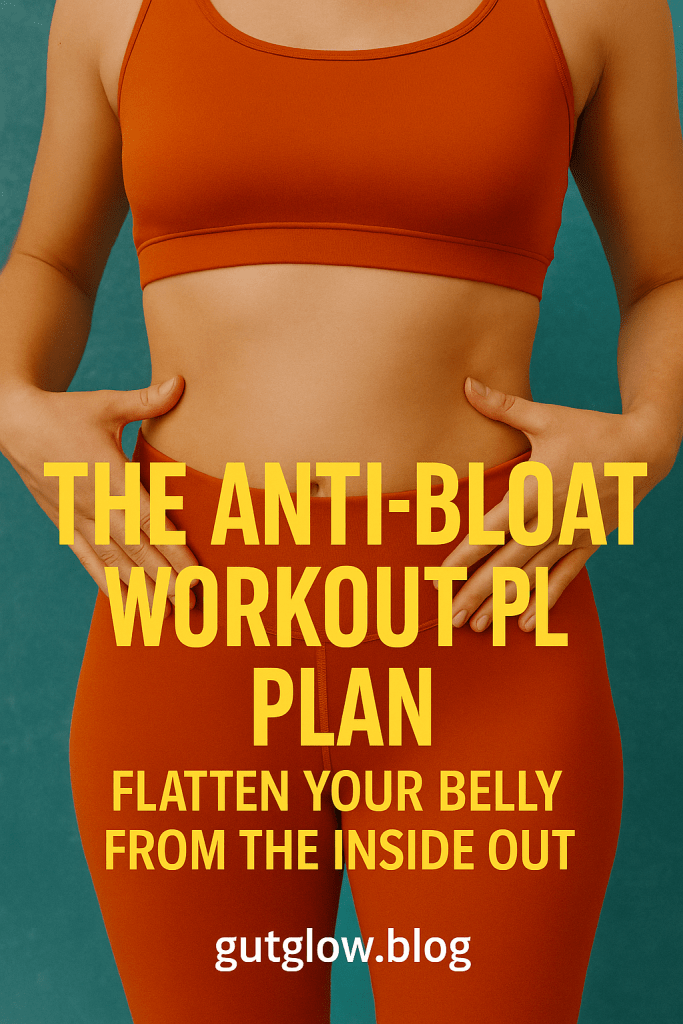
The Anti-Bloat Workout Plan: Flatten Your Belly from the Inside Out 🥦💪✨


Struggling with constant bloating and stubborn belly puff? Discover the anti-bloat workout plan designed to flatten your belly from the inside out—through gut health, core-strengthening moves, and skin-loving foods. Nurse-approved strategies to reduce inflammation, improve digestion, and glow from the inside out.


Why Your Belly Feels Puffy (and Why It’s Not Always Fat) 🌸

Let’s be real: sometimes that bloated belly has nothing to do with crunches and everything to do with your gut.

As a nurse with 22 years of experience (and plenty of “been there, bloated that” personal stories), I can tell you this: your digestive system is the ultimate boss of how flat—or puffy—your belly looks.

  • Poor gut health = inflammation + sluggish digestion = bloating.
  • Good gut health = smoother digestion + stronger core = flatter tummy and clearer skin.

👉 And here’s the kicker: your gut health doesn’t just affect your jeans—it also impacts your skin barrier, acne, rosacea, and even premature aging. (Check out my post on gut health and acne for a deep dive.)


The Gut-Skin-Bloat Connection 🧠🦠✨

Recent research has been shining a bright light on the gut-skin axis—the communication superhighway between your microbiome and your skin.

📊 A 2023 study in the journal Nutrients found that people with diverse gut microbiomes reported fewer digestive issues, lower bloating, and improved skin hydration.

That means your daily choices—what you eat, how you move, how much water you drink—are literally written on your belly and your face.


Step 1: Eat for a Flatter Belly (and Better Skin) 🥗🌈

You can’t out-crunch a bad gut. Your first anti-bloat move starts in the kitchen.

Gut-Friendly, Debloat Superfoods:

  • High-fiber veggies (broccoli, Brussels sprouts, spinach): fuel your microbiome and keep you regular. 🚽✨
  • Fermented foods (yogurt, kefir, kimchi, sauerkraut): add probiotics that calm inflammation.
  • Berries (blueberries, raspberries, strawberries): antioxidants fight free radicals that age your skin.
  • Ginger & peppermint: natural bloating busters.
  • Hydrating foods (cucumber, watermelon, celery): flush excess sodium and puffiness.

🙅‍♀️ Skip or limit: carbonated drinks, processed sugars, artificial sweeteners (like sorbitol), and fried foods—they’re like bloat bombs waiting to go off.

💡 Check on my post fiber as fitness fuel for more in-depth gut-food tips.


Step 2: The Anti-Bloat Workout Plan 🧘‍♀️💪

Here’s the part you’ve been waiting for—the workout moves that actually help you de-puff, flatten your belly, and support your gut.

1. Deep Breathing & Diaphragmatic Exercises

  • Helps stimulate the vagus nerve, calming the gut-brain axis.
  • Reduces stress-induced bloating.

2. Yoga Poses for Digestion (do 5–10 minutes after meals)

  • Seated Twist: massages intestines, aids motility.
  • Happy Baby: stretches pelvic floor, relieves gas.
  • Cat-Cow: improves circulation to the digestive organs.

👉 I wrote a full post on yoga for digestion you can dive into for a full flow.

3. Low-Impact Cardio (walking, cycling, swimming)

  • Moves food through the digestive tract.
  • Keeps lymphatic system flowing (bye-bye, water retention).

4. Core-Strengthening Moves

Forget endless crunches. Focus on functional core moves that support posture, digestion, and overall belly strength.

  • Planks (start with 20–30 sec holds) I know, holding a plank is basically questioning your life choices
  • Bird-dogs
  • Dead bugs

Pro tip from your nurse in her 40s: Strengthening your core doesn’t just flatten your tummy—it protects your back and improves circulation to your gut.


Step 3: Hydration = Debloat Magic 💧

Most people think they’re bloated from water—but bloating is often a sign of not enough water.

  • Aim for 8–10 cups daily, more if you sweat a lot.
  • Add lemon, cucumber, or mint for a refreshing, skin-boosting twist.
  • Herbal teas (peppermint, chamomile, fennel) = double win for gut soothing.

💡 Did you know? Skin hydration starts from the inside. Studies show well-hydrated skin maintains elasticity better (yes, fewer wrinkles 👏).


Step 4: Stress Less, Debloat More 😌🧘‍♀️

Stress hormones mess with digestion, slow gut motility, and trigger inflammation. That equals bloat and breakouts.

Simple de-stress hacks:

  • Journaling before bed 📝
  • 5–10 minutes of guided meditation or breathwork
  • Walking outside in natural light

👉 I’ve seen patients with IBS improve dramatically just by focusing on stress reduction alongside diet and exercise.


My Personal Story: From Puffy Nurse to Flat-Belly Flow 🌿

Here’s a real-life example: a few years ago, I was working back-to-back hospital shifts, running on coffee and vending machine snacks. My belly? Permanently puffy. My skin? Breaking out like I was 15 again. OMG

When I finally slowed down, started meal prepping gut-friendly foods, adding yoga flows, and actually drinking my water—I saw massive changes. My digestion calmed down, my belly smoothed out, and my skin looked happier than ever.

If it worked for me (a stressed-out nurse with a love for chips and queso), it can work for you too.


Step 5: Consistency Beats Perfection 🕰️

This isn’t about being perfect—it’s about small, consistent shifts:

  • Swapping soda for tea. Matcha is my favorite 🌸
  • Adding a 10-minute walk after dinner.
  • Reaching for Greek yogurt instead of chips.

Your gut and skin thrive on patterns, not perfection.


The Anti-Bloat Glow-Up: Skin Wins Too ✨

Here’s the fun part: once you improve gut health and reduce bloating, your skin often reflects the benefits:

  • Clearer complexion
  • Fewer inflammatory breakouts
  • Less redness and puffiness
  • Stronger, healthier barrier function

Yes, your abs will thank you—but so will your face!


Final Thoughts: Flatten Your Belly from the Inside Out 🌸

The anti-bloat workout plan isn’t about chasing a six-pack—it’s about reducing inflammation, calming digestion, and supporting skin health at the same time.

Your belly isn’t just about core strength. It’s a reflection of your gut health, your hydration, your stress, and your daily habits.


💬 Your Turn:
Have you noticed changes in your skin when your digestion is off—or improvements when your gut feels happy? Share your story in the comments—I’d love to hear your experience!


👉 Related posts you might love:

⚠️ Disclaimer (Because I’m a Nurse, Not Your Nurse 😉):
This blog is for general education and entertainment purposes only. It’s not a substitute for medical advice. Always consult your healthcare provider before making big changes to your diet, workout, or skincare routine.

✨🚑 Because Your Skin Deserves More Than a Reel and a Prayer

Retinol can transform skin, but only if your gut and barrier are supported. Nurse-approved tips for glowing, healthy, irritation-free skin.

🧠 Ever panic-bought a $90 retinol serum because a 22-year-old influencer promised “magic”?

You’re not alone. 🙋‍♀️ But as a nurse in my 40s with 22 years of experience, obsessed with skin, gut health, poop, and wound healing, I’m here to tell you: retinol is powerful—but it’s not a magic wand. Misused, it can backfire like bad cafeteria chili 🌶️💨.

Let’s break down the real tea on retinol, nurse-style, with solutions that actually help your skin without burning it off.


🧴 What Is Retinol?

Retinol is a vitamin A derivative that helps your skin:

  • Turn over faster (bye dead skin)
  • Boost collagen production
  • Reduce fine lines, acne, dark spots, and uneven texture

It’s clinically studied and highly effective—but the fine print rarely makes Instagram: skin barrier health, gut connections, and why your face may feel like sandpaper.


🔬 Science Made Simple: How Retinol & Gut Health Connect

Retinol works best when your skin and gut are supported. Here’s why:

  1. Skin Barrier Matters
    • Damaged barrier = more irritation. Think of it like waxing a car that’s already on fire.
  2. Gut Health Influences Vitamin A Metabolism
    • Inflammation, nutrient depletion, or irregular digestion can impact vitamin A absorption, showing up as purging, breakouts, or dullness.
    • Studies show gut dysbiosis can influence skin inflammation and barrier repair (Harvard Health, 2024).
  3. Cell Turnover Needs Support
    • Retinol accelerates cell turnover. Without hydration, nutrients, and barrier care, your skin can break down—similar to wounds that heal poorly under stress or poor nutrition.

🩹 Nurse’s Insights: Why Retinol Isn’t One-Size-Fits-All

Compromised Skin Barrier? Red, flaky, burning skin + retinol = disaster.

Gut Issues? IBS, inflammation, or poor nutrition = less effective vitamin A metabolism.

Strength & Frequency Matter: More isn’t better. Starting high-strength retinol on sensitive skin is like running a marathon in stilettos.


👩‍⚕️ What Nurses Know That Influencers Don’t

  1. Retinol is medicine.
    • Start low: 0.25% 1–2 nights/week. Your skin isn’t lazy—it’s protective.
  2. Barrier is your frontline.
    • Red, flaky, or burning? Pause, hydrate, repair.
  3. Healthy skin starts from the inside.
    • Gut health, bile production, liver function, and diet impact vitamin A metabolism.
  4. Think like wound care.
    • Support your skin with hydration, nutrients, and barrier protection to prevent breakdown.

🧠 Gut + Skin: The Retinol Recovery Team

💩 Poop Check-In

  • Daily? Great.
  • Irregular? Toxins recirculating = slower healing and detox.

🥬 Feed Your Gut

  • Probiotics: yogurt, kefir, sauerkraut
  • Prebiotics: garlic, onions, asparagus
  • Anti-inflammatory foods: berries, turmeric, leafy greens

💧 Hydrate

  • Flush toxins, support barrier, reduce flaking.

💊 Supportive Nutrients

  • Vitamin C → collagen + antioxidant defense
  • Zinc → inflammation control + healing
  • Omega-3s → barrier health + reduce dryness

🔄 Nurse-Approved Retinol Routine

Week 1–4

  • Use 0.25–0.3% retinol, 1–2 nights/week
  • Apply over moisturizer (“retinol sandwich”)
  • Avoid AHAs, BHAs, and vitamin C same night
  • SPF every morning

If irritation occurs:

  • STOP retinol
  • Use hydrating barrier creams (ceramides, niacinamide, squalane)
  • Let skin recover before reintroducing

🗣️ Real Talk: Retinol Isn’t a Quick Fix

Retinol can transform your skin—but if your gut is off, stress is high, and barrier is compromised, it won’t work the way you want. That’s feedback, not failure.

Listen to your body. Nourish your insides. Respect the healing timeline. Great skin is a team effort, not a TikTok trend. 🌟


🔗 Related Blog Posts

💖 Pin this post and share the glow!


⚠️ Disclaimer

This blog is for educational purposes only. Consult your doctor, dermatologist, or wound/ostomy specialist before changing skincare, diet, or supplements.
✨💉💩💧💊🌿

Fractional Laser & Collagen: The Dynamic Duo for a Skin Reboot 🔥✨

Let’s talk about something that’s more exciting than a new serum and packs a bigger punch than that third cup of coffee: fractional laser treatments. Yep—I’m talking about controlled skin damage that leads to beautiful skin healing. As a nurse (and someone who’s been on the laser table myself 🙋‍♀️), let me break it down in real terms with a splash of humor, a dose of science, and a whole lotta skincare love.


💡 What Is Fractional Laser Anyway?

Fractional laser therapy is like giving your skin a controlled “wake-up call.” It uses laser energy to create micro-injuries (aka teeny-tiny damage zones) that kick your skin’s collagen production into overdrive. Think of it as tricking your skin into remodeling itself—fresher, firmer, and smoother.

It’s used to target:

  • Fine lines and wrinkles 👵🏽
  • Acne scars and large pores
  • Uneven texture and tone
  • Sun damage and melasma

And guess what? It works. I’ve been doing it myself and yes, the glow-up is real.


🧬 Collagen: The Skin’s Built-In Filler

Let’s not forget the real MVP here—collagen. This protein is the scaffolding of your skin. But after age 30, collagen production goes downhill faster than a Costco cart on a hill. Fractional lasers help rebuild that scaffold, leading to:

  • Tighter skin
  • Smoother texture
  • Less visible lines and scars

Collagen = confidence, my friends.


🧠 Gut Check: Why Your Inside Health Matters

Here’s where I really get excited. Did you know your gut health plays a major role in how well your skin heals after treatments like fractional laser?

✨ A healthy gut = better nutrient absorption = stronger skin barrier
✨ Good digestion = less inflammation = better post-laser recovery
✨ Balanced microbiome = glowing skin from the inside out

So yes, drink that bone broth, eat your fermented foods, and take those probiotics. Your face will thank you.


🧴 My Post-Laser Tips (Nurse-Tested, Real-Life Approved)

  1. Hydrate like it’s your job 💧 — inside and out.
  2. Skip the gym for a few days. Sweat can irritate healing skin.
  3. Load up on Vitamin C & zinc. These are your wound-healing besties.
  4. Avoid the sun like your ex. SPF is mandatory (no exceptions!).
  5. No picking. No scrubbing. Your skin is doing important work—let it be.

🧪 My Results So Far…

Since starting fractional laser, I’ve noticed:

  • My skin looks smoother, especially on my cheeks and around my mouth.
  • My foundation goes on like a dream (when I bother to wear it).
  • My pores? Shrinking faster than my tolerance for nonsense. 😎

The best part? I feel like I’m working with my body—not just slapping stuff on top and hoping for the best.


⚠️ Disclaimer (Because I’m a Nurse, Not Your Nurse 😉)

This blog is for general education and entertainment purposes only. Always consult with your doctor, dermatologist, or wound/ostomy care specialist—especially if you have specific skin conditions, allergies, or are undergoing treatments.


💬 Final Thoughts

Fractional laser and collagen are a dynamic duo that’s not just hype—it’s science-backed, nurse-approved, and totally empowering. When paired with good gut health and solid aftercare, this treatment can truly transform your skin.✨

Now go forth and glow, friend. 🌟