🌟 PCOS and Your Gut: How a Balanced Microbiome Can Support Hormones and Fertility

Learn how gut health impacts PCOS. Nurse-approved tips to balance hormones, reduce inflammation, and support fertility naturally.

🧠 Could your gut be the missing link to managing PCOS symptoms and improving fertility?

Polycystic Ovary Syndrome (PCOS) affects millions of women worldwide, often leading to hormonal imbalances, irregular cycles, insulin resistance, and fertility challenges. But did you know that your gut microbiome may play a significant role in PCOS management? 🌿

Emerging research shows that gut bacteria influence hormone regulation, inflammation, and insulin sensitivity, all of which are key players in PCOS. Let’s break down the science and provide practical, nurse-approved strategies to support your gut—and your hormones.


🔬 Science Made Simple: The Gut-PCOS Connection

Your gut does more than digest food. It’s a communication hub linking your brain, hormones, immune system, and metabolism.

Here’s how gut health impacts PCOS:

  1. Gut Dysbiosis & Hormonal Imbalance
    • Low diversity in gut bacteria can worsen androgen levels, contributing to acne, hair growth, and irregular cycles.
    • A balanced microbiome helps regulate estrogen and progesterone, improving overall hormonal harmony. (Harvard Health, 2024)
  2. Insulin Resistance & Gut Health
    • Many women with PCOS experience insulin resistance.
    • Gut bacteria affect glucose metabolism and inflammation, influencing insulin sensitivity and energy balance.
  3. Inflammation & Fertility
    • Dysbiosis can increase systemic inflammation, affecting ovulation and egg quality.
    • Supporting a healthy gut may help reduce inflammatory markers, supporting fertility naturally.

🧬 Evidence & Insights

  • A 2021 study in Frontiers in Endocrinology found that women with PCOS often have altered gut microbiota, which correlates with higher androgen levels and metabolic issues.
  • Certain probiotics and prebiotics have been shown to improve insulin sensitivity and reduce inflammation in women with PCOS.
  • Lifestyle factors like diet, exercise, and sleep significantly influence both gut health and PCOS symptoms.

🥗 Nurse-Approved Tips to Support Your Gut & Hormones

Supporting your microbiome can improve PCOS symptoms, hormone balance, and fertility.

🌿 Strategy💡 What to Try💪 Why It Helps
Eat Fiber-Rich FoodsVegetables, fruits, legumes, whole grainsSupports SCFA-producing bacteria, regulates hormones
Include Fermented FoodsYogurt, kefir, sauerkraut, kimchiProvides probiotics to balance microbiome
Add PrebioticsGarlic, onions, asparagus, oatsFeeds beneficial bacteria, reduces inflammation
Limit Processed Sugars & Refined CarbsAvoid sugary drinks and snacksImproves insulin sensitivity, reduces dysbiosis
Move Your BodyDaily walks, strength training, yogaEnhances insulin sensitivity, reduces stress
Manage Stress & Sleep7–9 hours sleep, mindfulness, meditationLowers cortisol, supports hormone and gut balance

Glow tip: Introduce one habit at a time for sustainable, long-term results.


🙋‍♀️ Common Questions

“Can probiotics help PCOS?”
Yes! Certain probiotics may improve insulin sensitivity and reduce inflammation, but they work best alongside diet, exercise, and lifestyle changes.

“Does leaky gut affect PCOS?”
It can contribute. Supporting gut integrity with fiber, prebiotics, and anti-inflammatory foods can help hormonal balance.

“Which foods are best for gut and hormone health?”
Focus on high-fiber vegetables, fermented foods, healthy fats, and lean protein, while reducing processed sugars and refined carbs.


🌈 Key Takeaways

  • Your gut microbiome plays a major role in PCOS, affecting hormones, insulin, inflammation, and fertility.
  • Supporting a diverse, balanced gut can improve symptoms and hormone regulation naturally.
  • Combining diet, probiotics, prebiotics, exercise, and sleep creates a synergistic approach for PCOS management. 🌿

🔗 Explore More Related Posts

💖 Pin this post and share the glow!


⚠️ Disclaimer:

This article is for educational purposes only and is not medical advice. Consult your healthcare provider before making any changes to medication, diet, or lifestyle. Individual results may vary.

🌟 Insulin Resistance and Your Gut: How a Balanced Microbiome Could Help Control Blood Sugar

Discover how gut health affects insulin resistance. Nurse-approved tips for balancing your microbiome and improving blood sugar naturally.

🧠 Could your gut be the missing link in managing insulin resistance?

If you’re struggling with insulin resistance, you might already know how frustrating it can be to manage blood sugar levels despite diet, exercise, and lifestyle changes. But here’s a fascinating twist: your gut microbiome could be playing a starring role in your body’s insulin response. 🌿

Recent research shows that the composition and diversity of gut bacteria can influence glucose metabolism, inflammation, and hormone signaling—all critical players in insulin resistance. Let’s break it down in a way that’s easy to understand, nurse-approved, and practical.


🔬 Science Made Simple: The Gut-Insulin Connection

Your gut isn’t just for digestion. It’s a communication hub linking your brain, hormones, immune system, and metabolism.

Here’s how gut health impacts insulin resistance:

  1. Microbiome Diversity & Insulin Sensitivity
    • A diverse gut microbiome supports short-chain fatty acid (SCFA) production, which helps regulate glucose metabolism and reduces inflammation.
    • Low diversity can lead to dysbiosis, increasing insulin resistance risk. (Harvard Health, 2024)
  2. Leaky Gut & Chronic Inflammation
    • Poor gut integrity allows endotoxins like LPS into the bloodstream.
    • This triggers chronic low-grade inflammation, which directly worsens insulin resistance.
  3. Gut-Brain-Hormone Axis
    • Your gut communicates with your brain and pancreas, influencing appetite, satiety, and insulin secretion.
    • An unhealthy microbiome can disrupt these signals, making blood sugar management harder.

🧬 Evidence & Insights

  • A 2022 study in Frontiers in Endocrinology found that people with higher gut microbiome diversity had better insulin sensitivity and lower fasting glucose levels.
  • Certain prebiotics and probiotics may improve glucose metabolism by promoting beneficial gut bacteria growth.
  • Lifestyle factors—like diet, exercise, and sleep—dramatically influence both microbiome health and insulin resistance.

🥗 Nurse-Approved Tips to Support Your Gut & Blood Sugar

Here’s a practical, actionable guide to help your gut—and your blood sugar—stay in balance:

🌿 Strategy💡 What to Try💪 Why It Helps
Eat Fiber-Rich FoodsVegetables, fruits, whole grains, legumesSupports SCFA-producing bacteria and slows glucose absorption
Include Fermented FoodsYogurt, kefir, kimchi, sauerkrautProvides probiotics to boost microbial diversity
Add PrebioticsGarlic, onions, asparagus, oatsFeeds beneficial bacteria, improves insulin response
Limit Processed SugarsAvoid high-sugar drinks & snacksReduces dysbiosis and glucose spikes
Move Your BodyDaily walks, resistance trainingEnhances insulin sensitivity and gut motility
Prioritize Sleep & Stress Management7–9 hours sleep, mindfulnessLowers cortisol, reduces inflammation, supports microbiome balance

Glow tip: Small, consistent changes are more effective than drastic measures. Start with one gut-supporting habit at a time.


🙋‍♀️ Common Questions

“Can probiotics reverse insulin resistance?”
Probiotics can help improve gut health and metabolic function, but they’re most effective when combined with diet, exercise, and lifestyle changes.

“Is leaky gut the reason for my insulin issues?”
It could be a contributing factor. Restoring gut integrity with fiber, prebiotics, probiotics, and anti-inflammatory foods can support blood sugar regulation.

“Which foods are best for my gut and blood sugar?”
Prioritize high-fiber vegetables, fermented foods, lean proteins, and healthy fats while minimizing processed sugars and refined carbs.


🌈 Key Takeaways

  • Your gut microbiome plays a major role in insulin resistance and blood sugar management.
  • Diverse, balanced gut bacteria help regulate glucose metabolism and reduce inflammation.
  • Combining diet, probiotics, prebiotics, exercise, and sleep creates a synergistic approach for better blood sugar control. 🌿

🔗 Explore More Related Posts

💖 Pin this post and share the glow!


⚠️ Disclaimer:

This article is for educational purposes only and is not medical advice. Consult your healthcare provider before making any changes to medication, diet, or lifestyle. Individual results may vary.
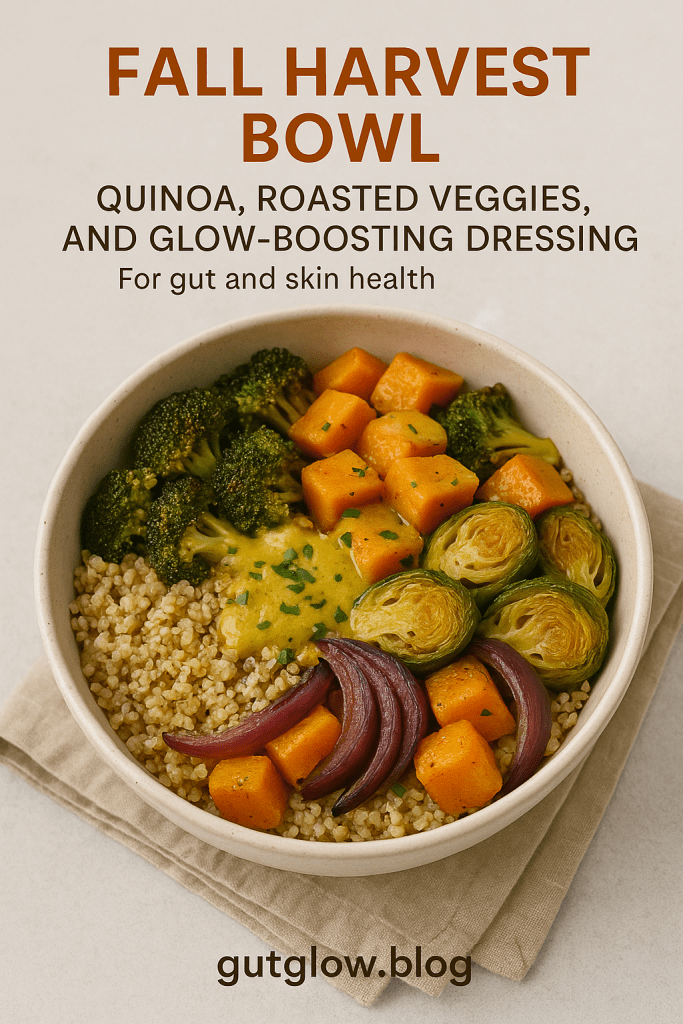
🥗Fall Harvest Bowl: Quinoa, Roasted Veggies & Glow-Boosting Dressing for Gut & Skin Health 🍂


Discover a nourishing Fall Harvest Bowl featuring quinoa, roasted veggies, and a glow-boosting dressing. Perfect for gut and skin health, with practical tips for adults 40+.


🍂 Fall Harvest Bowl: Nourish Your Gut, Glow Your Skin

As the leaves turn golden and the air crisps up, it’s the perfect time to cozy up with a bowl that not only warms you but also fuels your body with nutrients that support gut and skin health. Enter the Fall Harvest Bowl—a vibrant mix of quinoa, roasted vegetables, and a glow-boosting dressing.

Packed with fiber, antioxidants, and anti-inflammatory compounds, this bowl is a powerhouse for adults in their 40s and beyond, especially women navigating the changes that come with age.


🥗 Why This Bowl is a Game-Changer for Gut & Skin Health

🧬 The Power of Quinoa

Quinoa isn’t just a trendy grain—it’s a nutritional powerhouse. A 1-cup serving of cooked quinoa contains 5 grams of fiber, 8 grams of protein, and essential minerals like magnesium and iron Healthline. Its high fiber content supports digestive health by promoting regular bowel movements and feeding beneficial gut bacteria.

🌿 Roasted Vegetables: Nature’s Antioxidant Boost

Roasting vegetables like Brussels sprouts, sweet potatoes, and squash enhances their antioxidant properties. These antioxidants help combat oxidative stress, a contributor to skin aging. For instance, Brussels sprouts are rich in vitamin C, which is vital for collagen production and skin elasticity.

🥄 Glow-Boosting Dressing

A simple dressing made from olive oil, apple cider vinegar, and a touch of honey or maple syrup not only adds flavor but also provides healthy fats and anti-inflammatory compounds. Olive oil, rich in monounsaturated fats, supports skin hydration and elasticity.


🥄 How to Build Your Fall Harvest Bowl

Ingredients:

  • 1 cup quinoa
  • 1 cup Brussels sprouts, halved
  • 1 medium sweet potato, cubed
  • 1 cup squash (butternut or acorn), cubed
  • 1 tablespoon olive oil
  • Salt and pepper to taste
  • 1 tablespoon apple cider vinegar
  • 1 teaspoon honey or maple syrup
  • 1 tablespoon fresh rosemary, chopped

Instructions:

  1. Preheat Oven: Set your oven to 400°F (200°C).
  2. Prepare Vegetables: Toss Brussels sprouts, sweet potato, and squash with olive oil, salt, pepper, and rosemary. Spread them on a baking sheet.
  3. Roast: Bake for 25-30 minutes, stirring halfway through, until vegetables are tender and caramelized.
  4. Cook Quinoa: While vegetables roast, cook quinoa according to package instructions.
  5. Make Dressing: Whisk together apple cider vinegar, honey or maple syrup, and a pinch of salt.
  6. Assemble Bowl: In a bowl, layer quinoa, roasted vegetables, and drizzle with the dressing.

💡 Practical Tips for Enhancing Gut & Skin Health

  • Stay Hydrated: Aim for at least 8 glasses of water daily to support digestion and skin hydration.
  • Exercise Regularly: Incorporate both cardio and strength training to improve circulation and nutrient delivery to the skin.
  • Prioritize Sleep: Aim for 7-9 hours of quality sleep to allow your body to repair and regenerate.
  • Manage Stress: Practice mindfulness or yoga to reduce cortisol levels, which can impact both gut and skin health.

This Fall Harvest Bowl is more than just a meal—it’s a celebration of seasonal flavors that nourish your body from the inside out. By incorporating gut-friendly ingredients like quinoa and antioxidant-rich vegetables, you’re supporting your digestive health and promoting a radiant complexion.


Have you tried a Fall Harvest Bowl? Share your favorite ingredients or variations in the comments below! Let’s inspire each other to eat for health and glow.


⚠️ Disclaimer (Because I’m a Nurse, Not Your Nurse 😉): This blog is for general education and entertainment purposes only. Please consult with a healthcare professional before making any significant changes to your diet or lifestyle.


Don’t stop here – the best tips are just below ⬇️

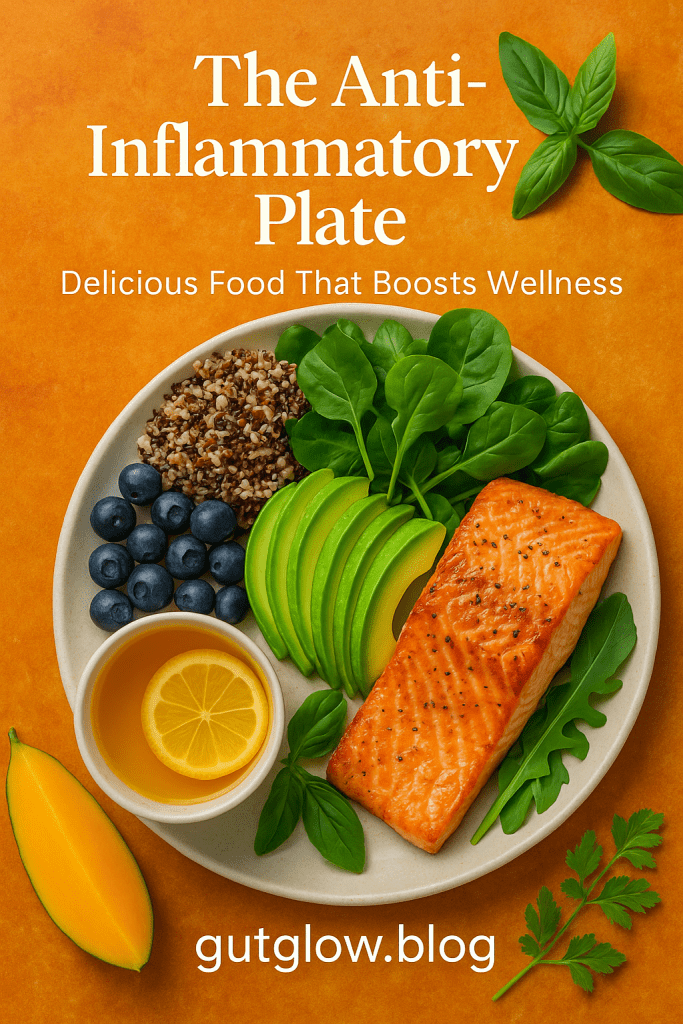
The Anti-Inflammatory Plate: Delicious Foods That Fight Inflammation and Boost Wellness 🥦✨

“Discover nurse-approved anti-inflammatory foods that support gut health, reduce inflammation, and promote glowing skin 🌿🥗. Your healing plate starts here!”


Ever notice how certain foods make you feel bloated, tired, or even trigger skin flare-ups? 😅 As a nurse with over 22 years of experience in wound, ostomy, and skin care, I can tell you: what you eat directly affects gut health, inflammation, and skin wellness.

Enter the anti-inflammatory plate—a simple, delicious way to eat your way to better digestion, glowing skin, and overall vitality. Research in Nutrients (2022) shows that diets rich in anti-inflammatory foods can reduce chronic inflammation, support gut microbiome diversity, and even improve skin elasticity.

Let’s break down my go-to anti-inflammatory foods and actionable tips to create a healing plate that works in real life (yes, even on busy weekdays 🥗✨).


🥦 What is an Anti-Inflammatory Diet?

An anti-inflammatory diet focuses on foods that reduce chronic inflammation in the body, which is often linked to:

  • Digestive issues (IBS, bloating)
  • Skin flare-ups (acne, eczema, rosacea)
  • Joint pain or stiffness
  • Low energy and premature aging

Glow tip:

I’ve seen countless patients improve gut and skin health simply by shifting to anti-inflammatory foods—no magic pills required.


🌱 Key Anti-Inflammatory Foods I Swear By

1. Leafy Greens

  • Spinach, kale, Swiss chard
  • High in magnesium, which helps calm inflammation
  • Packed with antioxidants for skin repair

2. Berries

  • Blueberries, strawberries, raspberries
  • Rich in polyphenols, fighting oxidative stress
  • Great for gut microbiome diversity

3. Fatty Fish

  • Salmon, sardines, mackerel
  • High in omega-3s, reducing inflammation and promoting glowing skin
  • Supports joint health

4. Nuts & Seeds

  • Walnuts, almonds, chia, flax
  • Provide healthy fats and fiber, improving digestion
  • Helps reduce inflammatory markers in the blood

5. Fermented Foods

  • Kefir, yogurt, kimchi, sauerkraut
  • Boost probiotics, balancing gut bacteria
  • Linked to reduced skin flare-ups (acne, eczema)

6. Herbs & Spices

  • Turmeric, ginger, garlic, cinnamon
  • Natural anti-inflammatory compounds
  • Easy to add to meals without extra calories

🥗 How to Build Your Healing Plate

  1. 50% vegetables & fruits → Mix colors for maximum nutrients
  2. 25% lean protein or fatty fish → Anti-inflammatory and satiating
  3. 25% whole grains or legumes → Fiber for gut health
  4. Add healthy fats & seeds → Olive oil, nuts, chia/flax
  5. Season with anti-inflammatory herbs & spices → Flavor + functional benefits

⚡ Gut Tip: Use meal prepping hacks to make anti-inflammatory meals quick and stress-free.


🌿 Lifestyle Habits That Boost Your Plate

  • Hydration 💧 → Supports digestion, skin elasticity, and detox pathways
  • Regular movement 🏃‍♀️ → Circulation boosts nutrient delivery and reduces inflammation
  • Stress management 🧘‍♀️ → Cortisol spikes can negate the benefits of anti-inflammatory foods
  • Sleep 😴 → Healing, skin repair, and hormone balance

🥄 Nurse-Approved Recipes & Snack Ideas

  • Berry + spinach smoothie with kefir and flax
  • Salmon salad with kale, walnuts, and olive oil dressing
  • Overnight oats with cinnamon, berries, and chia seeds
  • Kimchi and veggie stir-fry with turmeric-infused oil

Key Takeaways

  • Anti-inflammatory foods reduce inflammation, improve gut health, and support glowing skin.
  • Focus on colorful fruits, veggies, fatty fish, nuts, seeds, and fermented foods.
  • Small, consistent lifestyle habits amplify the benefits of your healing plate.

💬 What’s your favorite anti-inflammatory food or recipe? Share in the comments—I love swapping ideas!

⚠️ Disclaimer (Because I’m a Nurse, Not Your Nurse 😉): This blog is for general education and entertainment purposes only. Consult your healthcare provider before making major dietary changes.


Your next read is waiting… click below! ⬇️

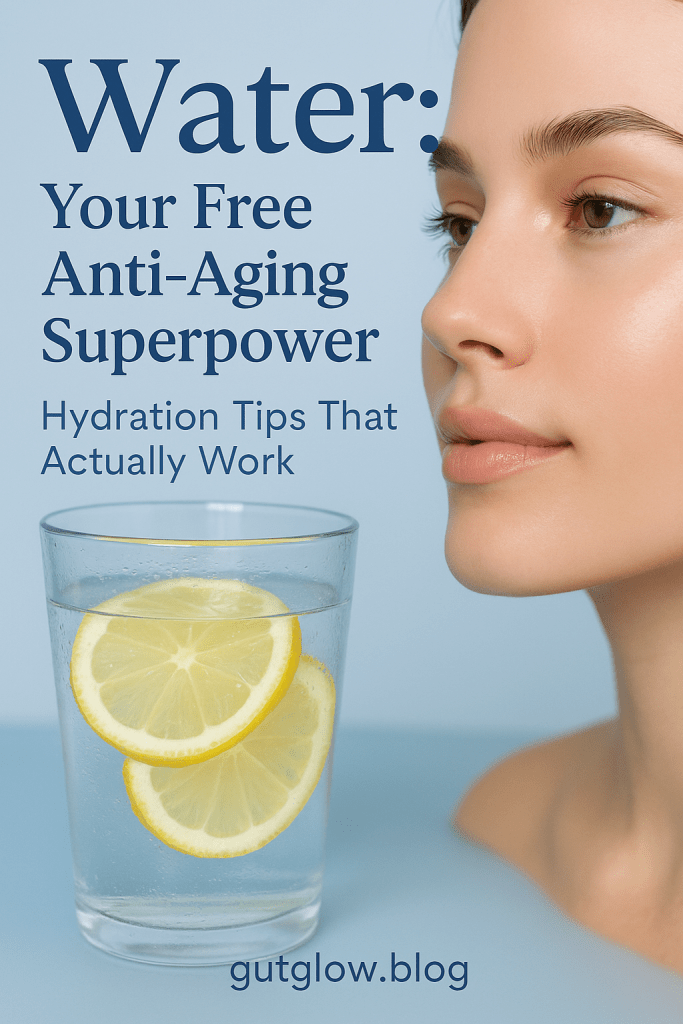
Water: 💦🌸 Your Free Anti-Aging Superpower (Hydration Tips That Actually Work) 🥤✨


“Hydration is your secret anti-aging weapon! 💦 Discover nurse-approved tips for glowing skin, gut health, and overall wellness with simple water habits.”


Ever notice your skin looks dull, tired, or even fine lines pop up after a week of skipping your usual water intake? 😅 You’re not imagining it—hydration is literally one of the most underrated anti-aging tools.

As a nurse with 22+ years of experience in skin, wound, and gut health, I can tell you: water isn’t just for quenching thirst. Proper hydration keeps your skin plump, supports digestion, regulates hormones, and even helps with detox pathways. Think of it as a free beauty elixir that works from the inside out.

A 2023 study in Clinical, Cosmetic and Investigational Dermatology confirmed that increased water intake improves skin elasticity and overall appearance, proving that drinking up is one of the simplest ways to fight the signs of aging.

Let’s dive into hydration habits that actually work—and the science behind why water is your skin’s best friend.


💧 Why Hydration Is Key for Skin & Anti-Aging

  • Elasticity & plumpness → Water keeps skin cells hydrated and reduces appearance of fine lines.
  • Supports collagen function → Proper hydration improves nutrient delivery to skin cells.
  • Flushes toxins → A well-hydrated body eliminates waste more efficiently, reducing inflammation and breakouts.

🥤 How Hydration Impacts Gut Health

  • Supports digestion → Water keeps bowel movements regular and aids nutrient absorption.
  • Balances microbiome → Hydrated digestive tract helps probiotics thrive.
  • Reduces bloating → Adequate water intake prevents fluid retention and digestive discomfort.

🌿 Nurse-Approved Hydration Tips That Actually Work

  1. Morning ritual → Start with 16 oz of water before coffee or breakfast.
  2. Infuse your water → Lemon, cucumber, or berries for flavor + antioxidants.
  3. Set reminders → Apps or alarms to avoid forgetting throughout the day.
  4. Hydrate with food → Include water-rich fruits and vegetables (cucumber, watermelon, oranges).
  5. Post-workout & evening hydration → Replace fluids lost in sweat; drink mindfully before bed.

✨ Extra Anti-Aging Hydration Hacks

  • Add electrolytes if you sweat → Keeps cells properly balanced.
  • Limit diuretics → Too much caffeine or alcohol can dehydrate skin.
  • Track your intake visually → Reusable water bottles with markers help you hit daily goals.

Key Takeaways

  • Water is a free, natural anti-aging tool.
  • Proper hydration improves skin, supports gut health, and reduces inflammation.
  • Small, consistent habits make a huge difference over time.

💬 How do you stay hydrated during busy days? Share your favorite tips below—I love swapping practical hacks!

⚠️ Disclaimer (Because I’m a Nurse, Not Your Nurse 😉): This blog is for general education and entertainment purposes only. Consult your healthcare provider before making major lifestyle changes.


Dive in for all the juicy details 🍓

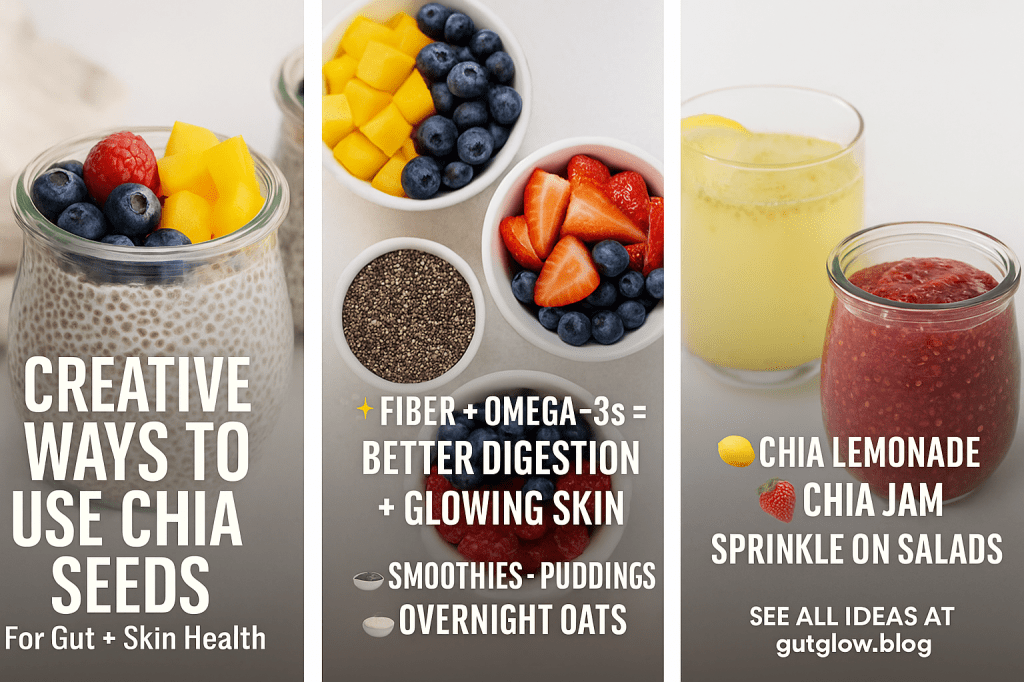
10 Creative Ways to Use Chia Seeds for Gut and Skin Health: Nurse-Approved Tips for Glowing Skin and Happy Digestion 🥣✨

Discover 10 nurse-approved ways to use chia seeds for gut health, glowing skin, and overall wellness. Easy recipes, tips, and research-backed benefits!

Ever wonder why chia seeds are hailed as a “superfood” beyond the trendy Instagram bowls? 🥣 As a nurse in my 40s with 22+ years in nursing, I’ve seen firsthand how gut health influences skin, energy, and overall wellness. Chia seeds may be tiny, but they pack a punch for digestion, hydration, and anti-aging benefits.

In this article, I’ll share 10 creative ways to use chia seeds to support your gut, calm inflammation, and promote healthy, glowing skin. Think of it as a nurse-approved guide to eating your way to a happier belly and radiant skin—without boring recipes or gimmicks!

1. Chia Seed Pudding – The Classic Gut Glow Breakfast

  • Why it works: Soaked chia seeds are rich in soluble fiber that supports healthy digestion and feeds your microbiome 🦠.
  • Mix 3 tbsp chia seeds with 1 cup unsweetened almond or oat milk, let sit overnight, add berries for antioxidants. 🥛
  • “I started my mornings with this pudding, and within a week, I noticed less bloating and smoother skin texture—goodbye morning puffiness!”

2. Smoothie Booster – Add a Spoonful for Skin & Gut

  • Blend 1–2 tbsp chia seeds into your morning smoothie.
  • Helps stabilize blood sugar, which can reduce acne flare-ups caused by insulin spikes.🍌🥬

3. Chia Egg – A Vegan Baking Hack 🥚

  • Mix 1 tbsp chia seeds + 3 tbsp water, let sit 10 mins = 1 egg replacement.
  • Adds fiber and omega-3s for gut-friendly baking.
  • Omega-3s can reduce systemic inflammation, improving skin conditions like eczema.

4. Chia-Infused Water – Hydration Hero 💧

  • Add 1 tsp chia seeds to a glass of water with lemon 🍋.
  • Seeds absorb water, keeping you hydrated longer, aiding skin elasticity.

5. Yogurt or Oat Topper

  • Sprinkle chia seeds on yogurt or oatmeal for a fiber and protein boost.
  • Supports beneficial gut bacteria and slows digestion to keep energy steady.

6. Homemade Energy Bars

  • Mix chia seeds with dates, nuts, and dark chocolate for gut-friendly snacks.
  • Great pre- or post-workout snack to support digestion and skin repair.

7. Chia Jam – No Sugar Needed 🍓

  • Cook berries + chia seeds for 10 mins = natural jam.
  • Keeps sugar low (reduces skin inflammation) while providing antioxidants for your glow.

8. Chia Seed Face Mask – Topical Benefits

  • Mix chia seeds with honey and yogurt for a gentle, anti-inflammatory mask.
  • Hydrates skin and calms redness.

9. Salad Booster – Crunch & Gut Love 🥬

  • Sprinkle chia seeds over salads for crunch + omega-3s.
  • Supports skin barrier health and gut flora.

10. Soup & Stew Thickener

  • Stir chia seeds into soups or stews to naturally thicken while adding fiber.
  • Promotes fullness and nourishes gut microbiome.

Chia seeds are small, but mighty 🌟. From breakfasts to skincare masks, these tiny seeds can make a big difference for digestion, inflammation, and glowing skin. Start with one or two ideas this week and see how your gut—and skin—responds!

💬 I’d love to hear from you: Have you tried chia seeds for your gut or skin? Which method is your favorite?

⚠️ Disclaimer (Because I’m a Nurse, Not Your Nurse 😉) This blog is for general education and entertainment purposes only. Always consult your healthcare provider before making significant changes to your diet or wellness routine.


Why Nurses Don’t Have Time to Poop (and How It Affects Our Gut) 💩⏰

Let’s just say it: nurses are the constipated heroes nobody talks about. We run on caffeine, adrenaline, and prayers. We can insert an IV during a code, chart with our elbows, and de-escalate a family meltdown at 140/90—but find time to poop? LOL. 😅

As a wound and ostomy care nurse in her 40s who is deeply in love with all things skin, gut, and “glow from the inside,” I’m here to shine a (well-moisturized) light on a truth many of us live but rarely talk about:

🚽 Nurses don’t poop. And it’s messing with our gut.


The Shift is Long, But the Colon Is Patient… Until It’s Not 🕒

Let’s be real. Between med passes, dressing changes, call lights, short staffing, and family updates, taking a moment to pee is an Olympic event—let alone finding a quiet five minutes to drop the kids off at the pool. So we do what we always do:

We hold it.
And hold it.
And… well, now we’re bloated and cranky and haven’t gone since Sunday. 🫠


What Happens When You Chronically “Hold It”?

1. Sluggish Motility = Constipation Party 🎉 (But You’re Not Invited)

Your colon is like a conveyor belt. When it slows down, waste sits longer, gets drier, and turns into something that deserves its own horror movie. Not only is it uncomfortable—it affects your whole digestive system.

2. Skin Flare-Ups from Gut Drama 😬

Yep, the gut-skin connection strikes again! When waste builds up, toxins don’t exit efficiently. That internal traffic jam can show up externally—think breakouts, dullness, rashes, and inflammation.

3. Hormonal Disruption & Cortisol Chaos 🔥

When your gut is backed up, stress hormones love to pile on. Your already-busy nurse brain is now riding a hormonal rollercoaster, complete with bloating, mood swings, and fatigue. Cute!

4. Microbiome Mayhem 🦠

Delaying bowel movements can throw your gut flora out of whack. That healthy bacteria you worked so hard to cultivate (hello, probiotics)? They’re not thrilled. It’s like skipping watering your plants and wondering why they’re sad.


The Nurse Gut Survival Guide 💡

Here’s what I (try to) do to stay regular in the world of 12s and no breaks:

🚰 Hydrate Like You’re Getting Paid For It

Water is a nurse’s best friend. Aim for at least 8 cups—even if it means timing it with your charting or shift huddles.

🥦 Fiber Is Your BFF

Sneak in fiber-rich snacks—chia pudding, apples, hummus and veggies, or even a high-fiber protein bar stashed in your bag like a secret weapon.

🚶‍♀️ Movement Matters

Even if it’s just walking laps around the unit or doing squats while waiting on pharmacy (don’t knock it!), keep things moving.

🧘‍♀️ Relax Your Nervous System

Stress literally shuts down digestion. Try deep breathing in the med room, stretching, or playing music on your commute to switch off the cortisol faucet.

💩 Make Time to Poop (Seriously)

Normalize taking five minutes. Yes, the unit might survive without you for 300 seconds. You can’t pour from an empty cup—or poop with a full colon. 😉


Bottom Line? Don’t Ignore Your Bottom 🧻❤️

Holding your poop for 13-hour shifts isn’t just uncomfortable—it’s a slow sabotage of your gut, skin, and sanity. Nurses are incredible, but we’re also human. Let’s start treating ourselves with the same care we give our patients.

Your colon—and your complexion—will thank you.


⚠️ Disclaimer (Because I’m a Nurse, Not Your Nurse 😉)
This blog is for general education and entertainment purposes only. Always consult with your doctor, dietitian, dermatologist, or wound/ostomy care specialist—especially if you have specific conditions, allergies, or a medical device like an ostomy.

Magnesium, Motility & Morning Poops: My Favorite Gut Routine


Because no one should start their day feeling full of 💩

Let’s be honest—there are few things as satisfying as that first glorious morning poop. If you’re over 40 (like me), a nurse (also me), and obsessed with skin, gut health, and all things digestive, then you know: regular poops are a form of self-care.

Over my 22 years as a nurse—and especially as a wound and ostomy care specialist—I’ve had a front-row seat to all kinds of gut drama. And guess what? A lot of it could be greatly improved by a solid routine, some magnesium magic, and a little TLC (tender loving care) for your gut motility.

So here’s my favorite gut routine, nurse-tested and life-approved.


💊 First Up: Why Magnesium

Magnesium isn’t just for sore muscles or leg cramps at 2 a.m. It’s a gut health powerhouse. Think of it as the chill friend who helps your intestines move things along without drama.

Types of Magnesium (Because It’s Not All the Same):

  • Magnesium Citrate – Great for promoting bowel movements. Perfect if you’re feeling a little… backed up.
  • Magnesium Glycinate – Gentle and calming. Supports relaxation and sleep but also helps the bowels over time.
  • Magnesium Oxide – Less absorbable but draws water into the colon (hello, softer stools!).

🔍 Nurse Tip: Always start low and go slow. Too much and you’ll go from “constipated” to “clear-out-the-room” real fast.


⏰ Timing is Everything

Morning poops are more than convenient—they’re biologically ideal. Your gut is most active after waking, especially after food hits your stomach. This is called the gastrocolic reflex—a fancy way of saying: “Your colon wants to get moving once breakfast arrives.”

My Morning Gut Routine:

  1. Hydrate Like You Mean It
    First thing: big glass of warm water with lemon. Bonus points if you add a pinch of sea salt or a splash of apple cider vinegar.
    💧 Hydration = happy bowels.
  2. Magnesium (the night before!)
    I take my magnesium glycinate or citrate before bed so my colon can wake up ready to rock.
  3. Move It, Don’t Lose It
    Light stretching or a walk can help stimulate motility. Sometimes just standing in front of your coffee machine counts.
  4. Fiber + Fat Breakfast Combo
    Think oats + chia + nut butter OR avocado toast with seeds. This combo wakes up the gut and your skin.
  5. Deep Breaths, No Rushing
    Stress shuts digestion down. Take a minute. Sit down. Poop in peace.

🧠 Gut Motility & Your Skin? Oh Yes.

Here’s where my skincare nerd side comes out: When your gut is slow, your skin shows it. Constipation leads to toxin build-up, and your body will try to detox however it can—including your face. Hello breakouts, dullness, and inflamed skin.

Good gut flow = glowing skin. It’s that simple.


💩 Stool Goals

You want a smooth, soft, easy-to-pass sausage. (Yes, I said it.)

✅ Not too hard
✅ Not too loose
✅ Ideally in the morning
✅ Once or twice a day

If you’re skipping days, pushing too hard, or living in the land of rabbit pellets, it’s time to rethink your gut routine.


Final Thought From This Poop-Obsessed Nurse:

Magnesium might not be glamorous, but it works. Pair it with hydration, movement, and mindful meals, and you’ll be amazed what your gut—and your skin—can do. Don’t wait until things get sluggish to start caring about motility.

Because, let’s be real: You deserve better than coffee, stress, and crossed fingers.

Your morning poop is a sacred ritual. Protect it at all costs.


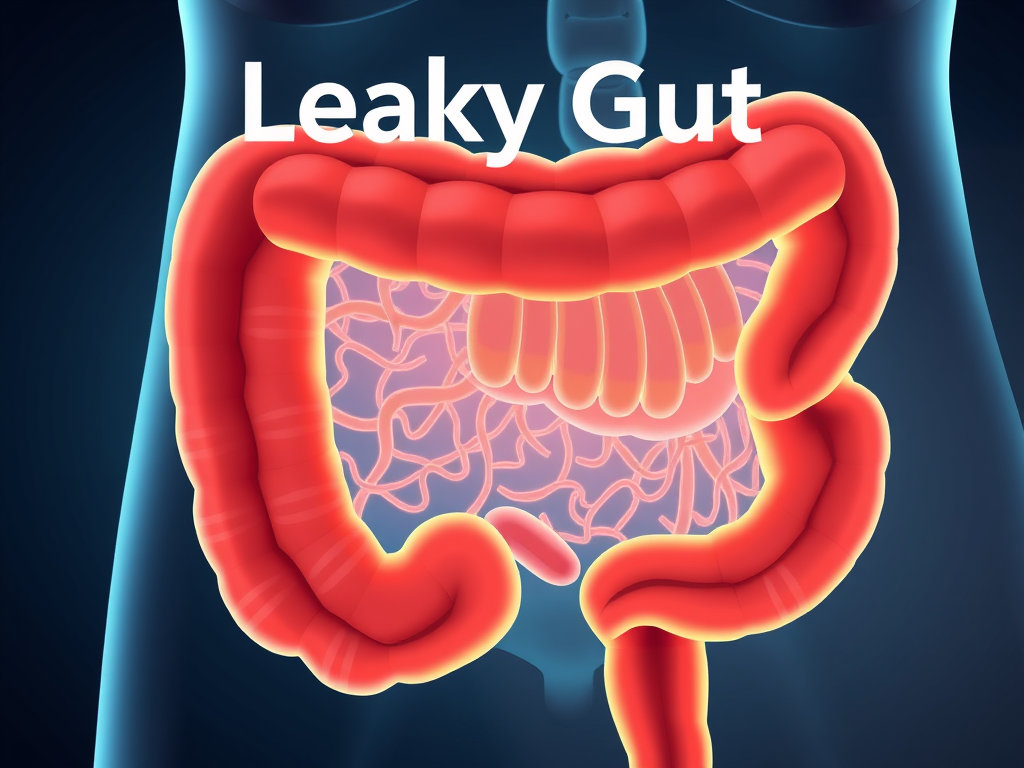
Leaky Gut: Trendy Diagnosis or Real Problem?

From the desk of a nurse who talks poop professionally

Let’s cut to the cheese (because dairy might be triggering your gut, but we’ll get there): Is “leaky gut” just the latest health buzzword, or is your digestive system actually betraying you one cell at a time?

As a nurse with 22 years of experience—who now spends her days talking about guts, wounds, ostomies, and everything in between—I’ve heard “leaky gut” tossed around more than a salad at a wellness retreat. So, let’s break it down in plain speak, minus the fear-mongering and plus a whole lot of real talk.


What Even Is Leaky Gut?

Leaky gut—also known in the science world as increased intestinal permeability—is when the lining of your intestines becomes damaged or inflamed. Normally, your gut lining is like a super-selective bouncer at a VIP club: it lets the good stuff (nutrients, water) in and keeps the riffraff (toxins, undigested food, bad bacteria) out.

When it becomes “leaky,” it’s like the bouncer got tired, took a nap, and now anyone can stroll into the bloodstream. Cue: inflammation, bloating, fatigue, skin breakouts, brain fog, and the dreaded poop problems.


Is It Real or Just Really Instagrammable?

Here’s the deal—leaky gut is real, but it’s not officially recognized as a diagnosis by all mainstream medical communities. Why? Because it’s tricky to prove directly in humans, and many of its symptoms mimic other conditions like IBS, food sensitivities, or even chronic stress.

But from my nurse perspective? I believe it’s a red flag. Not just a TikTok trend. When someone comes in with mystery rashes, chronic bloating, or poops that range from rabbit pellets to Niagara Falls, I start thinking gut barrier.


Signs Your Gut Might Be Leaking More Than Gossip

  • Bloating after every meal (no, it’s not just “getting older”)
  • Food sensitivities that didn’t used to be a thing
  • Fatigue no matter how many B12 shots you get
  • Skin issues: eczema, acne, or mystery breakouts
  • Frequent colds or “meh” immune function
  • Poop problems (constipation, diarrhea, or both on rotation)
  • Brain fog or mood swings that come out of nowhere

What Can You Actually Do About It?

I’m glad you asked. (Or maybe you didn’t, but I’m answering anyway.)

🥦 Eat Real Food

Minimize processed stuff. Think fiber-rich foods (veggies, fruits, whole grains), bone broth, and fermented foods like kimchi and kefir. Your gut bugs LOVE that stuff.

🚫 Avoid Gut Saboteurs

Common culprits? Excess sugar, alcohol, NSAIDs (like ibuprofen), and chronic stress. Yes, stress messes with your poop. Science backs me on this.

💊 Consider Supplements

Zinc, L-glutamine, collagen, and probiotics are often used to help support gut lining repair. Talk to your provider before adding a cart full of Amazon supplements, though.

💧 Hydrate Like It’s Your Job

Because it is your job—if you want better poops, better skin, and better energy.

🧘‍♀️ Chill the Heck Out

Stress is a major gut-wrecker. Meditation, yoga, deep breathing, or just screaming into a pillow in the supply closet (nurses, I see you)—whatever works.


So… Should You Panic?

Nah. Don’t panic. But don’t ignore your gut either.
If you’ve got skin flare-ups that won’t quit, poop that’s unpredictable, or you’re feeling “off” in ways that labs can’t explain—your gut might be trying to tell you something. And as your friendly, wound-and-gut-loving nurse in her 40s, I say: listen.

You don’t have to go full kale-smoothie-cleanse (please don’t), but you do need to take your gut health seriously. Because when your gut’s not happy, your skin, mood, and poop will absolutely snitch on it.


Nurse’s Final Note:

You can’t slap a collagen cream on a leaky gut. Skin glow starts inside—and yes, it often begins with your poop. 💩


Want more gut-friendly tips, recipes, or just a good laugh about poop and wrinkles?
Subscribe to the blog and stay weirdly well-informed.


Where Skin Deep Starts From Within: Unlock Radiant Skin Through Gut Health 🌿✨


Discover how gut health impacts your skin. Learn nurse-approved tips, gut-friendly foods, and wellness habits for glowing, clear skin from the inside out.


Let’s be honest—if your skin is acting up, your first thought is probably a new serum or a fancy face mask. But what if the real culprit isn’t sitting on your bathroom counter but deep inside your gut?

Your gut is home to trillions of microbes that affect everything from digestion and immunity to mood and, yes, skin health. As a nurse with 22+ years of wound care experience, I’ve seen firsthand how a balanced gut can be a game-changer for skin. Welcome to Gut Glow, where radiant skin truly starts from within. 🌿✨


The Gut-Skin Connection

Your gut and skin are in constant conversation, known as the gut-skin axis. When your microbiome is out of balance due to stress, poor diet, or antibiotics, inflammation can occur—showing up as breakouts, redness, dryness, or dullness.

Glow Tip: Supporting your gut can improve skin tone, texture, and hydration.


Nurse-Approved Tips for a Healthy Gut & Glowing Skin

1. Fiber Is Your Best Friend

Fiber nourishes your beneficial gut bacteria and keeps digestion running smoothly. Aim for:

  • Oats
  • Lentils
  • Apples
  • Chia seeds
  • Leafy greens

💡 Glow Tip: Add fiber gradually to avoid bloating and help your microbiome adapt.


2. Embrace Fermented Foods

Probiotics help balance gut bacteria, reducing inflammation that can manifest as skin issues. Include:

  • Yogurt & kefir
  • Kimchi & sauerkraut
  • Miso & tempeh

Quick Hack: Start with small portions to let your gut adjust.


3. Hydrate Strategically

Water supports digestion, nutrient absorption, and overall skin hydration. Try:

  • Drinking a full glass upon waking
  • Herbal teas like peppermint or ginger
  • Limiting sugary drinks

💧 Tip: Hydration inside = glow outside.


4. Manage Stress Mindfully

Stress increases cortisol, which can disrupt gut function and trigger skin inflammation. Strategies:

  • Daily 5–10 minute breathing exercises
  • Short walks during breaks
  • Journaling or meditation

🧘 Nurse’s Tip: Your gut appreciates calm as much as fiber.


5. Mind Your Meals:

Chew slowly, eat smaller portions, and include nutrient-dense foods to reduce bloating and improve digestion. Focus on:

  • High-fiber vegetables
  • Healthy fats like avocado and olive oil
  • Lean proteins

🌀 Glow Tip: Your skin reflects your digestive efficiency. Eat like your glow depends on it—because it does.


Foods That Feed Your Gut (and Skin)

  • Leafy Greens – rich in fiber and antioxidants for gut and skin health
  • Berries – antioxidant-rich to combat oxidative stress
  • Avocados – healthy fats for gut lining and skin hydration
  • Sweet Potatoes – beta-carotene supports vitamin A for skin repair
  • Fermented Foods – probiotics for a balanced microbiome
  • Yogurt & Kefir – reduce inflammation and support gut balance
  • Nuts & Seeds – fiber and healthy fats to nourish gut and skin

💚 Fun Fact: Eating a variety of colorful foods keeps both your gut bacteria and skin happy.


Lifestyle Habits That Support Gut-Skin Health

  • Regular Movement: Boosts digestion and circulation
  • Sleep: Restores gut and skin health
  • Limit Ultra-Processed Foods: Excess sugar and additives feed bad bacteria
  • Track Your Gut: Journaling meals and symptoms helps identify triggers

Your skin is more than a reflection of beauty products—it’s a mirror of your gut health. Feed your microbiome, manage stress, hydrate, and embrace gut-friendly foods. Over time, your skin will thank you with radiance and resilience.

Your Next Step: Start with one small change today—maybe a probiotic-rich breakfast or a 5-minute breathing session. Then watch the glow unfold.

⚠️ Disclaimer (Because I’m a Nurse, Not Your Nurse 😉) This blog is for general education and entertainment purposes only. Always consult a healthcare professional before making major changes to your diet or supplements.


Keep reading to unlock the full scoop 👀