
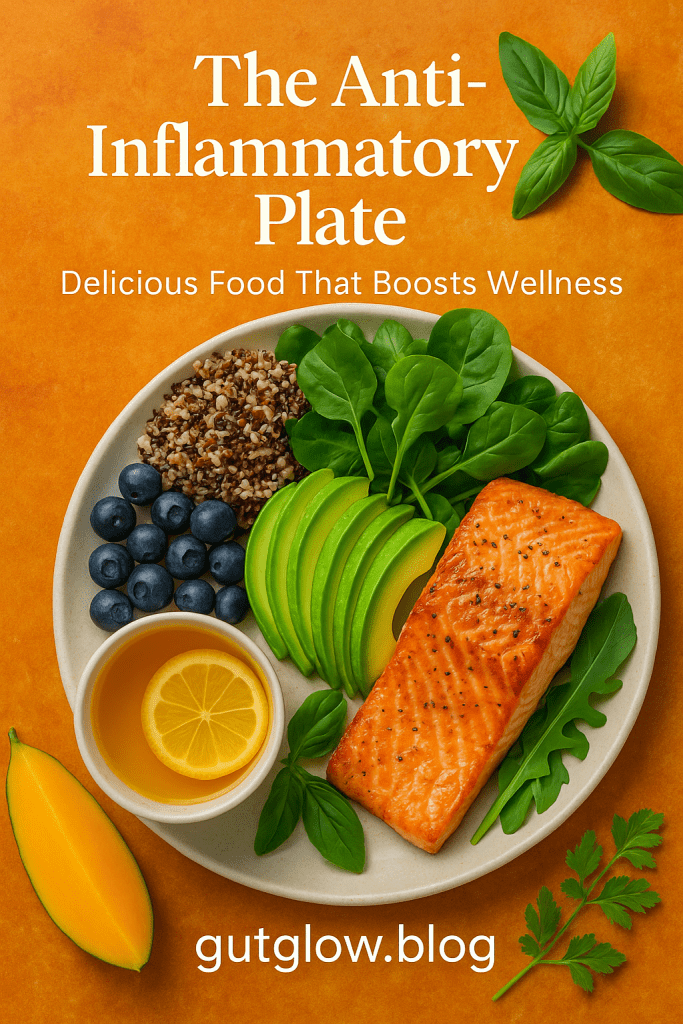
The Anti-Inflammatory Plate: Delicious Foods That Fight Inflammation and Boost Wellness 🥦✨

“Discover nurse-approved anti-inflammatory foods that support gut health, reduce inflammation, and promote glowing skin 🌿🥗. Your healing plate starts here!”


Ever notice how certain foods make you feel bloated, tired, or even trigger skin flare-ups? 😅 As a nurse with over 22 years of experience in wound, ostomy, and skin care, I can tell you: what you eat directly affects gut health, inflammation, and skin wellness.

Enter the anti-inflammatory plate—a simple, delicious way to eat your way to better digestion, glowing skin, and overall vitality. Research in Nutrients (2022) shows that diets rich in anti-inflammatory foods can reduce chronic inflammation, support gut microbiome diversity, and even improve skin elasticity.

Let’s break down my go-to anti-inflammatory foods and actionable tips to create a healing plate that works in real life (yes, even on busy weekdays 🥗✨).


🥦 What is an Anti-Inflammatory Diet?

An anti-inflammatory diet focuses on foods that reduce chronic inflammation in the body, which is often linked to:

  • Digestive issues (IBS, bloating)
  • Skin flare-ups (acne, eczema, rosacea)
  • Joint pain or stiffness
  • Low energy and premature aging

Glow tip:

I’ve seen countless patients improve gut and skin health simply by shifting to anti-inflammatory foods—no magic pills required.


🌱 Key Anti-Inflammatory Foods I Swear By

1. Leafy Greens

  • Spinach, kale, Swiss chard
  • High in magnesium, which helps calm inflammation
  • Packed with antioxidants for skin repair

2. Berries

  • Blueberries, strawberries, raspberries
  • Rich in polyphenols, fighting oxidative stress
  • Great for gut microbiome diversity

3. Fatty Fish

  • Salmon, sardines, mackerel
  • High in omega-3s, reducing inflammation and promoting glowing skin
  • Supports joint health

4. Nuts & Seeds

  • Walnuts, almonds, chia, flax
  • Provide healthy fats and fiber, improving digestion
  • Helps reduce inflammatory markers in the blood

5. Fermented Foods

  • Kefir, yogurt, kimchi, sauerkraut
  • Boost probiotics, balancing gut bacteria
  • Linked to reduced skin flare-ups (acne, eczema)

6. Herbs & Spices

  • Turmeric, ginger, garlic, cinnamon
  • Natural anti-inflammatory compounds
  • Easy to add to meals without extra calories

🥗 How to Build Your Healing Plate

  1. 50% vegetables & fruits → Mix colors for maximum nutrients
  2. 25% lean protein or fatty fish → Anti-inflammatory and satiating
  3. 25% whole grains or legumes → Fiber for gut health
  4. Add healthy fats & seeds → Olive oil, nuts, chia/flax
  5. Season with anti-inflammatory herbs & spices → Flavor + functional benefits

⚡ Gut Tip: Use meal prepping hacks to make anti-inflammatory meals quick and stress-free.


🌿 Lifestyle Habits That Boost Your Plate

  • Hydration 💧 → Supports digestion, skin elasticity, and detox pathways
  • Regular movement 🏃‍♀️ → Circulation boosts nutrient delivery and reduces inflammation
  • Stress management 🧘‍♀️ → Cortisol spikes can negate the benefits of anti-inflammatory foods
  • Sleep 😴 → Healing, skin repair, and hormone balance

🥄 Nurse-Approved Recipes & Snack Ideas

  • Berry + spinach smoothie with kefir and flax
  • Salmon salad with kale, walnuts, and olive oil dressing
  • Overnight oats with cinnamon, berries, and chia seeds
  • Kimchi and veggie stir-fry with turmeric-infused oil

Key Takeaways

  • Anti-inflammatory foods reduce inflammation, improve gut health, and support glowing skin.
  • Focus on colorful fruits, veggies, fatty fish, nuts, seeds, and fermented foods.
  • Small, consistent lifestyle habits amplify the benefits of your healing plate.

💬 What’s your favorite anti-inflammatory food or recipe? Share in the comments—I love swapping ideas!

⚠️ Disclaimer (Because I’m a Nurse, Not Your Nurse 😉): This blog is for general education and entertainment purposes only. Consult your healthcare provider before making major dietary changes.


Your next read is waiting… click below! ⬇️

10 Creative Ways to Use Flax Seeds for Skin and Gut Health 🥗✨

From smoothies to baked goods, explore 10 nurse-approved ways to incorporate flax seeds into your diet for better digestion and radiant skin.

Ever wondered why your skin sometimes looks dull despite eating “healthy”? Or why your digestion feels off after a seemingly balanced meal? 😩

As a nurse in my 40s with 22+ years of wound and skin care experience, I’ve seen the gut-skin connection play out in real time. What you eat directly impacts how your skin looks, how your digestion functions, and how your energy flows. Enter flax seeds—tiny nutritional powerhouses that are game-changers for both your gut and your skin.

From adding them to smoothies to baking them into treats, these seeds are versatile, nutritious, and nurse-approved. 🩺✨


Why Flax Seeds Are a Gut & Skin Superfood

Rich in Fiber for Digestive Health

Flax seeds are loaded with soluble and insoluble fiber, which helps regulate bowel movements, feed your good gut bacteria, and prevent bloating. A healthy gut often translates to calmer, clearer skin. 🦠

💡 Smart hacks: Start with 1–2 tablespoons of ground flax seeds daily. Sprinkle them on yogurt, salads, or oats.

Omega-3s for Anti-Inflammatory Support

Flax seeds are one of the best plant-based sources of ALA omega-3 fatty acids, which help reduce inflammation in the gut and skin. Chronic inflammation can worsen acne, eczema, and redness.

💡 Smart hacks: Pair flax seeds with vitamin C-rich foods like berries or citrus to enhance antioxidant absorption. 🍓🍊

Lignans for Hormonal & Skin Balance

Flax seeds are a powerhouse of lignans—phytoestrogens that support hormone balance. Balanced hormones = fewer hormonal breakouts and improved skin elasticity.


10 Creative Ways to Use Flax Seeds

1. Morning Smoothies 🥤

Blend 1–2 tablespoons of ground flax seeds into your smoothie for fiber, omega-3s, and a silky texture. Try pairing with banana, spinach, and a scoop of protein powder.

2. Overnight Oats 🌙

Add flax seeds to your overnight oats for gut-friendly fiber and skin-loving nutrients. Bonus: they help keep you full longer!

3. Yogurt or Chia Parfaits 🍓

Sprinkle ground flax seeds on yogurt or chia pudding. Add fresh fruit and a drizzle of honey for a delicious, anti-inflammatory snack.

4. Homemade Energy Balls ⚡

Mix flax seeds with dates, nuts, and cocoa powder to create portable, nutrient-packed snacks. Perfect for gut health on the go.

5. Salads & Grain Bowls 🥗

Top salads or quinoa bowls with a tablespoon of flax seeds for crunch, fiber, and omega-3s.

6. Baking Boost 🍪

Replace part of your flour with ground flax seeds in muffins, pancakes, or bread. They add moisture, fiber, and a nutty flavor.

7. Flaxseed Crackers 🥖

Mix flax seeds with water, seasonings, and bake into crispy crackers—a crunchy way to support your digestion.

8. Smoothie Bowls & Acai 🍌

Blend flax seeds into your smoothie bowls for extra nutrients and a subtle nutty taste. Top with berries, coconut flakes, or cacao nibs.

9. Soups & Stews 🍲

Stir ground flax seeds into soups or stews as a thickener and nutrient booster. They’re flavor-neutral and gut-friendly.

10. Egg Substitute in Baking 🥚

Use 1 tablespoon ground flax + 3 tablespoons water as a vegan egg replacement in recipes. Great for gut-conscious, skin-supportive baking!

💡 Smart hacks: Always grind flax seeds before use. Whole flax seeds can pass through the digestive system without releasing their full nutrient benefits.


Practical Tips for Maximum Benefits

  • Stay Hydrated: Fiber works best with water. Aim for 8–10 glasses daily. 💧
  • Start Slowly: Too much flax too quickly can cause bloating. Begin with 1 tablespoon and work up.
  • Pair with Probiotics: Yogurt, kefir, or fermented foods help your gut fully utilize flax’s benefits.
  • Consistency is Key: Daily incorporation = healthier gut + glowing skin over time. ✨

Flax seeds are small but mighty. From smoothies to baked goods, adding them to your diet is an easy, nurse-approved way to support your gut-skin connection. 🦠💖

-You can also grind flax seeds and add them to oatmeal, pancakes, smoothies or sprinkle to salads.

What’s your favorite way to use flax seeds? Share in the comments or try one of these 10 recipes this week!

⚠️ Disclaimer (Because I’m a Nurse, Not Your Nurse 😉): This blog is for general education and entertainment purposes only. Consult your healthcare provider before making major dietary changes.


Read more on this topic: