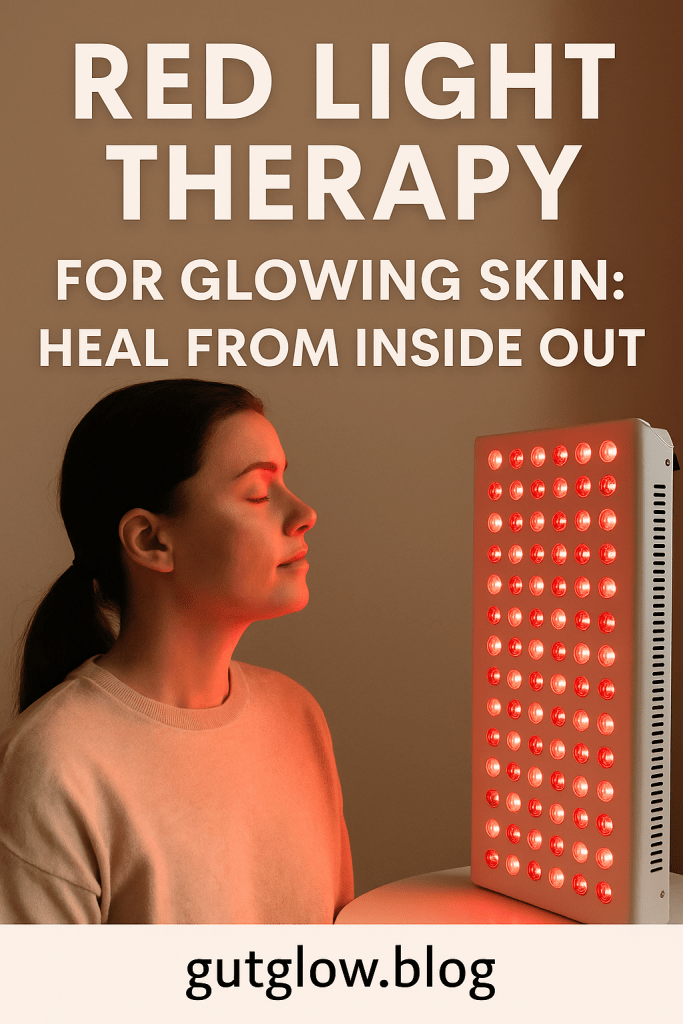
Red Light Therapy for Glowing Skin: Boost Collagen, Calm Inflammation, and Heal from the Inside Out 🔴✨

Discover how red light therapy boosts collagen, repairs skin, and calms inflammation. Nurse-approved tips for glowing skin and a stronger gut-skin connection.


Ever looked in the mirror after a stressful week and thought, “Why does my skin look like it aged five years overnight?” 😩 You’re not alone. As a nurse in my 40s with 22+ years of wound and skin care experience, I’ve seen firsthand how our skin tells the story of what’s happening inside our bodies.

One therapy that’s been getting serious attention in both dermatology clinics and wellness circles is red light therapy (RLT). From collagen production to gut-skin harmony, it’s not just hype—it’s science-backed. A 2021 review in Seminars in Cutaneous Medicine and Surgery highlighted how red and near-infrared light can improve wound healing, reduce inflammation, and stimulate collagen (Goldberg, 2021).

So, let’s talk about how this glowing red light can help you glow from the inside out. ✨


What Exactly is Red Light Therapy? 🔴

RLT uses specific wavelengths of red and near-infrared light to penetrate the skin at different depths. Unlike UV light, it’s not damaging. Instead, it energizes your cells’ mitochondria (aka your body’s battery packs) so they can repair and rejuvenate more efficiently.

Nurse Translation:

Think of RLT as a gentle recharge for your skin and gut cells—like plugging in your phone before the battery dies. 🔋


Skin Benefits: From Collagen to Calmer Skin ✨

1. Collagen Boosting

Collagen is the protein that keeps skin firm and youthful. Starting in your 30s, collagen production drops 1–2% each year (Shuster et al., British Journal of Dermatology, 1975). Red light therapy stimulates fibroblasts, the cells responsible for collagen production, which can reduce wrinkles and improve elasticity.

2. Calming Inflammation

Chronic inflammation is the villain behind acne, rosacea, and even premature aging. A 2017 study in Lasers in Medical Science showed significant improvements in acne severity with regular red light therapy (Lee et al., 2017).

3. Supporting Wound Healing

As a wound care nurse, I love this one! RLT has been shown to accelerate tissue repair and reduce scar formation.

👉 To do: Add RLT to your skincare routine 3–5 times a week for 10–20 minutes. Pair it with a barrier-supporting moisturizer for best results.


The Gut-Skin Connection and Red Light Therapy 🦠

We talk a lot about the gut-brain-skin axis here, and RLT plays a surprising role.

  • Anti-inflammatory Effects: RLT lowers systemic inflammation, which can ease gut irritation and skin flare-ups.
  • Improved Circulation: Better blood flow means nutrients reach your gut lining and skin barrier more effectively.
  • Stress Reduction: Some studies suggest light therapy helps regulate circadian rhythm, improving sleep (and we know poor sleep = cranky gut + dull skin).

📌 Research spotlight: A 2020 article in Photobiomodulation, Photomedicine, and Laser Surgery found that RLT improved gut microbiota balance in animal models, suggesting potential benefits for humans (Yu et al., 2020).

👉 To do: Combine RLT with gut-friendly foods like kefir, chia seeds, and leafy greens to maximize the glow-up from the inside out.


Practical Tips for Using Red Light Therapy 💡

  • At Home Devices: Look for FDA-cleared panels or masks. Consistency is more important than intensity.
  • Timing: Best used in the evening—it mimics sunset and can promote melatonin production.
  • Skincare Pairings: Apply RLT on clean, bare skin. Follow with hydrating serums or ceramide creams.
  • Gut-Skin Routine: Pair your RLT time with sipping green tea or a probiotic smoothie—two habits, one glow. ✨

Nurse’s Notes: Real Talk 🩺

I started using RLT during the pandemic (because who didn’t buy random wellness gadgets in 2020?). To my surprise, my skin looked calmer, and even my digestion felt smoother on weeks I was consistent. Could it all be placebo? Maybe. But the science + personal experience combo makes me a believer.

What about you—have you tried RLT yet? 🔴


Conclusion

Red light therapy isn’t a magic wand, but it’s a powerful tool to support your skin and gut health naturally. By boosting collagen, calming inflammation, and enhancing your body’s repair systems, it helps you glow from the inside out.

⚠️ Disclaimer (Because I’m a Nurse, Not Your Nurse 😉): This blog is for general education and entertainment purposes only. Always consult your healthcare provider before starting new therapies.


You might also like:

🥄 Glow from the Pantry: DIY Face Scrub Recipes Backed by Gut-Skin Science


Whip up nurse-approved DIY face scrubs with gut-loving ingredients like oats, turmeric, and yogurt. These skin-brightening recipes support your barrier and your microbiome—for beauty that starts in your gut.


Skincare You Can Snack On (Almost) 🍯

Let’s talk scrubs.
Not the ones you wear to work—though shoutout to comfy workwear—but the kind you slather on your face, made from things you probably already have in your kitchen.

As a wound and ostomy nurse in my 40s (with a soft spot for skincare, gut health, and a solid poop chart), I’ve seen how what we eat—and even what we apply—can impact not just our glow, but our gut-skin barrier. That’s why today’s post is extra special: we’re combining DIY self-care, self-love, clinical skin barrier love, and gut-friendly foods into one juicy blog.


🧠 Gut-Skin Science: Why DIY Scrubs Work from the Inside Out

Here’s the tea (or should I say turmeric tonic):
Your skin is a mirror of your gut. When your microbiome is thriving, your skin reflects it with fewer breakouts, reduced inflammation, and smoother texture.

A study in the Journal of Dermatological Science (2023) showed that gut dysbiosis (imbalanced gut bacteria) contributes to conditions like acne, rosacea, and eczema, and external barrier disruptions can worsen them.

✨ So, combining gentle topical exfoliants (like oats) with gut-loving ingredients (like yogurt and honey) gives you the inside-out glow-up.


🥣 My “Why” – Nurse, Skin Nerd, and Bloat-Free Glow Seeker

Years ago, my skin was inflamed, patchy, and dry. I was trying all the serums, all the cleansers—but nothing worked until I:

  • Healed my gut
  • Simplified my skincare
  • Made my first oat + turmeric scrub from pantry staples

That combo changed everything. My skin stopped freaking out, and my confidence skyrocketed. Now, I’m all about sharing real solutions that don’t require a $150 serum. Just science, softness, and a spoonful of probiotics.


🧽 Let’s Get Scrubbing: 3 DIY Face Scrubs That Feed Your Skin (and Gut)


1. 🥄 Oat + Yogurt Glow Scrub

Best For: Dry, sensitive, or barrier-compromised skin

Why it Works:

  • Oats calm irritation and gently exfoliate
  • Yogurt provides probiotics to support the skin microbiome
  • Honey locks in moisture and fights bacteria

✨ Recipe:

  • 2 tbsp ground oats (or instant oats blitzed in a blender)
  • 1 tbsp plain Greek yogurt (full-fat preferred)
  • 1 tsp raw honey

Mix, massage onto damp skin in circular motions for 30 seconds, and rinse.

➕ Gut Perk:

Eat your yogurt and oats, too! Both are rich in prebiotics and probiotics, which help improve digestion and reduce skin-triggering inflammation.


2. 🌿 Coffee + Turmeric Brightening Scrub

Best For: Dull, tired, or acne-prone skin

Why it Works:

  • Coffee grounds increase circulation and exfoliate dead skin
  • Turmeric reduces inflammation and brightens
  • Coconut oil nourishes and soothes

✨ Recipe:

  • 1 tbsp used coffee grounds
  • ½ tsp turmeric
  • 1 tbsp melted coconut oil

Apply gently (avoid white towels!) and let sit for 5 minutes before rinsing.

➕ Gut Perk:

Turmeric is a known gut anti-inflammatory—add it to golden milk or smoothies to calm the digestive tract and reduce systemic redness.


3. 🍌 Banana + Flaxseed Skin Smoother

Best For: Aging, flaky, or inflamed skin

Why it Works:

  • Banana is rich in potassium and vitamin C
  • Flaxseed adds omega-3s and gentle exfoliation
  • Aloe vera hydrates and cools

✨ Recipe:

  • ½ ripe banana
  • 1 tsp ground flaxseed
  • 1 tsp aloe vera gel

Mash it all together, apply, and rinse after 10 minutes for bouncy skin.

➕ Gut Perk:

Flaxseed = fiber. And fiber = better poops, lower bloat, and clearer skin. Win-win.


💡 Skincare Tip: Not All Scrubs Are Created Equal

Scrubbing isn’t about sandpapering your face. Harsh physical exfoliants (like sugar or walnut shell) can damage your skin barrier. Instead, use:

  • Soft, rounded particles (like oats or flax)
  • Anti-inflammatory ingredients (like turmeric or aloe)
  • Gut-happy ingredients you’d feel okay eating

Because if your skin barrier is crying, your gut is probably screaming.

💡 Read more: Nurse-Approved Skin Barrier Tips (and the Gut Connection)


🧴 Aftercare: Lock In That Glow

Always follow your scrub with:

  • A hydrating toner or spritz (like rosewater or green tea)
  • A barrier-repairing moisturizer
  • And yes, sunscreen, even if you’re staying inside

Your gut may be glowing, but your skin still needs a shield!


🤔 Let’s Talk: Have You Tried DIY Skincare?

Do you have a go-to kitchen skincare recipe?
What gut-friendly food has made the biggest difference for your skin?

👇 Drop your answers in the comments—I love seeing how your gut-glow journey is going!


✨ Final Thoughts: Beauty in the Pantry, Backed by Science

You don’t need a complicated skincare routine. You need ingredients that nourish your gut and skin together.

When you treat your body like a whole system (gut, brain, skin, soul), the results speak for themselves.

So grab that oat jar, stir in some yogurt, and scrub your way to a healthy, radiant, and microbiome-happy face.

Glowing skin? It’s homemade.


💚 Related Posts You’ll Love:

⚠️ Disclaimer (Because I’m a Nurse, Not Your Nurse 😉)

This blog is for general education and entertainment purposes only. Always consult with your healthcare provider before trying new skincare—especially if you’re managing a condition like eczema, rosacea, or open wounds.

🧴 Skin Care Ingredients: The Good, The Bad, and The Ugly

If you’ve ever stared at a skincare label and felt like you needed a chemistry degree, welcome to the club. From “good-for-you” botanicals to sneaky irritants lurking in the fine print, skin care ingredients can be a wild ride. As a wound and ostomy care nurse in my 40s with a passion for skin, gut health, and all things wellness, I’m here to decode the ingredient list so you can pick products that actually work—and avoid the ones that might sabotage your skin (and your gut!). Let’s dive in—with a splash of humor and a whole lot of nurse-approved wisdom. 🩺✨


✅ The Good: Ingredients Your Skin and Gut Will Love

🥑 Hyaluronic Acid

This is hydration’s BFF. It holds up to 1000x its weight in water and keeps your skin plump and dewy without clogging pores. Bonus: supports wound healing!

🌿 Niacinamide (Vitamin B3)

A multitasking superstar that calms redness, fights wrinkles, and balances oil production. Also great for barrier repair and gut inflammation.

🥥 Ceramides

Think of these as the bricks that build your skin’s protective wall. They lock in moisture and keep out irritants.

🍵 Green Tea Extract

Antioxidants galore. Helps calm skin inflammation and fight free radicals (hello, environmental stressors!).

💧 Glycerin

A gentle humectant that pulls moisture into the skin. Perfect for sensitive skin and those with dry patches.


⚠️ The Bad: Ingredients to Approach with Caution

🔥 Alcohol Denat (Denatured Alcohol)

Sure, it feels light and absorbs fast, but it can strip your skin’s natural oils and damage the skin barrier—leading to dryness, irritation, and yes, more wrinkles.

💨 Fragrances & Parfum

Smells good? Maybe. But they’re common irritants and can mess with sensitive or gut-prone skin.

⚗️ Synthetic Dyes

Mostly for looks, but can trigger allergic reactions or sensitivity—especially if you have eczema or rosacea.


🤢 The Ugly: Ingredients You Should Avoid Like the Plague

🧪 Oxybenzone

A chemical sunscreen ingredient that’s linked to hormone disruption and environmental damage. Stay away, especially if you’re gut sensitive.

🧴 Sulfates (SLS, SLES)

They make that satisfying foam but strip your skin and hair of natural oils, disrupting your moisture barrier and causing irritation.

🕸️ Parabens

Preservatives linked to hormone interference. Many brands are moving away from them, but always check your labels.


🧠 Gut & Skin Connection: Why Ingredients Matter Beyond Your Face

Your skin is your body’s largest organ, but your gut plays a starring role too. When harmful ingredients trigger inflammation, they don’t just irritate your skin—they can upset your gut microbiome, leading to flare-ups, digestive issues, and slow wound healing.

So, when you choose products packed with gut-friendly ingredients (think anti-inflammatories, antioxidants, and barrier supporters), you’re caring for your whole self.


💡 Nurse Tips for Picking Skin Care Products That Work

  • Patch test new products before full use
  • Start simple: fewer ingredients, fewer risks
  • Choose fragrance-free or naturally scented formulas
  • Avoid harsh exfoliants if your skin is sensitive or gut is flared
  • Listen to your skin—if it stings or itches, stop using it!

⚠️ Disclaimer (Because I’m a Nurse, Not Your Nurse 😉)

This blog is for general education and entertainment purposes only. Always consult with your doctor, dermatologist, dietitian, or wound/ostomy care nurse—especially if you have allergies or skin conditions.


✨ The Takeaway:

Skin care ingredients are like a diet for your skin—choose the wholesome, nourishing foods and skip the junk. Your skin and gut will thank you with fewer wrinkles, less redness, and a glow that’s truly from the inside out. 🌟

🕵️‍♀️ Wrinkle Prevention Secrets: More Than Just Creams and Botox

Let’s get real: no one wants their face to look like a well-used map before its time. But preventing wrinkles isn’t just about slathering on expensive creams or booking Botox appointments (although those can help!). As a wound and ostomy care nurse in my 40s who’s obsessed with skin, gut health, and overall wellness, I’m here to spill the tea ☕ on real wrinkle prevention. Spoiler alert: it’s a whole-body game.


🧴 Why Wrinkles Happen (And Why It’s Not Just About Age)

Wrinkles come from a mix of genetics, sun exposure, lifestyle choices, and—believe it or not—your gut health. Yep, that’s right. Chronic inflammation and poor gut function can sabotage collagen production and accelerate skin aging. Plus, stress? It’s a wrinkle factory. 😱


💡 Nurse-Approved Wrinkle Prevention Tips That Actually Work

1. Sun Protection Is Your #1 Anti-Aging Weapon

You cannot out-cream sun damage. Broad spectrum sunscreen (SPF 30+) daily, even on cloudy days, is non-negotiable. Hats, sunglasses, and seeking shade are your friends. Think of it as wrinkle prevention insurance! ☂️

2. Feed Your Skin (And Gut) From the Inside Out

Your skin cells need nutrients, and your gut has to absorb them! Eat plenty of antioxidants (berries, leafy greens), omega-3 fatty acids (salmon, walnuts), and collagen-boosting foods (bone broth, vitamin C-rich fruits). Avoid processed junk that inflames your gut—and your face. 🍓🥦🐟

3. Hydrate, But Don’t Rely on Water Alone

Water is essential, but skin hydration depends on your skin barrier too. Use moisturizers with ceramides and hyaluronic acid, and support gut health to optimize hydration system-wide. 💧

4. Manage Stress Like a Pro

Chronic stress increases cortisol, which breaks down collagen and elastin. Try meditation, yoga, or even just deep breathing. Your skin and gut will thank you. 🧘‍♀️

5. Get Moving

Exercise boosts circulation, delivering oxygen and nutrients to your skin cells while reducing inflammation. Plus, it helps regulate digestion—another win for wrinkle prevention. 🏃‍♀️

6. Sleep Like Your Skin Depends On It (Because It Does)

Growth hormone released during deep sleep helps repair and regenerate skin. Aim for 7–9 hours of quality sleep nightly. Bonus: less under-eye puffiness! 😴

7. Be Gentle With Your Skin

Avoid harsh scrubs or overwashing, which strip natural oils and weaken the barrier. Use gentle cleansers, and never skip sunscreen.


🔬 The Gut-Skin Connection: Your Secret Weapon

Chronic gut inflammation leads to systemic inflammation, which accelerates skin aging and wrinkles. Probiotics, prebiotics, and a fiber-rich diet help maintain a healthy gut microbiome—supporting youthful skin from the inside out.


⚠️ Disclaimer (Because I’m a Nurse, Not Your Nurse 😉)

This blog is for general education and entertainment purposes only. Always consult your doctor, dietitian, dermatologist, or wound/ostomy care nurse before making major lifestyle changes or starting new treatments.


✨ Final Thoughts:

Wrinkle prevention is a whole-body, lifestyle endeavor. It’s about nourishing your gut, protecting your skin, managing stress, and honoring your body’s natural rhythms. When you treat your skin like the living organ it is, your glow will last far beyond any cream’s shelf life.

Here’s to aging gracefully and glowing fiercely! 🌟💪

💧 Hydration Hacks: Why Water Alone Won’t Save Your Skin

Because chugging from a Stanley Cup isn’t a cure-all (sorry, TikTok).

We’ve all heard it: “Drink more water and your skin will glow!” While it’s true that hydration is important, I’m here to lovingly burst your bubbly water bottle and tell you the truth: water alone isn’t the secret to radiant, wrinkle-free skin. As a wound and ostomy care nurse in her 40s who’s obsessed with skin, gut health, poop talk, and practical wellness—trust me, I’ve done the homework so you don’t have to.


💦 Water Is Essential… But Not Enough

Let’s clear the air: yes, you need water. It helps with:

  • Circulation 🚰
  • Nutrient transport 🥬
  • Poop mobility 💩
  • Skin plumpness and cell turnover ✨

But if you’re dehydrated on the inside—or if your skin barrier is compromised on the outside—no amount of water will save your skin from flaking, dullness, or breakouts.

Think of hydration like building a house:
Water is the bricks.
But you also need cement, insulation, and a roof—otherwise it all crumbles.


🧠 Real Talk: Why You’re Still Dry Despite Drinking Water

Here’s what might be sabotaging your skin:

1. Caffeine Overload ☕

Coffee’s a diuretic. It makes you pee more, which means you’re losing water before your skin gets a chance to benefit.

2. Not Enough Electrolytes 🧂

Sodium, potassium, and magnesium help your body hold on to water. No electrolytes? You’re basically pouring water through a colander.

3. Low-Fat Diets 🥑🚫

Healthy fats (omega-3s!) lock moisture into your skin. No fat = dry, cracked barrier.

4. A Damaged Skin Barrier 🧱

If you’re over-exfoliating, using harsh products, or skipping moisturizer, your skin is literally leaking water into the air. (Not even kidding.)

5. Gut Imbalance 🦠

If your microbiome is out of whack, you might be inflamed, constipated, and not absorbing nutrients properly. That means dull skin, dryness, and even breakouts.


🧴 Nurse-Approved Hydration Hacks (That Actually Work)

Let’s build better hydration from the inside out and outside in:


💊 Internal Hydration:

  • Electrolyte packs or coconut water (especially after workouts or heat)
  • Eat your water: cucumbers, watermelon, oranges, leafy greens 🥒🍉
  • Healthy fats: avocado, salmon, flaxseed
  • Probiotics + fiber: support gut balance for better nutrient absorption
  • Daily water intake goal: Aim for ½ your body weight (lbs) in ounces

🧴 External Hydration:

  • Use a gentle, non-stripping cleanser
  • Layer in hydrating serums (hyaluronic acid, glycerin, panthenol)
  • Lock it in with moisturizer—don’t skip this step!
  • Apply SPF daily—yes, even when it’s cloudy ☁️
  • Avoid hot showers and harsh scrubs (they dehydrate the skin barrier!)

🩺 Nurse Wisdom: What I Tell My Patients

As someone who helps heal wounds every day, I’ve seen firsthand what dehydration (internal and topical) can do:

  • Slower wound healing
  • Increased skin tears
  • Chronic dryness
  • Skin infections

So yes, hydration is key—but only when paired with barrier support, gut health, and smart nutrition. Think whole-body hydration, not just a “drink more water” fix.


⚠️ Disclaimer (Because I’m a Nurse, Not Your Nurse 😉)

This blog is for general education and entertainment purposes only. Always consult with your doctor, dermatologist, dietitian, or wound/ostomy care nurse—especially if you have medical conditions or concerns.


💡 The Bottom Line:

💧 Water helps—but it’s not the hero.
🥑 Eat healthy fats.
🦠 Heal your gut.
🧴 Protect your skin barrier.
🌞 Wear SPF.
💩 And for the love of all things skincare… poop daily.

Want more real-talk skin + gut care tips from your favorite wound nerd? Subscribe to the blog or leave me a comment—I’m all ears (and elbows).


Acne & Your Gut: The Dirty Secret Behind Those Pesky Pimples

Absolutely! Here’s your engaging, nurse-backed blog article with humor, credibility, and practical

💥💩 It’s not just hormones and chocolate—your gut might be stirring up that breakout brigade.

If you’ve been throwing every serum, spot treatment, and LED mask at your acne with meh results, it might be time to go a little deeper… like, gut-level deep. As a wound and ostomy nurse in her 40s who loves skin care, poop talk, and all things gut health—trust me, I’ve seen (and treated) it all. And yes, your skin issues might actually start in your digestive system.

Let’s get into the dirty truth—because glowing skin starts from the inside out.


👃 The Gut-Skin Connection: More Than Just Gas

You’ve got trillions of bacteria living in your gut. (Don’t worry—they’re invited.)
When your gut is in balance, it supports nutrient absorption, immune function, and detox. But when it’s off—thanks to stress, poor diet, antibiotics, or that Taco Bell 3 a.m. decision—it gets inflamed. And that inflammation doesn’t just stay in your belly…

It travels through your bloodstream, whispers to your skin, and suddenly—boom:
🔴 cystic chin acne
🔴 forehead bumps
🔴 backne surprise party


🧠 Gut-Brain-Skin Axis: Science Meets Skin

Let me nurse-splain it:

Your gut, brain, and skin talk to each other via a communication superhighway made of:

  • Neurotransmitters
  • Hormones
  • Immune responses

When stress spikes, digestion slows → gut bacteria shifts → inflammation rises → your skin freaks out. That’s why breakouts often come with stress, poor sleep, or after a week of pizza and no water. (Guilty. We’ve all been there.)


😬 Signs Your Gut May Be Causing Your Acne:

  • Bloating, gas, or irregular poops (yes, I’m looking at your “once-a-weekers” 💩)
  • Skin that flares with certain foods (dairy, sugar, fried foods, oh my)
  • Acne that resists everything topical
  • Brain fog, fatigue, or mood swings (gut bacteria also make neurotransmitters like serotonin)

💡 Nurse-Approved Acne + Gut Solutions:

I’m not just here to diagnose—I’m here to help you fix it.

🥬 1. Fiber = Your Friend

  • Fiber feeds good bacteria and helps sweep out toxins.
  • Aim for 25–35g/day from veggies, chia seeds, oats, lentils, berries.

💊 2. Probiotics & Prebiotics

  • Add foods like kefir, yogurt, sauerkraut, miso for gut-friendly bugs.
  • Prebiotics (onions, garlic, asparagus, bananas) feed those good guys.

Bonus: Balanced gut = better vitamin absorption (like zinc, A, and E—all skin savers)

💧 3. Hydrate Like a Skinfluencer

  • Your gut lining and skin barrier both love water.
  • Dehydration = constipation + dull, congested skin.

🧘‍♀️ 4. Manage Stress, Nurse-Style

  • Meditate, move your body, limit caffeine (sorry not sorry).
  • Stress makes your gut leaky and your breakouts worse. Breathe, boo.

🧼 5. Use Gentle, Non-Inflammatory Skincare

  • Skip the 10-step routines and harsh scrubs.
  • Stick with ceramides, niacinamide, zinc-based SPF, and minimal actives while healing your gut.

🚽 6. Poop Check

  • You should be going at least once a day, smoothly and completely.
  • If you’re not, your liver can’t dump toxins properly—so they reroute… to your face.

📦 Nurse’s Skin Supplement Shortlist:

  • Zinc – reduces inflammation & supports healing
  • Vitamin A – helps regulate oil & skin cell turnover
  • Omega-3s – calm inflammation from the inside
  • L-glutamine – repairs gut lining (especially if you’ve had antibiotics or gut issues)
  • Digestive enzymes – help break down food properly, especially for acne-prone folks with bloat

Always check with your provider before starting supplements.


👩‍⚕️ Real Talk From the Skin-Gut-Poop Nurse

Look, acne is frustrating. I’ve seen patients—and friends—try everything from charcoal masks to praying over their skincare fridge. But if you’re not looking at the whole picture, especially gut health, you’re just treating symptoms.

Your skin is a mirror of your internal environment. Listen to it.


⚠️ Disclaimer (Because I’m a Nurse, Not Your Nurse 😉)

This blog is for general education and entertainment purposes only. Always consult your doctor, dietitian, dermatologist, or wound/ostomy care nurse before starting new treatments—especially if you have medical conditions, sensitivities, or take medications.


🧼 TL;DR – Gut Check Before Skin Freak-Out

  • Gut imbalances = inflammation = acne
  • Fix your gut → fix your face
  • Eat fiber, hydrate, de-stress, poop regularly
  • Be patient—true healing is an inside job

Need help starting a skin-gut-friendly routine? Want my favorite gut-healing breakfast ideas? Drop a comment or slide into my inbox (or DMs). Let’s poop and glow together. 💩✨


DIY Face Masks: Beauty Hack or Skin Disaster? Nurse Weighs In

🥑🧪 Slathering kitchen leftovers on your face might sound fun… but should you?

Let’s talk about the Pinterest rabbit hole of DIY face masks. If you’ve ever thought, “Maybe if I smear honey, turmeric, and Greek yogurt on my face, I’ll glow like J.Lo,” you’re not alone. As a wound and ostomy nurse who lives for gut health, glowing skin, and a good poop chat—I get the urge to keep it “natural.” But here’s the deal:

Not everything in your fridge belongs on your face.
(And yes, that includes oatmeal… sometimes. Let’s break it down.)


🍯 The Appeal of DIY Masks: Natural, Cheap, Fun

  • No weird chemicals
  • You know exactly what’s in it
  • Kitchen spa day = self-care
  • Instagram loves a mask selfie

But… are they safe? Are they effective? Or are you unknowingly destroying your skin barrier while trying to “detox”?

Let’s nurse this topic into clarity, shall we?


⚠️ When DIY Becomes D-I-Why-Did-I-Do-That?

Here’s where I see kitchen chaos turn into skin trouble:

🍋 1. Lemon Juice

✖️ Too acidic → disrupts pH
✖️ Can cause chemical burns
✖️ Increases sun sensitivity (hello, hyperpigmentation)

🥣 2. Baking Soda

✖️ High pH → strips your natural oils
✖️ Leaves skin raw, dry, and vulnerable
✖️ Especially risky for sensitive or mature skin

🧂 3. Sugar or Salt Scrubs

✖️ Feels satisfying, but those grains are too harsh
✖️ Can create microtears in your skin
✖️ Inflames acne-prone or aging skin


✅ Nurse-Approved DIY Ingredients (If You Must)

If you’re going the homemade route, here are some gentle heroes:

Honey (raw & local is best)

  • Antibacterial & hydrating
  • Good for acne-prone, dry, or inflamed skin

Plain Greek Yogurt

  • Lactic acid = gentle exfoliation
  • Contains probiotics = barrier-friendly

Oatmeal (finely ground)

  • Soothes itchy, inflamed skin
  • Ideal for eczema or sensitive skin

Aloe Vera (from the plant, not the green gel full of alcohol)

  • Calms redness and hydrates
  • Great for post-sun or irritation

Pro Tip: Always patch test your DIY concoctions before going full-face. Even “natural” things can trigger reactions—especially if your skin barrier is already stressed.


🧠 Nurse Perspective: Why Gut Health Still Matters

Let me be real: no mask in the world (DIY or $300 luxury) will fix…

  • Poor digestion
  • Chronic stress
  • Dehydration
  • Constipation
  • Nutrient deficiencies

If your skin’s acting up, don’t just reach for the avocado—ask your gut what’s going on.

💩 Are you pooping daily?
🥬 Are you eating enough fiber, good fats, and protein?
💧 Are you hydrated or just caffeinated?
🧘‍♀️ Stressed and inflamed or chill and glowing?

Fix your insides, and your outsides will follow. Skin is a mirror—not a mask.


🧴 Safer Alternatives to DIY Mayhem

  • Clay masks (like kaolin or bentonite)—great for oily skin
  • Sheet masks with ceramides or hyaluronic acid
  • Gentle exfoliating masks with lactic acid or enzymes (NOT scrubs!)
  • Hydrating masks with aloe, panthenol, or niacinamide

Pro tip from your friendly wound nurse: Healing takes TIME. Don’t sabotage your skin trying to rush the glow.


🧼 My Go-To Glow Routine:

  1. Gentle cleanser
  2. Hydrating toner or mist
  3. Barrier-repair serum (niacinamide or peptides)
  4. Moisturizer
  5. SPF every morning—no excuses

Bonus: Eat gut-friendly, poop daily, and manage stress. (Your skin will thank you.)


⚠️ Disclaimer (Because I’m a Nurse, Not Your Nurse 😉)

This blog is for general education and entertainment purposes only. Always consult with your doctor, dermatologist, dietitian, or wound/ostomy care nurse before starting new skin routines—especially if you have conditions, allergies, or active acne.


✨ TL;DR – The Nurse’s Verdict:

  • DIY masks can be fun—but not all are skin-safe
  • Avoid lemon, baking soda, scrubs
  • Use honey, yogurt, oats with caution
  • Focus on gut health and consistent care
  • Stop blaming your face—start listening to your body

Want more skin-safe, gut-loving skincare advice from someone who’s seen it all (and isn’t afraid to talk about poop)? Subscribe or drop a comment—I’d love to nerd out with you. 💩💖


✨🚑 Because Your Skin Deserves More Than a Reel and a Prayer

Retinol can transform skin, but only if your gut and barrier are supported. Nurse-approved tips for glowing, healthy, irritation-free skin.

🧠 Ever panic-bought a $90 retinol serum because a 22-year-old influencer promised “magic”?

You’re not alone. 🙋‍♀️ But as a nurse in my 40s with 22 years of experience, obsessed with skin, gut health, poop, and wound healing, I’m here to tell you: retinol is powerful—but it’s not a magic wand. Misused, it can backfire like bad cafeteria chili 🌶️💨.

Let’s break down the real tea on retinol, nurse-style, with solutions that actually help your skin without burning it off.


🧴 What Is Retinol?

Retinol is a vitamin A derivative that helps your skin:

  • Turn over faster (bye dead skin)
  • Boost collagen production
  • Reduce fine lines, acne, dark spots, and uneven texture

It’s clinically studied and highly effective—but the fine print rarely makes Instagram: skin barrier health, gut connections, and why your face may feel like sandpaper.


🔬 Science Made Simple: How Retinol & Gut Health Connect

Retinol works best when your skin and gut are supported. Here’s why:

  1. Skin Barrier Matters
    • Damaged barrier = more irritation. Think of it like waxing a car that’s already on fire.
  2. Gut Health Influences Vitamin A Metabolism
    • Inflammation, nutrient depletion, or irregular digestion can impact vitamin A absorption, showing up as purging, breakouts, or dullness.
    • Studies show gut dysbiosis can influence skin inflammation and barrier repair (Harvard Health, 2024).
  3. Cell Turnover Needs Support
    • Retinol accelerates cell turnover. Without hydration, nutrients, and barrier care, your skin can break down—similar to wounds that heal poorly under stress or poor nutrition.

🩹 Nurse’s Insights: Why Retinol Isn’t One-Size-Fits-All

Compromised Skin Barrier? Red, flaky, burning skin + retinol = disaster.

Gut Issues? IBS, inflammation, or poor nutrition = less effective vitamin A metabolism.

Strength & Frequency Matter: More isn’t better. Starting high-strength retinol on sensitive skin is like running a marathon in stilettos.


👩‍⚕️ What Nurses Know That Influencers Don’t

  1. Retinol is medicine.
    • Start low: 0.25% 1–2 nights/week. Your skin isn’t lazy—it’s protective.
  2. Barrier is your frontline.
    • Red, flaky, or burning? Pause, hydrate, repair.
  3. Healthy skin starts from the inside.
    • Gut health, bile production, liver function, and diet impact vitamin A metabolism.
  4. Think like wound care.
    • Support your skin with hydration, nutrients, and barrier protection to prevent breakdown.

🧠 Gut + Skin: The Retinol Recovery Team

💩 Poop Check-In

  • Daily? Great.
  • Irregular? Toxins recirculating = slower healing and detox.

🥬 Feed Your Gut

  • Probiotics: yogurt, kefir, sauerkraut
  • Prebiotics: garlic, onions, asparagus
  • Anti-inflammatory foods: berries, turmeric, leafy greens

💧 Hydrate

  • Flush toxins, support barrier, reduce flaking.

💊 Supportive Nutrients

  • Vitamin C → collagen + antioxidant defense
  • Zinc → inflammation control + healing
  • Omega-3s → barrier health + reduce dryness

🔄 Nurse-Approved Retinol Routine

Week 1–4

  • Use 0.25–0.3% retinol, 1–2 nights/week
  • Apply over moisturizer (“retinol sandwich”)
  • Avoid AHAs, BHAs, and vitamin C same night
  • SPF every morning

If irritation occurs:

  • STOP retinol
  • Use hydrating barrier creams (ceramides, niacinamide, squalane)
  • Let skin recover before reintroducing

🗣️ Real Talk: Retinol Isn’t a Quick Fix

Retinol can transform your skin—but if your gut is off, stress is high, and barrier is compromised, it won’t work the way you want. That’s feedback, not failure.

Listen to your body. Nourish your insides. Respect the healing timeline. Great skin is a team effort, not a TikTok trend. 🌟


🔗 Related Blog Posts

💖 Pin this post and share the glow!


⚠️ Disclaimer

This blog is for educational purposes only. Consult your doctor, dermatologist, or wound/ostomy specialist before changing skincare, diet, or supplements.
✨💉💩💧💊🌿

🧱 Beyond the Face: Nurse-Approved Skin Barrier Tips (and the Gut Connection You’re Probably Ignoring)

Spoiler: it’s not just your face that deserves love.


Skin barrier health goes way beyond your face. Learn how gut health impacts barrier function, and why your underboob, sacrum, and elbows deserve just as much love. Nurse-approved skincare tips that blend clinical credibility and gut-skin truth.


Let’s Be Honest: When’s the Last Time You Moisturized Your Elbows?

Or showed your underboob skin some barrier cream love? Or gave your belly folds a legit spa moment?

Exactly.

As a wound care nurse in her fabulous 40s—with a passion for poop and peptides—I’m here to tell you: 👉 Your skin barrier is not just a cute TikTok trend. It’s real. It’s vital. And it goes far beyond your face.

So let’s chat about the forgotten skin, barrier basics, gut health, and why ceramides should absolutely be your new BFF.


🧱 What Is the Skin Barrier, and Why Should You Care?

Think of your skin barrier like a brick wall:

  • 🧱 Skin cells = the bricks
  • 🧈 Lipids (fats) = the mortar holding it together

When that barrier is healthy, it keeps moisture in and irritants out. But when it’s damaged—through overwashing, harsh products, friction (hello, PPE life), or inflammation—it’s like a wall with missing bricks.

Cue: dryness, burning, cracking, rashes, mystery flaking at the worst times.

🩺 Nurse Note:

I see broken skin barriers every single day—from sacral wounds and underboob irritation to overzealous retinol regrets. The good news? It’s fixable. With the right plan.


🧴 Ceramides: The Unsung Heroes of Skin Health

Ceramides are natural fats that make up about 50% of your stratum corneum (your outermost skin layer). Translation: they’re a big deal.

Low ceramide levels = dry, irritated, inflamed skin.

Ceramides help:

  • Lock in moisture
  • Strengthen the skin barrier
  • Protect against bacteria and toxins
  • Reduce inflammation

And no—it’s not just your face that needs them.

Apply ceramide-rich creams to:

  • Hands (after 437 hand washes)
  • Inner thighs (chafing is real 😊)
  • Under breasts (sweat + yeast = no thanks)
  • Sacrum and buttocks (especially if sedentary)
  • Belly folds or other friction-prone areas

💡 Forgotten Skin Zones That Deserve Barrier Cream

If you’ve ever:

  • Treated MASD (moisture-associated skin damage)
  • Fought a diaper rash stronger than a toddler’s will
  • Dealt with heat rash under a belly fold after a shift in scrubs…

…then you know.

MVP barrier ingredients:

  • Zinc oxide: anti-inflammatory, creates a physical barrier
  • Dimethicone: smooths and protects skin
  • Petrolatum: locks in moisture (yes, super cheap)

Pair barrier creams with ceramides for next-level results.


🔬 The Gut-Skin Connection: What’s Inside Shows Up Outside

Recent research continues to show what nurses (and grandmas) have known for years: When your gut’s unhappy, your skin acts out.

According to a 2023 review in Frontiers in Microbiology:

  • Dysbiosis (imbalanced gut flora) has been linked to acne, eczema, psoriasis, and delayed wound healing.
  • A healthy gut can increase ceramide production in the skin and improve barrier function.

Signs your gut may be affecting your skin:

  • Unexplained dryness or flaking
  • Red, irritated patches (even in odd places)
  • Slow healing after minor injuries
  • Recurring rashes, especially with stress or diet changes

Key gut-skin supporters:

  • Probiotics & prebiotics: balance gut flora
  • Omega-3s: reduce inflammation
  • Zinc & vitamin A: aid in skin repair
  • Fiber: feeds the good bacteria

👩‍⚕️ Personal Story: From Cracked Skin to Ceramide Queen

After one particularly chaotic week (back-to-back shifts, minimal water, lots of stress, zero vegetables), I noticed the skin under my sports bra looked like it had lost a fight with sandpaper.

I swapped in a ceramide-heavy moisturizer and a barrier cream with zinc oxide. I also upped my probiotic, chugged more water than usual, and added fermented foods.

Within days, the irritation calmed, and within a week? Back to baseline—no redness, no stinging.

Moral of the story? Inside-out care works.


🧖‍♀️ Nurse-Approved Barrier Boost Routine

💪 For Skin:

  • Post-shower: Ceramide-rich lotion on damp skin
  • Hot spots: Barrier cream on folds, thighs, sacrum, under breasts
  • Hands: Reapply barrier balm every 8–10 washes

🥗 For Gut:

  • Stay hydrated (aim for 60–80 oz daily)
  • Eat collagen-rich foods: bone broth, berries, leafy greens
  • Avoid ultra-processed foods
  • Take a daily probiotic and include fermented foods

🧡 Final Takeaway: Your Skin Doesn’t Stop at Your Jawline

You don’t need 18 serums or a spa weekend to build a healthy skin barrier. You need:

  • Consistency
  • Ceramides + barrier creams
  • Gut support
  • A little humor (yes, it’s healthy) 😊 and a lot of hydration

Next time you slather your face with serum, remember: Your gut, your underboob, and your belly folds deserve love too.

Glow biologically—and don’t forget to moisturize your elbows. 😉

⚠️ Disclaimer (Because I’m a Nurse, Not Your Nurse 😉)

This blog is for general educational and entertainment purposes. It doesn’t replace personalized medical advice. Always consult your healthcare provider, especially if you’re treating wounds, rashes, or skin conditions.

Skincare in Your 40s: A Nurse’s Guide to Glowing Skin and a Happy Gut ✨🧴

Discover a nurse-approved skincare routine for your 40s that heals below the surface. Learn how the gut-skin connection, hydration, and real ingredients can help you glow—inside and out.


Welcome to your 40s—where your smile lines say, “I’ve lived,” and your forehead creases whisper, “I’ve worried (a lot).”

👉 Skincare in your 40s is a whole different ball game.

The good news? It doesn’t have to be complicated—or cost as much as your first car.

Let’s break it down nurse-style: science-backed tips and a gut-skin wellness twist that your face (and your microbiome) will love.


🧼 Step 1: Cleanse Like You Mean It (Without Stripping Your Barrier)

Forget those 15-step influencer routines. In your 40s, it’s time to get serious about protecting your skin’s barrier.
Your oil production has slowed, your skin is thinner, and your wound-healing abilities aren’t what they used to be. That’s why your cleanser matters—a lot.

Look for:

  • pH-balanced formulas
  • Creamy, non-foaming textures
  • Ingredients like glycerin, oat extract, or aloe

If it sounds like something you’d feel safe using near a surgical site, you’re on the right track.

🧠 Bonus tip: Your skin microbiome needs TLC too. A stripped barrier can mess with both your skin and gut health—yes, they’re connected!

🔗 Related read: How a Healthy Gut Can Transform Your Skin and Hair Naturally


🍊 Step 2: Brighten + Protect with Vitamin C

Vitamin C is your daytime BFF. In your 40s, environmental stress starts to leave its mark—pollution, UV exposure, and (ahem) years of cortisol spikes from shift work and parenting.

💥 Enter: L-ascorbic acid (aka the most effective form of Vitamin C).

It:

  • Boosts collagen
  • Brightens dark spots
  • Protects against free radicals
  • Pairs perfectly under sunscreen

✅ Choose a serum with 10–20% concentration, and apply before your moisturizer in the morning.

🌿 If you’re sensitive, try magnesium ascorbyl phosphate instead. It’s gentler on skin that’s been through the trenches.


🌞 Step 3: SPF = Aging Insurance

Look, I love a good anti-aging cream—but sunscreen still reigns supreme. It’s your #1 defense against wrinkles, dark spots, and skin cancer. And yes, even when it’s cloudy. Even if you’re just going to Target.

🔬 As a nurse, I’ve seen firsthand what lack of SPF does to healing and collagen. Trust me—you want to keep that skin protected and supported.

🧴 Use a broad-spectrum SPF 30 or higher, preferably mineral-based if you’re sensitive.

💡 Pro tip: Reapply every 2 hours if you’re outside, even if you’re just sipping iced coffee and reading skin blogs (like this one 😉).

🔗 Related: Sunscreen for Dads Who Think They’re Invincible


💧 Step 4: Hydrate Like It’s Your Job (Because It Kinda Is)

Hydration = glow + gut support + smoother skin

Aging skin tends to be drier, thinner, and more prone to transepidermal water loss. Add in night shifts, coffee habits, or not enough water (you know who you are), and your skin is begging for hydration.

What your 40s skin craves:

  • Hyaluronic acid (draws water in)
  • Ceramides (seals the deal)
  • Peptides (tells your skin to keep repairing)

🥤 And yes, drink that water! Your gut bacteria thrive in hydrated environments—and when your gut is happy, your skin usually glows in gratitude.


🥦 Step 5: Feed Your Face (From the Inside Out)

Want clear, vibrant, bounce-back skin in your 40s? Your gut microbiome needs to be part of your beauty regimen.

What to eat for better skin:

  • 🐟 Omega-3s: Fatty fish, chia seeds
  • 🥬 Leafy greens: Anti-inflammatory + antioxidant-rich
  • 🥣 Bone broth: Collagen and gut-healing amino acids
  • 🥛 Fermented foods: Yogurt, kefir, kimchi = happy gut flora
  • 🧄 Prebiotics: Garlic, onions, bananas (fuel for good bacteria)

🦠 The gut-skin axis is real: poor digestion, leaky gut, or dysbiosis can all show up as acne, rosacea, dullness, or inflammation.

🔗 Related: The Surprising Link Between Rosacea and Your Gut Microbiome


💊 Step 6: Use Smart Actives (One at a Time, Please)

In your 40s, you’ve earned the right to target your skincare concerns—but don’t overdo it. More isn’t better. It’s just… inflamed.

Choose actives based on your needs:

  • Retinol or retinaldehyde: For fine lines, collagen loss
  • Peptides: For firmness and repair
  • Niacinamide: For redness, barrier support, and pigment
  • Glycolic or lactic acid: For texture and tone

👩‍⚕️ Nurse tip: Introduce one active at a time. Start 2x per week, then work up. If your skin feels tight, dry, or angry—it’s time to back off.


🛏 Step 7: Sleep + Stress = Skin Care (Seriously)

Let’s talk cortisol. When stress hormones spike:

  • Collagen breaks down faster
  • Skin becomes more reactive
  • Inflammation increases
  • Digestion slows = gut chaos = skin chaos

😴 Aim for 7–9 hours of sleep.
🧘‍♀️ Add daily decompression rituals: deep breathing, journaling, light stretching, or just watching trash TV without guilt.

🔗 Need help resetting your gut? Check out Anti-Aging from the Gut: https://gutglow.blog/2025/06/14/anti-aging-from-the-gut-what-to-eat-to-reduce-wrinkles-and-hair-loss-naturally-%f0%9f%8c%bf%e2%9c%a8/What to Eat to Reduce Wrinkles and Hair Loss Naturally 


👩‍⚕️ Final Thoughts from Your Favorite Nurse

Aging is a privilege—and so is caring for your skin with intention. You don’t need fancy tools or a drawer full of serums. You just need to:
💛 Understand your body
💧 Feed your gut
🌿 Support your barrier
😴 Sleep more
☀️ Wear SPF
🧠 And trust the process

In your 40s, your skin can still glow—it just needs a little more love and a lot more support.

So hydrate, exfoliate, meditate—and celebrate that beautiful face of yours.

Now go glow, beautifully and biologically. ✨🧠💪