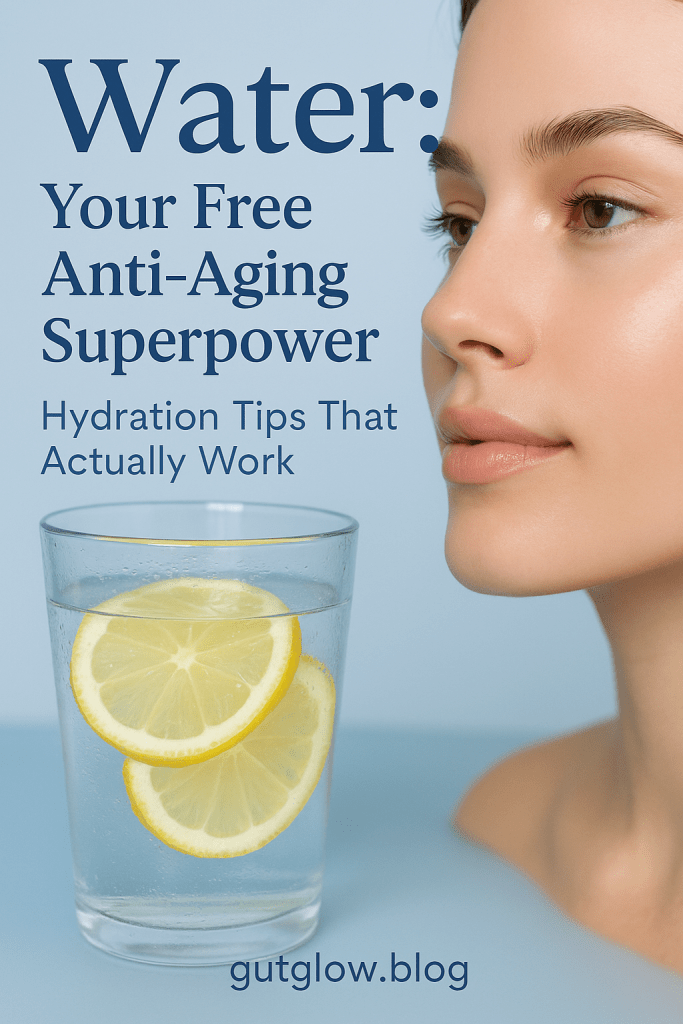
Water: 💦🌸 Your Free Anti-Aging Superpower (Hydration Tips That Actually Work) 🥤✨


“Hydration is your secret anti-aging weapon! 💦 Discover nurse-approved tips for glowing skin, gut health, and overall wellness with simple water habits.”


Ever notice your skin looks dull, tired, or even fine lines pop up after a week of skipping your usual water intake? 😅 You’re not imagining it—hydration is literally one of the most underrated anti-aging tools.

As a nurse with 22+ years of experience in skin, wound, and gut health, I can tell you: water isn’t just for quenching thirst. Proper hydration keeps your skin plump, supports digestion, regulates hormones, and even helps with detox pathways. Think of it as a free beauty elixir that works from the inside out.

A 2023 study in Clinical, Cosmetic and Investigational Dermatology confirmed that increased water intake improves skin elasticity and overall appearance, proving that drinking up is one of the simplest ways to fight the signs of aging.

Let’s dive into hydration habits that actually work—and the science behind why water is your skin’s best friend.


💧 Why Hydration Is Key for Skin & Anti-Aging

  • Elasticity & plumpness → Water keeps skin cells hydrated and reduces appearance of fine lines.
  • Supports collagen function → Proper hydration improves nutrient delivery to skin cells.
  • Flushes toxins → A well-hydrated body eliminates waste more efficiently, reducing inflammation and breakouts.

🥤 How Hydration Impacts Gut Health

  • Supports digestion → Water keeps bowel movements regular and aids nutrient absorption.
  • Balances microbiome → Hydrated digestive tract helps probiotics thrive.
  • Reduces bloating → Adequate water intake prevents fluid retention and digestive discomfort.

🌿 Nurse-Approved Hydration Tips That Actually Work

  1. Morning ritual → Start with 16 oz of water before coffee or breakfast.
  2. Infuse your water → Lemon, cucumber, or berries for flavor + antioxidants.
  3. Set reminders → Apps or alarms to avoid forgetting throughout the day.
  4. Hydrate with food → Include water-rich fruits and vegetables (cucumber, watermelon, oranges).
  5. Post-workout & evening hydration → Replace fluids lost in sweat; drink mindfully before bed.

✨ Extra Anti-Aging Hydration Hacks

  • Add electrolytes if you sweat → Keeps cells properly balanced.
  • Limit diuretics → Too much caffeine or alcohol can dehydrate skin.
  • Track your intake visually → Reusable water bottles with markers help you hit daily goals.

Key Takeaways

  • Water is a free, natural anti-aging tool.
  • Proper hydration improves skin, supports gut health, and reduces inflammation.
  • Small, consistent habits make a huge difference over time.

💬 How do you stay hydrated during busy days? Share your favorite tips below—I love swapping practical hacks!

⚠️ Disclaimer (Because I’m a Nurse, Not Your Nurse 😉): This blog is for general education and entertainment purposes only. Consult your healthcare provider before making major lifestyle changes.


Dive in for all the juicy details 🍓

Family Drama & Flare-Ups: What Stress Does to Your Skin (and Gut) 🧠✨


Ever notice acne, eczema, or gut issues after family drama? 😅 Discover how stress impacts the gut-skin connection + nurse-approved ways to calm the chaos.


We’ve all been there: one awkward holiday dinner or heated group text later, and suddenly your chin’s breaking out like a teenager’s. Coincidence? Nope. 🙃

Stress—especially the emotional kind that comes with family drama—doesn’t just mess with your mood. It can wreak havoc on your skin and gut. Science calls this the gut-skin axis, and as someone who’s been a nurse for over 22 years (and survived plenty of family parties), I can tell you: your body absolutely keeps the score.

In fact, a 2023 Harvard Health article noted that chronic stress alters your microbiome and immune response, directly triggering acne, eczema, psoriasis, and even digestive flare-ups like IBS.

So, let’s unpack how stress shows up on your face, in your belly, and what you can actually do about it (without running away to a cabin in the woods 🏕️).


🧠 Stress, Family Drama, and the Gut-Skin Axis

When your in-laws or siblings spark your stress response, your body floods with cortisol (your “fight or flight” hormone). Cortisol doesn’t just make you feel anxious—it:

  • Increases oil production → hello, hormonal acne.
  • Weakens the skin barrier → more sensitive, reactive skin.
  • Alters gut bacteria balance → dysbiosis, bloating, inflammation.
  • Slows digestion → constipation or diarrhea flare-ups.

👉 Question: Do you notice your skin or digestion flaring up after stressful family events?


✨ Skin Conditions Most Affected by Stress

  • Acne → Stress increases oil + inflammation.
  • Eczema/Psoriasis → Stress weakens the skin barrier, worsening itch and flares.
  • Rosacea → Stress dilates blood vessels, leading to redness and flare-ups.
  • Premature aging → Chronic cortisol increases free radicals, accelerating wrinkles.

A 2022 article in Journal of Clinical and Aesthetic Dermatology confirmed that stress-induced inflammation is a direct driver of skin flare-ups across multiple conditions.

Pearls for you: I’ve seen wound patients heal slower when they’re under stress. The skin is your largest organ—so yes, your family arguments literally show up on your face.


🥦 Gut-Friendly Foods That Calm the Chaos

What you eat during (and after) family drama matters. Stress depletes nutrients like magnesium, zinc, and vitamin C.

Anti-Stress, Gut-Skin Foods:

  • Leafy greens + legumes → Rich in magnesium, lowers cortisol.
  • Probiotic foods (yogurt, kimchi, kefir) → Rebalance the microbiome.
  • Omega-3 rich foods (salmon, flax, chia) → Calm inflammation.
  • Berries + citrus → High in vitamin C for collagen + immune support.

👉 Glow tip: After family tension, skip the wine + cheese binge and whip up a gut-glow smoothie with spinach, berries, flax, and kefir. Your skin will thank you.


🚶 Stress-Busting Habits That Show on Your Skin

Beyond food, lifestyle tweaks can literally change your skin’s stress response:

  • Hydrate like it’s your job 💧 → Water helps flush cortisol metabolites.
  • Exercise regularly 🏋️ → Lowers cortisol, increases circulation, improves skin glow.
  • Sleep 7–9 hours 😴 → Skin repair happens overnight.
  • Breathwork/meditation 🧘 → A 2023 Mayo Clinic review showed meditation lowers stress markers and reduces inflammation.

⚡ Nurse Humor: Sometimes just a brisk walk outside after family drama does more for your skin than the fanciest serum in your bathroom cabinet.


💊 Supplements & Skincare Helpers for Stressful Times

  • Magnesium glycinate → Calms stress + muscle tension.
  • Probiotic supplement → Adds extra gut support during flare-ups.
  • Ashwagandha → Adaptogen shown to lower cortisol.
  • Niacinamide serum → Strengthens skin barrier + calms redness.
  • Gentle moisturizer → Keeps skin from drying out under stress.

✨ Key Takeaways

  • Stress—especially family drama—directly affects both gut and skin health.
  • Cortisol leads to acne, eczema, and gut imbalances.
  • Nourishing foods, hydration, sleep, and mindfulness can help calm flare-ups.

💬 Your turn: Have you ever noticed your skin reacting after a stressful family interaction? What’s your go-to stress skin rescue? Drop it in the comments—I’d love to hear your strategies!

⚠️ Disclaimer (Because I’m a Nurse, Not Your Nurse 😉): This blog is for general education and entertainment purposes only. Always consult your healthcare provider before making changes to your diet, supplements, or skincare routine.


Keep reading to unlock the full scoop 👀