🚶‍♀️Walking for Wellness: How a Daily Stroll Improves Digestion and Skin Glow

Discover how a simple daily walk can boost digestion, reduce bloating, and give your skin that natural glow. Backed by gut health science—and a nurse who loves poop talk.


Why Your Gut (and Skin!) Love a Walk After Dinner

Okay, real talk: as a nurse in my 40s who’s spent decades working with wounds, guts, and skin—sometimes all at once—I live for the small habits that deliver big results. One of the simplest? Walking.

No, not power walking in neon leggings (unless that’s your vibe). I’m talking about a relaxed, 20-30 minute daily stroll. Just you, your gut microbiome, and the sidewalk.

Walking is like a gentle massage for your intestines. It gets your digestion going, supports regularity (we love a good poop 🧻), and yes—it can even make your skin glow.

Let’s break it down, gut to glow ✨.


The Gut-Skin Axis: A Quick Refresher

You’ve heard me say it before, and I’ll say it again: what happens in your gut doesn’t stay in your gut.

Your digestive system is directly connected to your skin through what’s called the gut-skin axis. Imbalances in your microbiome (that community of bacteria in your belly) can show up on your skin as:

  • Acne
  • Eczema
  • Rosacea
  • Dullness or dryness
  • Premature aging (hello, wrinkles 👋)

A 2023 study published in Frontiers in Microbiology found that people with healthier, more diverse gut microbiomes also had better skin hydration and elasticity. That means a happier belly = plumper, glowier skin.


The Magic of Movement: How Walking Affects Your Gut

1. Improves Digestion and Reduces Bloating

Ever notice how you feel lighter and less gassy after a walk? That’s because walking:

  • Stimulates peristalsis (aka the wave-like motion that moves food through your intestines)
  • Helps reduce constipation
  • Encourages gas to move along instead of building up

A study in Gastroenterology and Hepatology (2021) found that a 15-minute walk after meals improved digestion and reduced post-meal bloating in individuals with IBS.


2. Lowers Inflammation—The Root of All Skin Drama

Chronic inflammation in the gut can lead to systemic inflammation. Guess where that shows up first? Yep—your face.

Low-impact cardio like walking:

  • Lowers stress hormones like cortisol
  • Boosts circulation
  • Reduces inflammatory cytokines (those troublemakers that trigger skin flare-ups)

Regular walkers tend to have clearer skin, fewer breakouts, and less puffiness. Glow up from the sidewalk up!


3. Boosts Microbiome Diversity

Movement improves blood flow to your GI tract and helps your gut bacteria thrive. Research in the International Journal of Sports Medicine showed that people who exercised regularly had more microbial diversity, especially in anti-inflammatory strains.

That’s important, because diverse gut flora = a better barrier = stronger, healthier skin.


My Story: A Walk, a Smoothie, and a Surprise Glow

A few years ago, I was dealing with stress, random breakouts, and a serious case of “blah skin.” I started doing one small thing every day: a walk after dinner.

I didn’t change my whole life—I just committed to moving after meals and paired it with a gut-friendly diet (think: fermented foods, fiber, and a killer smoothie—see below 👇). Within 3 weeks:

  • My skin tone looked brighter
  • My bloating disappeared
  • And my mood? Totally lifted

It felt like I’d pressed the reset button—from the inside out.


Gut-Friendly Foods That Pair Well with Walking

Want even more results from your strolls? Feed your microbiome with these skin-supporting goodies:

🥬 Leafy Greens (Spinach, Kale):

Rich in fiber to keep things moving and loaded with skin-friendly antioxidants.

🥕 Fermented Foods (Kimchi, Sauerkraut, Greek Yogurt):

Restore gut flora and reduce inflammation.

🍓 Berries:

High in vitamin C and polyphenols—your skin’s best friends.

💧 Water with Lemon:

Keeps digestion smooth and skin hydrated.

Pair these with your walk and you’ve got a glow-getting combo.


BONUS RECIPE: My “Glow & Go” Cinnamon Vanilla Gut-Skin Smoothie 🌱

Ingredients:

  • 1 cup unsweetened oat milk
  • 1 tsp matcha
  • ½ frozen banana
  • 1 scoop collagen peptides
  • 1 tsp ground flaxseed
  • ¼ tsp cinnamon
  • ½ tsp vanilla extract
  • Ice cubes

Blend and enjoy post-walk. Your skin will say thank you with every sip. (So will your colon. 💚)


Final Thoughts: It’s Simple, Not Silly

We don’t need fancy face creams or restrictive diets to get glowing skin. Sometimes, it’s the basics that work best.

Walking:
✅ Aids digestion
✅ Clears your mind
✅ Improves gut health
✅ Makes you look and feel better

And the best part? It’s free.


Let’s Chat! 👟✨

Have you noticed a difference in your skin or digestion when you walk regularly? Do you have any gut-friendly habits that changed your skin for the better?

Drop a comment below—I’d love to hear your story. 👇
(And you might inspire someone else to take that first step!)

⚠️ Disclaimer (Because I’m a Nurse, Not Your Nurse 😉)
This blog is for general education and entertainment purposes only. Always consult your healthcare provider for personalized medical advice.

Anti-Aging from the Gut: What to Eat to Reduce Wrinkles and Hair Loss Naturally 🌿✨


Why Your Gut Holds the Secret to Fighting Wrinkles and Hair Loss 🧬💁‍♀️

If you’re over 40 like me—a nurse obsessed with skin, gut health, and wellness—you’ve probably tried every cream, serum, and supplement promising to erase wrinkles and stop hair loss. But what if the real fountain of youth lives inside your gut?

Emerging research reveals a powerful gut-skin connection: a healthy gut microbiome helps reduce inflammation, improve nutrient absorption, and boost collagen production, all crucial for youthful skin and strong hair. According to a 2024 review in Nutrients, gut dysbiosis—an imbalance in gut bacteria—is linked with increased skin aging signs and hair follicle damage.

Put simply: what you eat to nurture your gut can literally change the way your skin looks and your hair grows.


How Gut Health Influences Aging Signs Like Wrinkles and Hair Loss 🔬

Your gut is home to trillions of bacteria that regulate immune response and inflammation. When this balance is off, inflammation can become chronic, producing oxidative stress that breaks down collagen and elastin—the proteins that keep skin firm and wrinkle-free. This also disrupts hair follicle health, leading to thinning or hair loss.

  • Chronic Gut Inflammation = Breakdown of collagen → more wrinkles
  • Poor Nutrient Absorption = Lack of vitamins & minerals → brittle hair & dull skin
  • Toxin Build-Up = Skin irritation, premature aging signs

A recent study in Frontiers in Microbiology highlighted that restoring gut balance through diet and probiotics could improve skin hydration, reduce wrinkles, and even support hair regrowth.


My Gut-Glow Journey: From Tired Skin to Radiant Confidence 💪🌟

Let me share my own story. After years working night shifts fueled by fast food and caffeine, my skin looked tired, fine lines deepened, and my hair lost its shine. My digestion was a mess—bloating, irregularity—you name it.

When I started focusing on gut-friendly foods—fermented veggies, fiber-rich grains, and omega-3s—not only did my digestion improve, but my skin started glowing, wrinkles softened, and my hair felt thicker and healthier. #RealTalk #NurseLife


Anti-Aging Superfoods for Your Gut, Skin, and Hair 🥦🍣🍓

Here’s the good stuff—foods that help balance your microbiome, reduce inflammation, and feed your skin and hair at the cellular level:

1. Fermented Foods: Your Probiotic Powerhouses 🥒

Think kimchi, sauerkraut, kefir, and yogurt with live cultures. These foods boost good bacteria that calm gut inflammation and help skin heal faster.

Skin benefits: Reduced redness, fewer breakouts, improved elasticity
Hair benefits: Healthier scalp environment, stronger follicles

2. Fiber-Rich Prebiotics: Feeding the Good Guys 🧄🍠

Foods like garlic, onions, asparagus, and oats nourish beneficial bacteria. They improve digestion and nutrient absorption, critical for skin repair and hair growth.

Skin benefits: Enhanced collagen production and hydration
Hair benefits: Improved delivery of hair-friendly nutrients like zinc and biotin

3. Omega-3 Fatty Acids: The Inflammation Fighters 🐟🌰

Salmon, flaxseeds, chia seeds, and walnuts lower systemic inflammation and protect skin from oxidative damage.

Skin benefits: Increased skin elasticity, reduced wrinkle depth
Hair benefits: Prevents hair follicle inflammation and shedding

4. Colorful Antioxidant-Rich Produce: Nature’s Skin Shields 🫐🥕

Berries, carrots, leafy greens, and red bell peppers are packed with antioxidants like vitamins C and E, which protect skin from sun damage and promote collagen synthesis.

Skin benefits: Brighter complexion, less sun damage
Hair benefits: Supports healthy hair pigment and scalp circulation

5. Hydration Heroes: Water and Herbal Teas 💧🌿

Hydration keeps your skin plump and supports toxin removal through digestion.

Skin benefits: Less dryness, fewer wrinkles
Hair benefits: Keeps hair hydrated and reduces breakage


Supplements That Support Gut and Skin Health (Ask Your Provider First!) 💊

  • Probiotics: Multi-strain, refrigerated for potency
  • Zinc: Skin repair and hair follicle support
  • Vitamin D: Immune regulation and hair health
  • Biotin & Collagen: Structural support for skin and hair

Lifestyle Habits That Boost Your Gut-Skin Anti-Aging Game 🏃‍♀️🛌

  • Move your body: Exercise boosts circulation and digestion.
  • Prioritize sleep: Your cells repair and regenerate while you snooze.
  • Manage stress: Chronic stress harms gut bacteria and accelerates aging.
  • Regular bowel movements: Efficient toxin removal prevents skin flare-ups.

Easy Anti-Aging Gut-Friendly Recipe Idea: The Gut-Glow Bowl 🍽️✨

Combine fermented veggies, leafy greens, grilled salmon, quinoa, and a drizzle of olive oil. Add some walnuts and fresh berries on the side. Boom—a delicious way to feed your gut, skin, and hair with every bite.


Ready to Turn Back the Clock From the Inside Out? ⏳💫

Your gut isn’t just about digestion—it’s a major player in how your skin ages and how your hair grows. By nourishing your microbiome with the right foods and habits, you can reduce wrinkles, prevent hair loss, and glow with confidence.


What About You? Let’s Chat! 👇

Have you noticed changes in your skin or hair when you improve your gut health? Tried probiotics or specific foods that made a difference? Share your experience below—I love hearing real-world stories!


Stay glowing and gut-happy

⚠️ Disclaimer (Because I’m a Nurse, Not Your Nurse 😉)
This blog is for general education and entertainment purposes only. It does not replace personalized medical advice. Always consult your healthcare provider before making changes to your diet or skin routine.

Dad’s Wrinkle Eraser: The Man Glow Juice That Fights Aging from the Inside Out 💪✨

Wrinkles? Dry skin? Dull complexion? Forget expensive creams for a minute — what if the real secret to youthful skin isn’t just what you put on your face, but what you put in your gut? 🤔🍏

Hey there! I’m a nurse in my 40s, an ostomy and wound care specialist, and a huge fan of all things skin, gut, and wellness. Today, I want to share a secret weapon I call “Dad’s Wrinkle Eraser” — also known as the “Man Glow Juice.” 🧃 This powerful gut-friendly elixir is designed to nourish your skin from the inside out, smooth out wrinkles, and give you that glow that screams “healthy, vibrant, and ageless.” ✨💥

Why? Because the gut-skin connection is real, and it’s backed by science. Let’s dive in! 🔬💡


The Gut-Skin Connection: Why Your Wrinkles Might Start in Your Gut 🦠➡️👵

We often think of wrinkles as an inevitable side effect of aging or sun damage. But recent research shows that what’s happening in your digestive system plays a huge role in your skin’s health.

What Science Says 📚🧪

A 2023 review published in Nutrients highlighted that intestinal health directly impacts skin conditions like eczema, acne, rosacea, and premature aging. The gut microbiome — trillions of bacteria living in your intestines — influences inflammation, nutrient absorption, and even collagen production, all critical for youthful skin.

An imbalanced gut (dysbiosis) can increase systemic inflammation, leading to faster skin aging and more wrinkles. So yes, your gut health and your wrinkle count are more connected than you might think. 🤯


What Is “Dad’s Wrinkle Eraser” (Man Glow Juice)? 🧃✨

This isn’t a magical fountain of youth but a carefully crafted drink packed with gut-loving, skin-boosting ingredients. It’s like giving your digestive system a spa day 🧖‍♀️ and your skin a facelift — naturally. 🌿💆‍♀️

The Core Ingredients and Their Benefits:

  • Kefir or Probiotic Yogurt: Loaded with probiotics to balance your gut bacteria and reduce inflammation. 🦠✅
  • Collagen Peptides: Supports skin elasticity and hydration from within. 💧💪
  • Turmeric: A potent anti-inflammatory that calms skin irritation and redness. 🌟🔥
  • Lemon Juice: High in vitamin C, essential for collagen synthesis and brightening dull skin. 🍋✨
  • Ginger: Boosts digestion and reduces gut inflammation. 🫚🔥
  • Honey: A natural prebiotic that feeds good gut bacteria. 🍯🐝
  • Spinach or Kale: Packed with antioxidants and vitamins A and K for skin repair. 🥬💚

How to Make Dad’s Wrinkle Eraser: The Man Glow Juice Recipe 🥤👩‍🍳

Ingredients:

  • 1 cup kefir or probiotic yogurt 🥛
  • 1 scoop collagen peptides 💊
  • 1/2 teaspoon turmeric powder 🌿
  • Juice of 1/2 lemon 🍋
  • 1/2 inch fresh ginger root, grated 🫚
  • 1 teaspoon raw honey 🍯
  • A handful of spinach or kale 🥬
  • 1 cup water or coconut water 🥥💧

Instructions:

  1. Add all ingredients to a blender. 🔄
  2. Blend until smooth. 🍹
  3. Drink fresh daily for best results! 💥

Bonus: You can swap spinach/kale with cucumber or celery if you prefer a milder taste. 🥒


Why This Juice Works: The Science-Backed Gut-Skin Boost 🔬🧴

  • Probiotics in kefir help restore the gut’s natural balance, reducing inflammation that can accelerate skin aging. 🦠👌
  • Collagen peptides replenish the skin’s structural protein, decreasing fine lines and wrinkles. 🧓➡️🧑‍🦱
  • Turmeric and ginger fight oxidative stress and inflammation — two big culprits behind dull, aging skin. 💥🔥
  • Vitamin C from lemon juice aids collagen production and brightens your complexion. 🍋🌞
  • Prebiotics from honey support the growth of beneficial bacteria, maintaining gut health long-term. 🍯🦠
  • Leafy greens provide antioxidants and hydration to promote skin repair and smoothness. 🥬✨

A Personal Story: How I Used Gut Health to Fight My Own Skin Battles 🩺❤️

After years of nursing patients with chronic wounds and skin issues, I realized that my own skin problems were linked to gut health — not just creams or topical products. I used to struggle with adult acne and early wrinkles. 😩🧴 Incorporating gut-friendly foods and this “Man Glow Juice” into my daily routine, along with proper hydration and sunscreen, helped me see noticeable skin improvement within weeks. 🌿💧 My skin felt plumper, wrinkles softened, and my digestion improved too.

Seeing this made me even more passionate about teaching others the gut-skin connection, especially men like Dad who might not think about their gut health impacting their skin. 👨‍👧✨


More Gut-Friendly Foods to Boost Your Skin Glow 🥗🌟

Here are some additional superstar foods to add to your diet:

  • Fermented foods: Sauerkraut, kimchi, miso — all great for probiotics. 🥢🦠
  • Omega-3 rich foods: Salmon, chia seeds, flaxseeds reduce inflammation. 🐟🌰
  • Polyphenol-rich foods: Dark chocolate, green tea, berries nourish your skin and gut bacteria. 🍫🍵🍓
  • Fiber-rich veggies: Carrots, sweet potatoes, broccoli support digestion and toxin elimination. 🥕🍠🥦

Other Lifestyle Tips to Erase Wrinkles and Support Gut Health 💪🧴

  • Stay hydrated: Aim for at least 8 glasses of water a day. 💧💦
  • Exercise regularly: Physical activity improves circulation and gut motility. 🏃‍♀️🏋️‍♀️
  • Get quality sleep: Skin repairs itself during deep sleep stages. 😴🌙
  • Use broad-spectrum sunscreen daily: UV damage accelerates aging. 🧴☀️
  • Consider vitamin supplements: Vitamin D, zinc, and biotin are key for skin repair and wound healing. 💊🌟

Wrapping It Up: The Ultimate Gut-Skin Glow Plan for Dads (and Everyone!) 🎁👨‍👧✨

“Dad’s Wrinkle Eraser” isn’t just a juice; it’s a lifestyle shift. Nourishing your gut means your skin will thank you with fewer wrinkles, less inflammation, and a healthy glow. The best part? It’s simple, natural, and backed by science. 🔬❤️


Ready to Give Your Gut (and Skin) a Boost? 🚀🥤

Have you ever tried focusing on your gut health to improve your skin? Or maybe you’ve noticed a flare-up when your digestion is off? Drop your stories or questions below — I’d love to hear how your gut and skin journey is going! 💬👇

Thank you for reading! Remember, great skin starts with a happy gut — so let’s drink to that glow. 🥂✨


⚠️ Disclaimer (Because I’m a Nurse, Not Your Nurse 😉)

This blog is for general education and entertainment purposes only. It’s not medical advice. Always check with your healthcare provider before making any major changes to your diet or health routine. 🩺💬

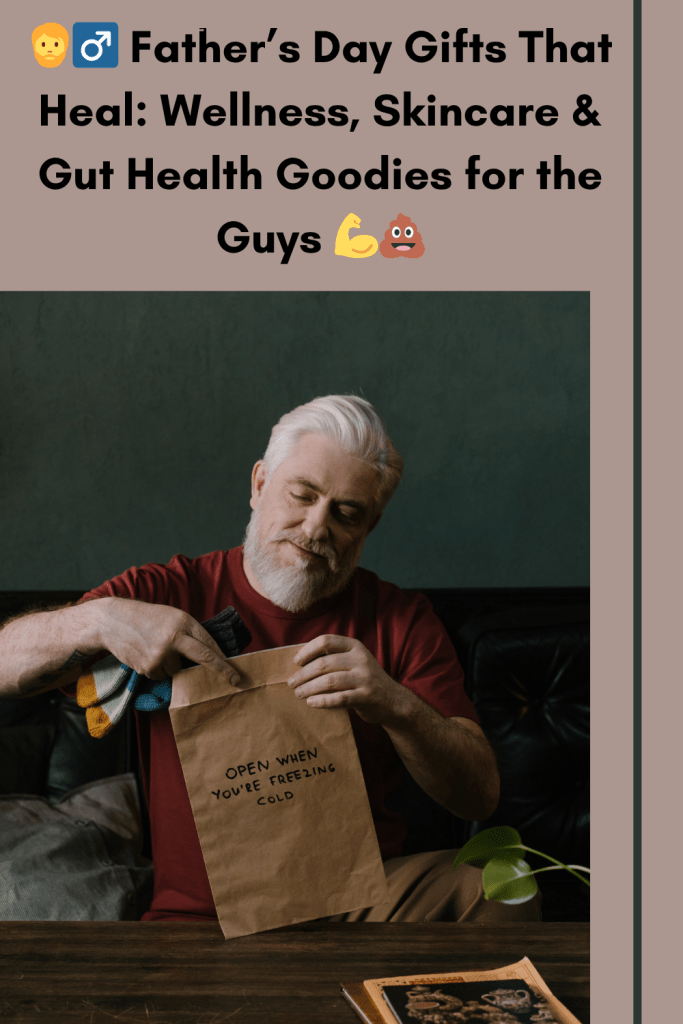
🧔‍♂️ Father’s Day Gifts That Heal: Wellness, Skincare & Gut Health Goodies for the Guys 💪💩


Real Talk: Dads Deserve Better Than Another Tie 👔

Let’s be honest. The guy who taught you how to ride a bike or told the world’s worst dad jokes probably doesn’t need another mug that says “Best Dad Ever.” What he does need? A serious wellness upgrade—and it starts with the gut, the skin, and maybe a little anti-inflammatory magic. 💥

This Father’s Day, give the gift of self-care with clinical benefits. As a nurse in her 40s who’s obsessed with gut health, poop, and preventing premature aging (because, same!), I’ve rounded up some actually awesome ideas that mix science, skin, and soul.


🧴 1. Skincare for Dads Who Swear They “Don’t Need It”

Listen, Dad’s skin has seen some things. Years of sun, shaving, stress, and maybe neglect. Help him get started without overwhelming him.

Gift Ideas:

  • Simple skincare kits (like CeraVe or Jack Black)
  • SPF moisturizer – because sun damage doesn’t care if you’re “not into skincare”
  • Vitamin C serum – for dullness, spots, and looking less like a raisin

🦠 2. Gut-Healthy Gifts for the Guy Who’s Full of… You Know 💩

Dads don’t talk about digestion—but they should. Gas, bloating, and belly aches? Not a vibe. Help him heal from the inside out.

Gift Ideas:

  • High-quality probiotics – look for multi-strain, 10+ billion CFUs
  • Fiber-rich snacks – chia bars, roasted chickpeas, or even a DIY “gut basket”
  • Digestive enzyme supplements – especially great if Dad loves BBQ 🔥

📚 Fun Fact: A 2022 study in Nutrients found that probiotics can improve digestion and reduce systemic inflammation—meaning better gut, brain, and even skin health.


🧠 3. Supplements That Work Smarter (Not Harder)

If your dad’s taking random vitamins from 2007, it’s time for an upgrade.

Gift Ideas:

  • Omega-3s – for heart, brain, and joint support
  • Zinc + Vitamin D combo – boosts immunity and wound healing
  • Collagen peptides – yep, even for men! Supports skin, gut, and joints

💬 Nurse Tip: Always check for third-party testing and bioavailability (so it actually gets absorbed).


💆‍♂️ 4. Anti-Stress Gifts for the Overworked, Under-Rested Dad

Stress ages you—fast. Help your dad relax with tools that reduce cortisol and promote healthy aging.

Gift Ideas:

  • Weighted blanket – promotes deeper sleep
  • Adaptogen supplements (like ashwagandha or Rhodiola)
  • Subscription to a meditation app – pair it with noise-canceling headphones

🍲 5. Foodie Finds for the Gut-Loving Grill Master

Gut health doesn’t mean giving up flavor. If your dad’s into grilling or cooking, turn his hobby into a wellness win.

Gift Ideas:

  • Fermentation kits – for homemade sauerkraut or kimchi
  • Avocado oil & spice blends – anti-inflammatory and flavorful
  • Healthy grilling cookbook – with gut-friendly recipes and fiber-rich swaps.

🧬 6. The Gift of Knowledge (That Isn’t Boring)

For the curious dad who loves facts and science, consider giving him tools to understand his own body.

Gift Ideas:

  • Microbiome test kit – personalized insights into gut health
  • Wearable tech – tracks stress, sleep, or hydration
  • Books on men’s health, gut-brain connection, or longevity (check out “The Good Gut” or “Fiber Fueled”)

Final Thoughts: Dads Deserve to Glow Too ✨

This Father’s Day, let’s celebrate the dads, stepdads, grandpas, and gut-loving men in our lives by helping them live longer, healthier, and with way better skin. 💆‍♂️💩❤️

Remember: The path to glowing skin, a happy belly, and a healthy heart isn’t just for women. Men need that gut-skin love, too.


🗣️ Let’s Chat:

What’s the most unique gift you’ve ever given your dad? Would he actually use probiotics or collagen powder? Share your favorites (or your fails) in the comments!


⚠️ Disclaimer (Because I’m a Nurse, Not Your Nurse 😉)

This blog is for general education and entertainment purposes only. Always consult a healthcare provider before starting new supplements or treatments.

Can Probiotics Help with Hair Growth? The Research-Backed Truth 💊🧠


From Poop Talk to Hair Talk 💩➡️💇‍♀️

If you’re anything like me—a nurse in her 40s who talks about poop as often as she talks about skincare—then you’ve probably wondered: Can my gut health really affect my hair? And more importantly: Can probiotics help my hair grow back or grow better? Let’s dive into the scalp-tingling science! 🧬


What’s the Gut-Hair Connection, Anyway?

The idea that your gut can affect everything from your mood to your skin isn’t new. But researchers are now uncovering links between gut health and hair health too. Just like the gut-skin axis, there’s a growing belief in a gut-hair axis—where inflammation, poor nutrient absorption, and microbial imbalances (dysbiosis) can contribute to hair loss and poor hair quality.

A 2021 study published in Frontiers in Cellular and Infection Microbiology found that gut microbial imbalances were linked to telogen effluvium (a common type of hair shedding), due to increased systemic inflammation and nutrient depletion. So, yep—it’s not just vanity, it’s biology!


How Probiotics Might Help With Hair Growth 🦠💇‍♀️

Probiotics are live beneficial bacteria that help balance your gut microbiome. Here’s how they could potentially boost your hair health:

1. Reduce Inflammation

Chronic inflammation can disrupt the hair cycle and damage hair follicles. By balancing gut flora, probiotics help lower inflammation throughout the body, including the scalp.

2. Improve Nutrient Absorption

Your hair thrives on nutrients like biotin, zinc, iron, and B vitamins. A healthy gut helps absorb these more efficiently, making sure your hair gets the building blocks it needs to grow.

3. Support Hormonal Balance

Some strains of probiotics (like Lactobacillus rhamnosus) may support hormonal health by improving estrogen metabolism—important for those struggling with hormone-related hair loss.

4. Boost Immunity & Fight Pathogens

An overgrowth of harmful bacteria or yeast (like Candida) can interfere with nutrient absorption and trigger immune responses that impact hair health. Probiotics help keep these troublemakers in check.


My Story: Poop, Probiotics & Ponytail Power 💪💩

I used to think thinning hair was just a side effect of getting older (hello, 40s 👋) genetics is involve too. But when I started focusing more on gut health—cutting out processed foods, upping my fiber, and taking a targeted multi-strain probiotic—I noticed more than just better digestion. My skin glowed, my bloating improved, and surprise… my hair looked thicker. My ponytail actually bounced again. Coincidence? I think not.


Best Probiotic Strains for Hair & Scalp Health

Not all probiotics are created equal. Here are a few that show promise:

  • Lactobacillus plantarum – Anti-inflammatory, promotes nutrient absorption
  • Lactobacillus rhamnosus – Supports hormonal balance
  • Bifidobacterium longum – Reduces gut inflammation
  • Lactobacillus paracasei – Helps skin and scalp barrier function

🔍 Tip: Look for a high-quality probiotic with multiple strains and at least 10–20 billion CFU.


Gut-Friendly Foods That Also Feed Your Hair 🍓🥬🐟

Food is your foundation. These are my go-to gut-friendly foods for strong hair:

  • Fermented foods (yogurt, kefir, sauerkraut, kimchi) – Natural probiotics
  • Leafy greens – Full of folate, iron, and fiber
  • Fatty fish – Omega-3s reduce inflammation
  • Sweet potatoes – Rich in beta-carotene for scalp health
  • Pumpkin seeds – Packed with zinc and magnesium

P.S. These are also amazing for wound healing—bonus nurse tip! 🩹


What Does the Research Say? 📚

A 2022 review in the Journal of Cosmetic Dermatology noted that probiotics may improve the scalp microbiome, reduce dandruff, and support hair follicle cycling. Another clinical study showed that participants who took probiotics reported better skin hydration and hair strength.

So while more research is needed, the science is catching up with what many of us see in real life.


Final Thoughts: Should You Take Probiotics for Hair Growth? 🤔

If your gut is struggling, your hair likely is too. While probiotics aren’t a magic fix, they’re a powerful tool in a holistic approach to beauty, wellness, and—yep—even wound healing. Think of them as beauty boosters that start in your belly.


Let’s Get Chatty 💬

Have you ever tried probiotics for your skin or hair? Did you notice a difference? Drop your experience in the comments—I’d love to hear what’s worked (or flopped) for you!

And if you loved this post, check out:


https://gutglow.blog/2025/05/27/%f0%9f%a6%a0-probiotics-for-your-face-the-gut-skin-connection-you-need-to-know/

https://gutglow.blog/2025/05/31/microdermabrasion-101-the-secret-to-radiant-smooth-skin-%e2%9c%a8/


    Thanks for hanging out with me today, friends. Until next time—stay hydrated, eat your fiber, and don’t be afraid to talk about poop. 😉

    ⚠️ Disclaimer (Because I’m a Nurse, Not Your Nurse 😉)

    This blog is for general education and entertainment purposes only and should not be considered medical advice. Always consult your healthcare provider before starting new supplements or treatments.

    Microdermabrasion 101: The Secret to Radiant, Smooth Skin ✨

    Hey there, skin lovers! I’m a nurse in my fabulous 40s who’s been obsessed with all things skin, gut, and wellness for years. When I’m not helping patients with wound care and ostomies, you’ll find me nerding out on skincare science, gut health, and yes — the magical connection between your digestion and your glow.

    Today, let’s dive into the world of microdermabrasion — a powerful (and pretty satisfying) treatment that can seriously upgrade your skin’s radiance and smoothness. But spoiler alert: while microdermabrasion can do wonders, the real secret to radiant skin comes from a combo of great skincare AND a happy gut. Yep, your gut and skin are BFFs! 💁‍♀️


    What is Microdermabrasion? 🤔

    Microdermabrasion is a non-invasive cosmetic procedure that gently buffs away the outer layer of dead skin cells using tiny crystals or a diamond-tipped wand. Think of it like sanding wood — it smooths the surface to reveal fresher, brighter skin underneath.

    It’s great for:

    • Fading fine lines & wrinkles
    • Minimizing pores
    • Improving texture and tone
    • Reducing mild acne scars and sun damage

    Unlike harsher peels, it’s gentle enough for most skin types with minimal downtime — hello, glow without the drama! ✨


    The Science: How Does It Work? 🔬

    When you remove the dead skin barrier, microdermabrasion stimulates your skin’s natural healing process. This jumpstarts collagen and elastin production — the proteins that keep your skin firm and youthful. Plus, sloughing off dead cells allows your skincare products to penetrate deeper and work better.

    A 2023 study published in the Journal of Dermatology Research found that microdermabrasion treatments significantly increased skin hydration and elasticity, reinforcing its reputation as a go-to for skin rejuvenation.


    But Wait — What About Your Gut? 🍎🥦

    As someone who’s spent years caring for wounds and digestive health, I’m here to tell you: Your gut health is a game changer for your skin’s radiance. The gut-skin axis is real — your gut microbiome influences inflammation, immune response, and even collagen synthesis.

    Recent research highlights this beautifully: a 2024 review in Gut Microbes showed that people with balanced gut bacteria have fewer inflammatory skin conditions and better skin barrier function. That means what you eat directly impacts your skin’s glow.

    Gut-Friendly Foods for Glowing Skin:

    • Fermented foods like yogurt, kimchi, and sauerkraut boost good bacteria 🥒
    • Fiber-rich veggies like broccoli, spinach, and sweet potatoes feed those bacteria 🌿
    • Omega-3 rich foods like salmon and walnuts reduce inflammation 🐟
    • Antioxidant-packed fruits like berries and citrus fight free radical damage 🍓

    A Personal Story: How I Found My Glow 🌟

    A few years ago, after struggling with persistent dullness and early wrinkles despite fancy creams and serums, I shifted focus to my gut health. I started eating probiotic-rich foods daily, drinking more water, and cutting back on processed sugars. Within weeks, my skin looked visibly brighter and felt smoother — almost like a microdermabrasion glow, but from within. It was a lightbulb moment!

    This experience reinforced my belief that skincare isn’t just about what you put on your skin, but what you nourish your body with.


    How to Combine Microdermabrasion and Gut Health for Maximum Results 💪

    1. Get microdermabrasion treatments every 4-6 weeks (professionally or at home with a trusted device)
    2. Eat a gut-friendly diet rich in probiotics, fiber, and antioxidants
    3. Stay hydrated — water is your skin’s bestie! 💧
    4. Use gentle, hydrating skincare after treatments to soothe and protect
    5. Avoid excessive sun exposure and always use sunscreen (no shortcuts here!) ☀️

    ⚠️ Disclaimer (Because I’m a Nurse, Not Your Nurse 😉)

    This blog is for general education and entertainment purposes only. Always consult your healthcare provider or dermatologist before starting any new skin or gut health regimen.


    Your Turn! 💬

    What’s your experience been with microdermabrasion or focusing on gut health to improve your skin? Have you noticed a “glow-up” from inside out? Drop your stories, questions, or favorite gut-friendly snacks in the comments — I’d love to hear!


    💎 Luxury Skincare: Splurge or Save? A Nurse’s Honest Take 💸

    Let’s talk about that $300 face cream calling your name at Sephora, or that serum with gold flakes that promises to reverse time. Are luxury skincare products really worth the splurge? Or are we all just rubbing overpriced hope into our pores?

    As an ostomy and wound care nurse in my 40s—and a total skincare nerd—I’ve tested my fair share of products (and peeked at a lot of ingredient lists). I’m here to break it down with a dose of science, sass, and skin-gut wisdom. 🧴🧠✨


    💰 Splurge-Worthy or Skin Scam?

    Let’s get this out of the way: expensive doesn’t always mean better. But cheap doesn’t always mean effective either. So where’s the line?

    ✅ When to SPLURGE:

    These items can be worth the extra dollars if:

    🔬 They have clinically backed ingredients.
    Look for proven powerhouses like retinol, peptides, niacinamide, and vitamin C—especially when in stable, high-quality formulations.

    🧪 They offer advanced delivery systems.
    If a luxury serum has encapsulated ingredients that penetrate deeper and work longer, it may be worth it (especially for aging or damaged skin).

    💆 Texture and sensory experience matter.
    If your $90 night cream makes you want to stick to your routine because it feels heavenly, that’s self-care magic I can get behind.

    👃 They’re free from irritants and full of nourishing extras.
    Sensitive skin? You’ll often find luxury lines invest in calming ingredients like ceramides, centella asiatica, or probiotic ferments.


    🧴 When to SAVE:

    A nurse’s budget (and practicality) says there are times to absolutely keep your coins:

    🧼 Cleansers.
    It’s on your face for 60 seconds. Drugstore options with gentle surfactants do just fine (I see you, CeraVe and Vanicream).

    💧 Hydrators.
    Want to trap water in your skin? Look for glycerin, hyaluronic acid, or squalane—you can find all of these in affordable formulas.

    ☀️ Sunscreens.
    SPF is non-negotiable, but you don’t need a $70 bottle. Some of my favorites are under $20, with great feel, broad spectrum protection, and no white cast.


    🧠 Let’s Talk Gut-Skin Realness

    Now here’s where the nurse in me can’t help but chime in: a $200 moisturizer won’t do much if your gut health is a dumpster fire. 💩🔥

    When your digestive system isn’t happy, you can see it on your face—breakouts, dullness, sensitivity, inflammation. If your skin looks “off,” don’t just shop for serums—check your poop, water intake, fiber, stress, and sleep. Yes, even the fanciest cream can’t fix leaky gut syndrome or chronic constipation. 😉

    Want glow? Pair your skincare with:

    • 🌱 Probiotics & prebiotics (yes to fermented foods!)
    • 🥦 Antioxidant-rich veggies
    • 💧 2-3L of water/day
    • 💤 Actual sleep (not just melatonin dreams)

    🩺 A Nurse’s Honest Bottom Line

    Splurge strategically. Don’t fall for fancy packaging alone. Invest where it counts—actives, treatments, and products that truly enhance your routine or solve a problem.

    Save smartly. Skincare isn’t a status symbol. You can have radiant, resilient skin with the right drugstore products and a solid gut game.

    Care from the inside out. Skin health is a full-body conversation—and that includes your intestines, hydration, stress, and even your poop schedule. (Nurse mic drop 🎤💩)


    💬 Let’s Chat

    Have a product you’ve been eyeing but unsure if it’s worth it? Drop it in the comments and I’ll give you the no-fluff nurse verdict! 👇


    ⚠️ Disclaimer (Because I’m a Nurse, Not Your Nurse 😉)

    This blog is for general education and entertainment purposes only. Always consult with your dermatologist, primary care doc, or wound/ostomy care specialist for personalized advice—especially if you have specific conditions, allergies, or medical devices like an ostomy. What works for one skin type might irritate another—so go slow, patch test, and listen to your body.


    ✨🚑 Because Your Skin Deserves More Than a Reel and a Prayer

    Retinol can transform skin, but only if your gut and barrier are supported. Nurse-approved tips for glowing, healthy, irritation-free skin.

    🧠 Ever panic-bought a $90 retinol serum because a 22-year-old influencer promised “magic”?

    You’re not alone. 🙋‍♀️ But as a nurse in my 40s with 22 years of experience, obsessed with skin, gut health, poop, and wound healing, I’m here to tell you: retinol is powerful—but it’s not a magic wand. Misused, it can backfire like bad cafeteria chili 🌶️💨.

    Let’s break down the real tea on retinol, nurse-style, with solutions that actually help your skin without burning it off.


    🧴 What Is Retinol?

    Retinol is a vitamin A derivative that helps your skin:

    • Turn over faster (bye dead skin)
    • Boost collagen production
    • Reduce fine lines, acne, dark spots, and uneven texture

    It’s clinically studied and highly effective—but the fine print rarely makes Instagram: skin barrier health, gut connections, and why your face may feel like sandpaper.


    🔬 Science Made Simple: How Retinol & Gut Health Connect

    Retinol works best when your skin and gut are supported. Here’s why:

    1. Skin Barrier Matters
      • Damaged barrier = more irritation. Think of it like waxing a car that’s already on fire.
    2. Gut Health Influences Vitamin A Metabolism
      • Inflammation, nutrient depletion, or irregular digestion can impact vitamin A absorption, showing up as purging, breakouts, or dullness.
      • Studies show gut dysbiosis can influence skin inflammation and barrier repair (Harvard Health, 2024).
    3. Cell Turnover Needs Support
      • Retinol accelerates cell turnover. Without hydration, nutrients, and barrier care, your skin can break down—similar to wounds that heal poorly under stress or poor nutrition.

    🩹 Nurse’s Insights: Why Retinol Isn’t One-Size-Fits-All

    Compromised Skin Barrier? Red, flaky, burning skin + retinol = disaster.

    Gut Issues? IBS, inflammation, or poor nutrition = less effective vitamin A metabolism.

    Strength & Frequency Matter: More isn’t better. Starting high-strength retinol on sensitive skin is like running a marathon in stilettos.


    👩‍⚕️ What Nurses Know That Influencers Don’t

    1. Retinol is medicine.
      • Start low: 0.25% 1–2 nights/week. Your skin isn’t lazy—it’s protective.
    2. Barrier is your frontline.
      • Red, flaky, or burning? Pause, hydrate, repair.
    3. Healthy skin starts from the inside.
      • Gut health, bile production, liver function, and diet impact vitamin A metabolism.
    4. Think like wound care.
      • Support your skin with hydration, nutrients, and barrier protection to prevent breakdown.

    🧠 Gut + Skin: The Retinol Recovery Team

    💩 Poop Check-In

    • Daily? Great.
    • Irregular? Toxins recirculating = slower healing and detox.

    🥬 Feed Your Gut

    • Probiotics: yogurt, kefir, sauerkraut
    • Prebiotics: garlic, onions, asparagus
    • Anti-inflammatory foods: berries, turmeric, leafy greens

    💧 Hydrate

    • Flush toxins, support barrier, reduce flaking.

    💊 Supportive Nutrients

    • Vitamin C → collagen + antioxidant defense
    • Zinc → inflammation control + healing
    • Omega-3s → barrier health + reduce dryness

    🔄 Nurse-Approved Retinol Routine

    Week 1–4

    • Use 0.25–0.3% retinol, 1–2 nights/week
    • Apply over moisturizer (“retinol sandwich”)
    • Avoid AHAs, BHAs, and vitamin C same night
    • SPF every morning

    If irritation occurs:

    • STOP retinol
    • Use hydrating barrier creams (ceramides, niacinamide, squalane)
    • Let skin recover before reintroducing

    🗣️ Real Talk: Retinol Isn’t a Quick Fix

    Retinol can transform your skin—but if your gut is off, stress is high, and barrier is compromised, it won’t work the way you want. That’s feedback, not failure.

    Listen to your body. Nourish your insides. Respect the healing timeline. Great skin is a team effort, not a TikTok trend. 🌟


    🔗 Related Blog Posts

    💖 Pin this post and share the glow!


    ⚠️ Disclaimer

    This blog is for educational purposes only. Consult your doctor, dermatologist, or wound/ostomy specialist before changing skincare, diet, or supplements.
    ✨💉💩💧💊🌿

    💥 Laser Hair Removal: Nurse-Approved Truths and Myths You Need to Know

    Let’s talk about the laser in the room. As a nurse, skincare enthusiast, and someone personally doing laser hair removal since November (and yes—I’m seeing legit results! 🙌), I’m here to spill the hairless truth about this treatment.

    Whether you’re considering it for hygiene, aesthetics, convenience, or simply because you’re over shaving for the 837th time—this guide is for you. We’ll debunk myths, highlight facts, and of course, sprinkle in some gut-skin realness. Because yes, even hair removal is connected to your inner health. 🧠🦠✨


    🔍 First Things First: What is Laser Hair Removal?

    Laser hair removal uses a concentrated beam of light to target hair follicles. The pigment in the hair absorbs the light, which damages the follicle and reduces future hair growth.

    It’s not instant.
    It’s not painless.
    It’s definitely not a one-and-done.
    But it works, especially when done consistently and professionally.


    💣 Common Myths—Blasted with Facts

    ❌ Myth #1: It works for everyone the same

    🔍 Truth: It works best on people with light skin and dark hair, but newer technologies are now more inclusive for a wider range of skin tones and hair types. Always go to a reputable provider who understands your skin.

    ❌ Myth #2: It’s permanent after one session

    🔍 Truth: Nope. It takes 6–8 sessions, sometimes more, and occasional maintenance. But yes, you’ll notice smoother, slower-growing hair early on (like I did!).

    ❌ Myth #3: It causes infertility or cancer

    🔍 Truth: There’s zero scientific evidence backing that up. The laser doesn’t penetrate deeply enough to reach internal organs. Just stay away from sketchy, unlicensed providers—always.

    ❌ Myth #4: It’s just for women

    🔍 Truth: Hellooo! Men do this too. Chest, back, neck—gone. Hair care is healthcare, and anyone who wants smooth skin is welcome here.


    🧬 The Skin + Gut Connection (Yes, Even Here!)

    Laser hair removal may be a surface-level treatment, but your skin’s health—including how it reacts to lasers—starts below the surface.

    ✅ A strong gut helps regulate inflammation, which means less risk of breakouts or irritation post-laser.
    ✅ Probiotics, water, and anti-inflammatory foods support healing and help your skin glow.
    ✅ If your gut is struggling, your skin might be too sensitive, red, or reactive post-treatment.

    So, if you’re treating the outside, take care of the inside too. Skin and gut are BFFs, and you want both on your side during laser treatments.


    💡 Pro Tips from a Nurse (and Laser Patient!)

    1. Don’t wax or pluck between sessions – it removes the hair root, which the laser needs to zap.
    2. Shave the day before your appointment (no nicks, please).
    3. Skip actives like retinol or glycolic acids on treated areas for at least 2–3 days before and after.
    4. Sunscreen = Non-Negotiable ☀️
    5. Hydrate, hydrate, hydrate—internally with water and externally with calming lotions.
    6. Don’t freak if your skin gets red or bumpy—it’s a temporary inflammatory response, not a rash.

    ⚠️ Disclaimer (Because I’m a Nurse, Not Your Nurse 😉)

    This blog is for general education and entertainment purposes only. Always consult with your doctor, dermatologist, or licensed laser technician—especially if you have specific skin conditions or are on medications.


    ✨ The Hair-Free Recap

    Laser hair removal is not just a luxury—it’s a legit option for managing unwanted hair, reducing ingrown hairs, and simplifying your routine. But like anything in skincare, it works best when you understand your body, prep your skin, and pair it with overall wellness.

    You glow more when you know more. 😉💡

    Father’s Day Menu: Gut-Friendly BBQ Recipes for Skin and Poop Perfection 🍔🌽🔥

    Father’s Day is just around the corner — time to fire up the grill and celebrate the dads who coach, fix, and keep the family circus running. But let’s be real: that classic BBQ spread can sometimes leave your gut grumbling and your skin less than happy. Enter the Gut-Friendly BBQ—flavor-packed recipes that nourish both skin and digestion, so Dad feels great from the inside out (and nobody’s stuck dealing with bloating or breakouts).

    As an ostomy and wound care nurse in my 40s, with a passion for all things skin, gut, and wellness, I’m here to help you serve up a Father’s Day feast that’s delicious, nutritious, and easy on the tummy (and skin!). Ready to get grilling?


    Why Gut-Friendly BBQ? 🍽️💪

    Your gut and skin have a tight-knit relationship, like your favorite BBQ sauce and ribs. When your digestion is smooth, your skin glows, your wounds heal faster, and your energy stays high. But heavy, greasy, or processed BBQ fare can cause inflammation, skin flare-ups, and uncomfortable digestion (no thanks!).

    This menu balances indulgence with gut-loving ingredients to keep Dad happy, healthy, and satisfied.


    The Starters: Gut-Loving Grilled Veggies and Sides 🥗🔥

    • Grilled Asparagus with Lemon & Garlic: Asparagus is a prebiotic powerhouse feeding your good gut bacteria. Toss with garlic and lemon for a zesty punch that supports digestion and freshens breath (win-win).
    • Corn on the Cob with Herb Butter: Whole corn is fiber-rich, which keeps your poop on point and your skin glowing. Swap heavy butter for herb-infused olive oil for flavor without the gut bloat.

    Main Event: Gut-Friendly BBQ Mains 🍔🌿

    • Grass-Fed Beef Burgers with Collagen Boost: Grass-fed beef provides omega-3 fatty acids and protein that support skin repair and wound healing. Add a scoop of collagen powder to the mix or serve a bone broth-based dipping sauce on the side—perfect for skin and joints!
    • Grilled Salmon with Citrus Glaze: Rich in omega-3s, salmon calms inflammation and nourishes skin from the inside out. The citrus glaze adds vitamin C, critical for collagen production and a healthy gut lining.

    Sides & Extras: Probiotic Punch and Hydration 💧🥒

    • Kimchi or Sauerkraut: Fermented veggies packed with probiotics to support a healthy gut microbiome—key for digestion and clear skin.
    • Cucumber & Mint Salad: Hydrating and refreshing, cucumbers help flush toxins and keep skin plump, while mint soothes digestion.

    Dessert: Sweet Treats That Don’t Spoil the Gut 🍓🍯

    • Grilled Pineapple with Honey and Cinnamon: Pineapple contains bromelain, an enzyme that aids digestion and reduces inflammation. A drizzle of honey and sprinkle of cinnamon adds natural sweetness without processed sugar spikes.

    Bonus Tips for a Gut- and Skin-Friendly BBQ 🥤🌞

    • Stay Hydrated: Water is your skin’s best friend and helps digestion run smoothly. Encourage Dad to sip water or infused water with lemon or cucumber all day.
    • Sunscreen for the Grill Master: Don’t forget that SPF! BBQing outdoors means UV exposure, which can cause skin damage and wrinkles.
    • Mind Portion Sizes: Overeating, even of healthy food, can stress the gut and skin. Small, frequent servings keep everything balanced.

    ⚠️ Disclaimer (Because I’m a Nurse, Not Your Nurse 😉)

    This blog is for general education and entertainment purposes only. Always consult with your doctor, dietitian, dermatologist, or wound/ostomy care specialist—especially if you have specific conditions, allergies, or dietary needs.


    Final Thoughts

    This Father’s Day, celebrate Dad with a BBQ menu that honors his gut and skin health while delivering all the mouthwatering flavors he loves. Because when the gut is happy and the skin is glowing, Dad’s ready to keep coaching, fixing, and dodging those family group texts like a champ.

    Want recipes or shopping lists to make this feast a breeze? Just ask—I’m here to help!