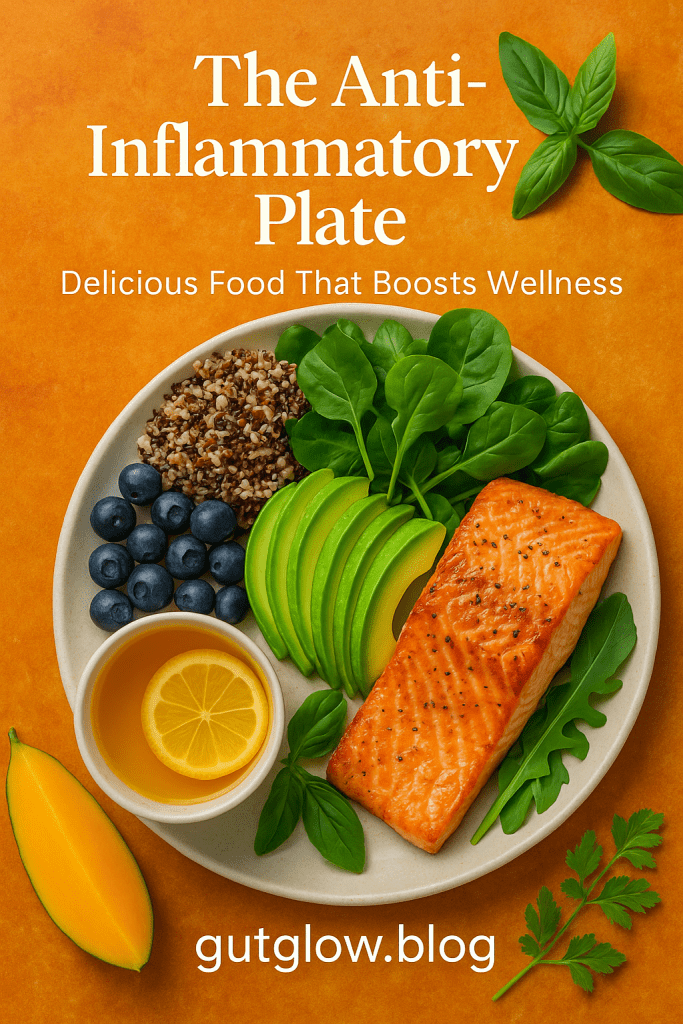
The Anti-Inflammatory Plate: Delicious Foods That Fight Inflammation and Boost Wellness 🥦✨

“Discover nurse-approved anti-inflammatory foods that support gut health, reduce inflammation, and promote glowing skin 🌿🥗. Your healing plate starts here!”


Ever notice how certain foods make you feel bloated, tired, or even trigger skin flare-ups? 😅 As a nurse with over 22 years of experience in wound, ostomy, and skin care, I can tell you: what you eat directly affects gut health, inflammation, and skin wellness.

Enter the anti-inflammatory plate—a simple, delicious way to eat your way to better digestion, glowing skin, and overall vitality. Research in Nutrients (2022) shows that diets rich in anti-inflammatory foods can reduce chronic inflammation, support gut microbiome diversity, and even improve skin elasticity.

Let’s break down my go-to anti-inflammatory foods and actionable tips to create a healing plate that works in real life (yes, even on busy weekdays 🥗✨).


🥦 What is an Anti-Inflammatory Diet?

An anti-inflammatory diet focuses on foods that reduce chronic inflammation in the body, which is often linked to:

  • Digestive issues (IBS, bloating)
  • Skin flare-ups (acne, eczema, rosacea)
  • Joint pain or stiffness
  • Low energy and premature aging

Glow tip:

I’ve seen countless patients improve gut and skin health simply by shifting to anti-inflammatory foods—no magic pills required.


🌱 Key Anti-Inflammatory Foods I Swear By

1. Leafy Greens

  • Spinach, kale, Swiss chard
  • High in magnesium, which helps calm inflammation
  • Packed with antioxidants for skin repair

2. Berries

  • Blueberries, strawberries, raspberries
  • Rich in polyphenols, fighting oxidative stress
  • Great for gut microbiome diversity

3. Fatty Fish

  • Salmon, sardines, mackerel
  • High in omega-3s, reducing inflammation and promoting glowing skin
  • Supports joint health

4. Nuts & Seeds

  • Walnuts, almonds, chia, flax
  • Provide healthy fats and fiber, improving digestion
  • Helps reduce inflammatory markers in the blood

5. Fermented Foods

  • Kefir, yogurt, kimchi, sauerkraut
  • Boost probiotics, balancing gut bacteria
  • Linked to reduced skin flare-ups (acne, eczema)

6. Herbs & Spices

  • Turmeric, ginger, garlic, cinnamon
  • Natural anti-inflammatory compounds
  • Easy to add to meals without extra calories

🥗 How to Build Your Healing Plate

  1. 50% vegetables & fruits → Mix colors for maximum nutrients
  2. 25% lean protein or fatty fish → Anti-inflammatory and satiating
  3. 25% whole grains or legumes → Fiber for gut health
  4. Add healthy fats & seeds → Olive oil, nuts, chia/flax
  5. Season with anti-inflammatory herbs & spices → Flavor + functional benefits

⚡ Gut Tip: Use meal prepping hacks to make anti-inflammatory meals quick and stress-free.


🌿 Lifestyle Habits That Boost Your Plate

  • Hydration 💧 → Supports digestion, skin elasticity, and detox pathways
  • Regular movement 🏃‍♀️ → Circulation boosts nutrient delivery and reduces inflammation
  • Stress management 🧘‍♀️ → Cortisol spikes can negate the benefits of anti-inflammatory foods
  • Sleep 😴 → Healing, skin repair, and hormone balance

🥄 Nurse-Approved Recipes & Snack Ideas

  • Berry + spinach smoothie with kefir and flax
  • Salmon salad with kale, walnuts, and olive oil dressing
  • Overnight oats with cinnamon, berries, and chia seeds
  • Kimchi and veggie stir-fry with turmeric-infused oil

Key Takeaways

  • Anti-inflammatory foods reduce inflammation, improve gut health, and support glowing skin.
  • Focus on colorful fruits, veggies, fatty fish, nuts, seeds, and fermented foods.
  • Small, consistent lifestyle habits amplify the benefits of your healing plate.

💬 What’s your favorite anti-inflammatory food or recipe? Share in the comments—I love swapping ideas!

⚠️ Disclaimer (Because I’m a Nurse, Not Your Nurse 😉): This blog is for general education and entertainment purposes only. Consult your healthcare provider before making major dietary changes.


Your next read is waiting… click below! ⬇️

Golden Turmeric Chai: 🍂✨ A Gut-Friendly Autumn Drink for Radiant Skin & Wellness


Sip this Golden Turmeric Chai 🍂✨ for glowing skin, healthy digestion, and cozy autumn wellness. Nurse-approved, gut-friendly, and anti-inflammatory.


Ever wonder if your cozy fall drinks could do more than just warm your hands? ☕🍁

As a nurse in my 40s with 22+ years of wound and ostomy care experience, I’ve seen firsthand how gut health directly impacts skin, energy, and inflammation. Many adults struggle with digestive issues, bloating, and early signs of skin aging, especially during seasonal indulgences.

Enter the Golden Turmeric Chai: a warm, spiced, and gut-friendly beverage that nourishes from the inside out. Packed with turmeric, ginger, cinnamon, and collagen options, this chai is a delicious way to support your gut-skin connection this autumn.


Why Turmeric Is Your Golden Gut & Skin Ally

Turmeric isn’t just trendy—it’s scientifically proven to fight inflammation and support digestion.

  • Gut benefits: Curcumin in turmeric helps reduce gut inflammation and supports healthy microbiota (Frontiers in Nutrition, 2023).
  • Skin benefits: Antioxidant properties help combat oxidative stress and promote collagen synthesis, giving you a natural glow (Journal of Cosmetic Dermatology, 2022).

💡 Gut tip: Pair turmeric with a pinch of black pepper to increase absorption and maximize benefits.

Do you already use turmeric in your cooking or drinks?


Gut-Friendly Spices That Make Chai Magic

Golden Chai blends several spices for flavor and gut support:

  • Ginger: Aids digestion, reduces nausea (Nutrition Reviews, 2022).
  • Cinnamon: Balances blood sugar, reduces bloating.
  • Cloves + Cardamom: Antioxidant-rich, support inflammation control.

💡 Tip: Warm spices slowly in milk or plant-based alternatives to release their full nutrients and aroma.


Optional Collagen & Milk Choices for Radiant Skin

  • Collagen peptides: Strengthen gut lining and boost skin elasticity.
  • Milk options: Unsweetened almond, oat, or dairy milk for creaminess without excess sugar.

💡Gut glow tip: Add collagen after heating to prevent clumping. Mix well and sip daily for long-term benefits.


How to Make Your Golden Turmeric Chai

Ingredients (1 serving):

  • 1 cup unsweetened almond or oat milk 🥛
  • ½ tsp turmeric powder
  • ¼ tsp cinnamon
  • ¼ tsp ground ginger
  • Pinch of black pepper
  • Optional: ½ tsp honey or maple syrup
  • Optional: 1 scoop collagen peptides

Directions:

  1. Heat milk in a saucepan over medium heat.
  2. Whisk in turmeric, cinnamon, ginger, and black pepper until fully combined.
  3. Add sweetener and collagen if desired.
  4. Pour into a mug and enjoy warm. Optional: top with a sprinkle of cinnamon or coconut whipped cream.

💡 Gut tip: Stir in 1 tbsp unsweetened kefir for probiotics once chai is warm, not hot, to support your microbiome.


Additional Tips for Autumn Gut & Skin Wellness

  • Hydrate first: Drink water before any caffeinated or spiced drinks.
  • Pair with protein: Nuts or Greek yogurt help balance blood sugar.
  • Batch prep: Make a spice blend in advance for quick chai.
  • Movement matters: A short walk after sipping supports digestion.
  • Skincare synergy: Antioxidant-rich drinks + topical antioxidants amplify results.

This Golden Turmeric Chai 🍂✨ is more than a cozy fall drink—it’s a nurse-approved, gut-friendly way to support radiant skin, digestion, and overall wellness.

Try it this season and see how your gut and skin glow from the inside out.

Do you already enjoy golden chai or other spiced wellness drinks? Share your favorite recipes in the comments! Don’t forget to subscribe for more gut-skin tips.

⚠️ Disclaimer (Because I’m a Nurse, Not Your Nurse 😉): This blog is for general education and entertainment purposes only. Consult your healthcare provider before making dietary changes.


Continue reading:

🍎 Apple Cider Collagen Elixir: Sip Your Way to Gut Health, Glowing Skin & Wellness


Boost your gut, digestion, and glowing skin with this Apple Cider Collagen Elixir 🍎✨ Nurse-approved, cozy fall wellness drink for healthy adults.


Ever sip on apple cider and think, “This tastes amazing, but can it do more than just warm me up?” 🍂

As a nurse in my 40s with 22+ years in wound and ostomy care, I’ve seen firsthand how gut health impacts skin, energy, and overall wellness. Many adults—especially in their 40s—struggle with digestion, inflammation, and early signs of skin aging.

Enter the Apple Cider Collagen Elixir: a cozy fall drink that isn’t just delicious, it’s gut-friendly, skin-supportive, and easy to make at home. Bonus: it skips the sugar overload of typical seasonal drinks.

In this post, we’ll break down the gut-skin benefits of apple cider, collagen, and warming spices, plus actionable tips to make this elixir a part of your daily wellness routine.


Why Apple Cider Is More Than a Cozy Fall Drink

Apple cider isn’t just a fall tradition 🍎—it’s packed with polyphenols and antioxidants that support gut health and reduce inflammation.

  • Gut benefits: Polyphenols feed beneficial gut bacteria (Smith et al., Nutrients, 2022).
  • Skin benefits: Antioxidants combat oxidative stress, supporting collagen production and smoother skin.
  • Tip: Choose unsweetened or lightly sweetened apple cider to avoid blood sugar spikes.

💡 Nurse tip: I often tell patients to pair polyphenol-rich drinks with protein or healthy fats to stabilize blood sugar and maximize gut benefits.

Do you prefer your apple cider warm or chilled for a cozy gut boost?


Collagen: Your Secret Weapon for Skin & Gut Health

Collagen isn’t just for wrinkles—it supports gut lining integrity, which helps prevent leaky gut and promotes nutrient absorption.

  • Skin glow: Collagen peptides improve elasticity and hydration (Journal of Cosmetic Dermatology, 2023).
  • Gut support: Amino acids like glycine strengthen the intestinal barrier.
  • Tip: Add 1–2 scoops of hydrolyzed collagen powder to your warm apple cider.

💡 Fun nurse fact: I sometimes sneak collagen into my morning beverages—patients would be shocked how easily it mixes with everything! 😉


Spices That Make It Gut-Friendly & Anti-Inflammatory

Spices aren’t just flavor—they’re medicinal.

  • Cinnamon: Helps balance blood sugar and adds warm fall flavor.
  • Ginger: Supports digestion, reduces nausea (Nutrition Reviews, 2022).
  • Nutmeg or Cloves: Rich in antioxidants to fight inflammation.

💡 Tip: Stir in spices while warming your cider to release their full aroma and nutrients.

Which spice is your fall favorite for drinks—cinnamon, ginger, or nutmeg?


How to Make the Apple Cider Collagen Elixir

Ingredients (1 serving):

  • 1 cup unsweetened apple cider 🍎
  • 1 scoop collagen peptides
  • ½ tsp cinnamon
  • ¼ tsp ground ginger
  • ¼ tsp nutmeg or cloves
  • Optional: 1 tsp honey or maple syrup
  • Topping: a cinnamon stick or whipped coconut cream

Directions:

  1. Warm apple cider in a small saucepan over medium heat.
  2. Stir in collagen and spices until fully dissolved.
  3. Sweeten lightly if desired.
  4. Pour into your favorite mug, top with a cinnamon stick, and enjoy!

💡 Gut tip: Add 1 tbsp unsweetened kefir after warming to add probiotics for your microbiome.


Additional Tips for Gut & Skin Wellness in Your 40s

  • Hydrate first: Start with a glass of water before caffeine or cider.
  • Pair with protein: Greek yogurt or nuts to stabilize blood sugar.
  • Batch prep: Freeze small portions of spices or apple cider for quick use.
  • Exercise & movement: Even short walks after meals improve digestion.
  • Skin care synergy: Pair your elixir with antioxidant-rich skincare to amplify benefits.

This Apple Cider Collagen Elixir 🍎✨ isn’t just a cozy fall drink—it’s a nurse-approved way to support your gut, skin, and overall wellness.

Give it a try this season and see how a simple sip can help digestion, reduce inflammation, and support radiant skin.

Have you tried adding collagen or spices to your fall drinks? Share your favorite combos in the comments! And don’t forget to subscribe for more gut-skin wellness tips.

⚠️ Disclaimer (Because I’m a Nurse, Not Your Nurse 😉): This blog is for general education and entertainment purposes only. Always consult your healthcare provider before making dietary changes.


You might like:

Can Probiotics Help with Hair Growth? The Research-Backed Truth 💊🧠


From Poop Talk to Hair Talk 💩➡️💇‍♀️

If you’re anything like me—a nurse in her 40s who talks about poop as often as she talks about skincare—then you’ve probably wondered: Can my gut health really affect my hair? And more importantly: Can probiotics help my hair grow back or grow better? Let’s dive into the scalp-tingling science! 🧬


What’s the Gut-Hair Connection, Anyway?

The idea that your gut can affect everything from your mood to your skin isn’t new. But researchers are now uncovering links between gut health and hair health too. Just like the gut-skin axis, there’s a growing belief in a gut-hair axis—where inflammation, poor nutrient absorption, and microbial imbalances (dysbiosis) can contribute to hair loss and poor hair quality.

A 2021 study published in Frontiers in Cellular and Infection Microbiology found that gut microbial imbalances were linked to telogen effluvium (a common type of hair shedding), due to increased systemic inflammation and nutrient depletion. So, yep—it’s not just vanity, it’s biology!


How Probiotics Might Help With Hair Growth 🦠💇‍♀️

Probiotics are live beneficial bacteria that help balance your gut microbiome. Here’s how they could potentially boost your hair health:

1. Reduce Inflammation

Chronic inflammation can disrupt the hair cycle and damage hair follicles. By balancing gut flora, probiotics help lower inflammation throughout the body, including the scalp.

2. Improve Nutrient Absorption

Your hair thrives on nutrients like biotin, zinc, iron, and B vitamins. A healthy gut helps absorb these more efficiently, making sure your hair gets the building blocks it needs to grow.

3. Support Hormonal Balance

Some strains of probiotics (like Lactobacillus rhamnosus) may support hormonal health by improving estrogen metabolism—important for those struggling with hormone-related hair loss.

4. Boost Immunity & Fight Pathogens

An overgrowth of harmful bacteria or yeast (like Candida) can interfere with nutrient absorption and trigger immune responses that impact hair health. Probiotics help keep these troublemakers in check.


My Story: Poop, Probiotics & Ponytail Power 💪💩

I used to think thinning hair was just a side effect of getting older (hello, 40s 👋) genetics is involve too. But when I started focusing more on gut health—cutting out processed foods, upping my fiber, and taking a targeted multi-strain probiotic—I noticed more than just better digestion. My skin glowed, my bloating improved, and surprise… my hair looked thicker. My ponytail actually bounced again. Coincidence? I think not.


Best Probiotic Strains for Hair & Scalp Health

Not all probiotics are created equal. Here are a few that show promise:

  • Lactobacillus plantarum – Anti-inflammatory, promotes nutrient absorption
  • Lactobacillus rhamnosus – Supports hormonal balance
  • Bifidobacterium longum – Reduces gut inflammation
  • Lactobacillus paracasei – Helps skin and scalp barrier function

🔍 Tip: Look for a high-quality probiotic with multiple strains and at least 10–20 billion CFU.


Gut-Friendly Foods That Also Feed Your Hair 🍓🥬🐟

Food is your foundation. These are my go-to gut-friendly foods for strong hair:

  • Fermented foods (yogurt, kefir, sauerkraut, kimchi) – Natural probiotics
  • Leafy greens – Full of folate, iron, and fiber
  • Fatty fish – Omega-3s reduce inflammation
  • Sweet potatoes – Rich in beta-carotene for scalp health
  • Pumpkin seeds – Packed with zinc and magnesium

P.S. These are also amazing for wound healing—bonus nurse tip! 🩹


What Does the Research Say? 📚

A 2022 review in the Journal of Cosmetic Dermatology noted that probiotics may improve the scalp microbiome, reduce dandruff, and support hair follicle cycling. Another clinical study showed that participants who took probiotics reported better skin hydration and hair strength.

So while more research is needed, the science is catching up with what many of us see in real life.


Final Thoughts: Should You Take Probiotics for Hair Growth? 🤔

If your gut is struggling, your hair likely is too. While probiotics aren’t a magic fix, they’re a powerful tool in a holistic approach to beauty, wellness, and—yep—even wound healing. Think of them as beauty boosters that start in your belly.


Let’s Get Chatty 💬

Have you ever tried probiotics for your skin or hair? Did you notice a difference? Drop your experience in the comments—I’d love to hear what’s worked (or flopped) for you!

And if you loved this post, check out:


https://gutglow.blog/2025/05/27/%f0%9f%a6%a0-probiotics-for-your-face-the-gut-skin-connection-you-need-to-know/

https://gutglow.blog/2025/05/31/microdermabrasion-101-the-secret-to-radiant-smooth-skin-%e2%9c%a8/


    Thanks for hanging out with me today, friends. Until next time—stay hydrated, eat your fiber, and don’t be afraid to talk about poop. 😉

    ⚠️ Disclaimer (Because I’m a Nurse, Not Your Nurse 😉)

    This blog is for general education and entertainment purposes only and should not be considered medical advice. Always consult your healthcare provider before starting new supplements or treatments.

    🥗 Eat for Glow: The Gut-Skin Connection in Every Meal

    Let’s talk glow-up—and not the Instagram-filter kind. I’m talking real, nurse-approved, radiant-from-the-inside-out kind of glow ✨. That post-veggie-bowl, happy-bowels, hydrated-skin, clear-complexion kind of magic.

    As a wound and ostomy nurse who’s spent over two decades knee-deep in poop (literally and figuratively 💩), I can confidently say: your gut health and skin health are BFFs—and your fork is the matchmaker. 🍴💘

    So if you’ve been slathering on serums but still dealing with breakouts, inflammation, or dry patches, it might be time to look below the surface—yep, we’re going gut deep.


    🌿 The Gut-Skin Axis: It’s a Thing, I Promise

    Your digestive tract isn’t just about absorbing nutrients and giving you that glorious morning poop. 🚽 It also plays a major role in:

    • 💥 Inflammation levels
    • 🦠 Immune system regulation
    • 💧 Skin hydration and barrier repair
    • 🌟 Collagen production and wrinkle resilience

    Basically, when your gut’s out of whack, your skin sends out a distress flare—cue acne, dullness, eczema, or even delayed wound healing.


    🧠 Fun Nurse Fact: The Gut Has a Brain of Its Own

    The enteric nervous system, aka the “second brain,” talks to your skin through the gut-brain-skin axis. Stressful day? Your gut bacteria notice. Eat junk food all weekend? Your skin spills the tea Monday morning. ☕️


    🥑 Glow-Up Grocery List: What to Eat for That Inside-Out Radiance

    These foods are skin AND gut heroes. Think of them as the support squad for both your intestines and your Instagram selfies:

    🥬 Leafy Greens (Kale, Spinach, Arugula)

    Packed with fiber and antioxidants—think of them as a broom and a shield in your gut.

    🥕 Orange & Red Veggies (Carrots, Sweet Potatoes, Bell Peppers)

    Loaded with beta-carotene (hello, vitamin A precursor!)—supports skin renewal and reduces dryness.

    🥥 Healthy Fats (Avocados, Olive Oil, Nuts)

    Support cell membranes and reduce inflammation. Plus, fat helps you absorb fat-soluble skin vitamins (A, D, E, K).

    🫐 Berries

    These antioxidant powerhouses help your skin fight off free radicals—and they taste like dessert.

    🧄 Fermented Foods (Kimchi, Sauerkraut, Kefir, Yogurt)

    Bring on the probiotics! They balance gut flora and calm skin issues like acne, rosacea, and eczema.


    ❌ Gut-Skin Glow Killers (Sorry, But We Need to Talk…)

    🍬 Sugar Bombs

    Inflammatory and collagen-destroying. That “sugar face” thing? It’s real.

    🧪 Ultra-Processed Junk

    Your microbiome thrives on whole food diversity—not fake cheese dust and artificial dyes.

    🥤 Dehydration

    Okay, water’s not food, but it’s ESSENTIAL. Dry gut = dry skin. 💦 Drink up, friend.


    💊 Bonus: Gut-Friendly Supplements That Help Skin Heal

    Always talk with your provider first, but here are some MVPs I recommend (especially for wound healing!):

    • Zinc: For tissue repair and immune health
    • Vitamin C: Boosts collagen and immune support
    • Vitamin D: Crucial for immune modulation and skin resilience
    • Probiotics: Choose one with multiple strains for gut flora diversity

    🌟 Real Talk From Your Wound Care Nurse

    Whether you’re healing from a surgical wound, managing your ostomy, or just trying to keep your 40s face glowing while juggling life—food is your ally. I’ve seen people heal faster, feel better, and glow brighter when they support their guts with good nutrition.

    Skincare isn’t just what you put on your skin—it’s what you feed it, too. 🍽💕


    ⚠️ Disclaimer (Because I’m a Nurse, Not Your Nurse 😉)

    This blog is for general education and entertainment purposes only. Always consult with your doctor, dietitian, dermatologist or wound/ostomy care specialist—especially if you have specific conditions, allergies, or a medical device like an ostomy. What works for one person might not work for another (especially if we’re talking ileostomy vs colostomy vs urostomy—big differences, folks!).


    🌈 Final Thought

    Eating for glow isn’t about being perfect—it’s about being kind to your gut and consistent with your choices. Your skin is your biggest organ, and your gut? Well, it’s the backstage crew that keeps the whole show running.

    So go ahead—pile your plate with color, fiber, and fermented goodness. Your skin (and your poop 💩) will thank you.


    Wellness Without Woo: 💙 A Nurse’s Guide to Real Self-Care 👋

    Hey there, fellow wellness warriors! 👋 As a nurse in my 40s who’s spent 22 years diving deep into skin, gut health, wounds, and all things wellness, I’m here to give you the real tea ☕ on self-care — minus the fluff, the “energy vortexes,” and those crystal elixir vibes that make you wonder if you’re on a reality show. Let’s talk wellness without the woo.


    What Is “Wellness Without Woo,” Anyway?

    In a world where detox teas promise a miracle cleanse and magic powders claim to fix your skin overnight, I’m here to say: nah. Real self-care isn’t about chasing the latest fad. It’s about science-backed habits that actually make a difference for your skin, gut, and overall health. Think hydration, balanced nutrition, sleep, and a dash of movement (yes, even those nursing shifts count as cardio sometimes! 🏃‍♀️).


    1. Hydration: Your Skin’s BFF 💧

    Your skin and gut thrive on water. Drinking enough H2O is the cheapest, easiest, and most effective anti-aging trick you can do. It keeps your skin plump, helps your digestive system flush out toxins, and supports wound healing. Plus, it prevents that “dehydrated nurse face” look after a 12-hour shift.


    2. Eat Real, Not Magical 🍎

    Forget the powders and potions. Your gut (and skin!) want whole foods — think colorful veggies, fiber-rich fruits, healthy fats, and protein. These nourish your microbiome, support digestion, and help your skin maintain elasticity. Pro tip: your gut health shows up on your face, so feed it well.


    3. Move Your Body — Even If It’s Just a Walk 🏃‍♀️

    You don’t need a gym membership or 2-hour yoga sessions. Moving daily — walking, stretching, or chasing toddlers — helps circulation, reduces stress, and supports skin cell turnover. Plus, it’s great for your gut motility (translation: better poop, less bloating — yay! 🚽).


    4. Sunscreen Is a Must ☀️

    No self-care routine is complete without sun protection. UV rays age your skin faster than stress does. (And trust me, nursing stress is real.) A broad-spectrum SPF shields your skin and lowers your risk for skin cancer — because glowing skin should last a lifetime.


    5. Sleep Like Your Skin Depends on It 💤

    Spoiler: it does. Sleep is when your body repairs skin damage, balances hormones, and resets your gut health. Aim for 7-9 hours and watch those wrinkles and digestion issues chill out.


    6. Listen to Your Body, Not the Hype 🧘‍♀️

    With ostomies, wounds, and skin issues in the mix, personalizing self-care is key. What works for one person may not work for another — especially when it comes to gut and skin health. Always chat with your healthcare providers before starting any new routine.


    Final Thoughts

    Self-care doesn’t need to be complicated or expensive. It’s about consistent, science-backed habits that nurture your body and mind — no crystals required. So ditch the “woo,” grab your water bottle, put on your sunscreen, and embrace wellness that’s real, reliable, and nurse-approved. 💙


    ⚠️ Disclaimer: Because I’m a Nurse, Not Your Nurse 😉
    This blog is for general education and entertainment purposes only. Always consult with your doctor, dietitian, dermatologist, or wound/ostomy care specialist — especially if you have specific conditions, allergies, or medical devices like an ostomy. What works for one person might not work for another.


    Want more practical tips without the fluff? You’re in the right place. Let’s keep it real, together. 💪✨

    Where Skin Deep Starts From Within: Unlock Radiant Skin Through Gut Health 🌿✨


    Discover how gut health impacts your skin. Learn nurse-approved tips, gut-friendly foods, and wellness habits for glowing, clear skin from the inside out.


    Let’s be honest—if your skin is acting up, your first thought is probably a new serum or a fancy face mask. But what if the real culprit isn’t sitting on your bathroom counter but deep inside your gut?

    Your gut is home to trillions of microbes that affect everything from digestion and immunity to mood and, yes, skin health. As a nurse with 22+ years of wound care experience, I’ve seen firsthand how a balanced gut can be a game-changer for skin. Welcome to Gut Glow, where radiant skin truly starts from within. 🌿✨


    The Gut-Skin Connection

    Your gut and skin are in constant conversation, known as the gut-skin axis. When your microbiome is out of balance due to stress, poor diet, or antibiotics, inflammation can occur—showing up as breakouts, redness, dryness, or dullness.

    Glow Tip: Supporting your gut can improve skin tone, texture, and hydration.


    Nurse-Approved Tips for a Healthy Gut & Glowing Skin

    1. Fiber Is Your Best Friend

    Fiber nourishes your beneficial gut bacteria and keeps digestion running smoothly. Aim for:

    • Oats
    • Lentils
    • Apples
    • Chia seeds
    • Leafy greens

    💡 Glow Tip: Add fiber gradually to avoid bloating and help your microbiome adapt.


    2. Embrace Fermented Foods

    Probiotics help balance gut bacteria, reducing inflammation that can manifest as skin issues. Include:

    • Yogurt & kefir
    • Kimchi & sauerkraut
    • Miso & tempeh

    Quick Hack: Start with small portions to let your gut adjust.


    3. Hydrate Strategically

    Water supports digestion, nutrient absorption, and overall skin hydration. Try:

    • Drinking a full glass upon waking
    • Herbal teas like peppermint or ginger
    • Limiting sugary drinks

    💧 Tip: Hydration inside = glow outside.


    4. Manage Stress Mindfully

    Stress increases cortisol, which can disrupt gut function and trigger skin inflammation. Strategies:

    • Daily 5–10 minute breathing exercises
    • Short walks during breaks
    • Journaling or meditation

    🧘 Nurse’s Tip: Your gut appreciates calm as much as fiber.


    5. Mind Your Meals:

    Chew slowly, eat smaller portions, and include nutrient-dense foods to reduce bloating and improve digestion. Focus on:

    • High-fiber vegetables
    • Healthy fats like avocado and olive oil
    • Lean proteins

    🌀 Glow Tip: Your skin reflects your digestive efficiency. Eat like your glow depends on it—because it does.


    Foods That Feed Your Gut (and Skin)

    • Leafy Greens – rich in fiber and antioxidants for gut and skin health
    • Berries – antioxidant-rich to combat oxidative stress
    • Avocados – healthy fats for gut lining and skin hydration
    • Sweet Potatoes – beta-carotene supports vitamin A for skin repair
    • Fermented Foods – probiotics for a balanced microbiome
    • Yogurt & Kefir – reduce inflammation and support gut balance
    • Nuts & Seeds – fiber and healthy fats to nourish gut and skin

    💚 Fun Fact: Eating a variety of colorful foods keeps both your gut bacteria and skin happy.


    Lifestyle Habits That Support Gut-Skin Health

    • Regular Movement: Boosts digestion and circulation
    • Sleep: Restores gut and skin health
    • Limit Ultra-Processed Foods: Excess sugar and additives feed bad bacteria
    • Track Your Gut: Journaling meals and symptoms helps identify triggers

    Your skin is more than a reflection of beauty products—it’s a mirror of your gut health. Feed your microbiome, manage stress, hydrate, and embrace gut-friendly foods. Over time, your skin will thank you with radiance and resilience.

    Your Next Step: Start with one small change today—maybe a probiotic-rich breakfast or a 5-minute breathing session. Then watch the glow unfold.

    ⚠️ Disclaimer (Because I’m a Nurse, Not Your Nurse 😉) This blog is for general education and entertainment purposes only. Always consult a healthcare professional before making major changes to your diet or supplements.


    Keep reading to unlock the full scoop 👀